These ideas run from a can of chalkboard paint to a natural pool that costs twice what chlorine does, so the deciding factor is not budget but how much of your weekend you are willing to give.
A milk-crate container garden moves in an hour; the pergola with Toja Grid brackets and its hardware bill wants a full Saturday plus a friend.
[link-whisper-related-posts]1. Vertical Garden
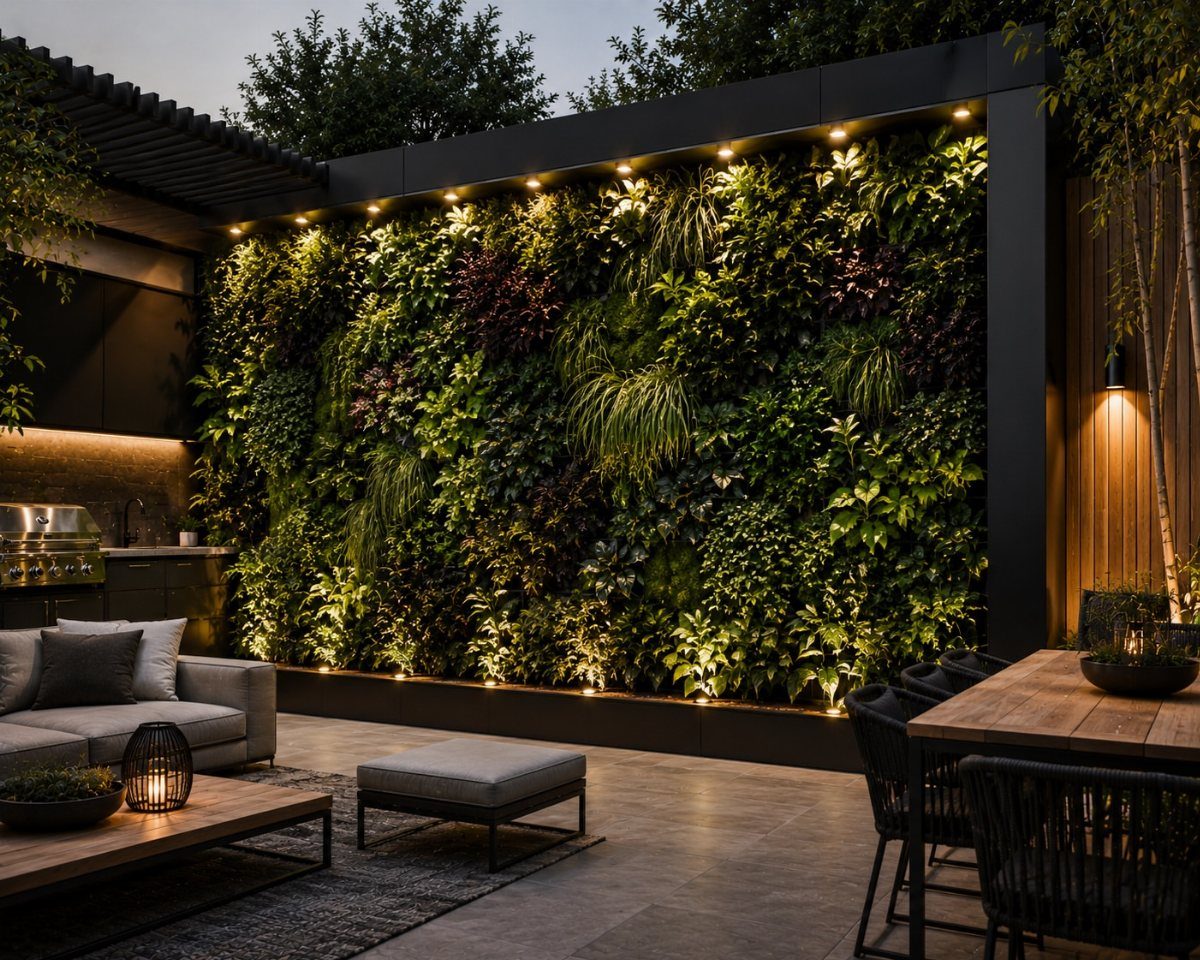
A vertical garden uses wall space that otherwise does nothing. For renters and small-lot owners, that matters: you get green without giving up ground.
Wall planters or trellises train tomatoes, herbs, or flowering vines upward.
Spotlights after dark turn the wall into something you still want to look at when the plants are not clearly visible. I would put herbs near the kitchen door for grabbing, and something trailing for the look of it.
Modular planter pockets from any garden store let you start small and expand as you learn what grows.
Watering is the trick; top-down systems miss lower roots, so a can with a long spout or a simple drip line saves the wall from dry spots.

【36 Pocket Vertical Garden】Features 36 individual planting pockets, allowing you to grow herbs, flowers, succulents, strawberries, vegetables, and other plants while maximizing vertical space.

Innovative Space-saving Design: maximize your gardening potential with our stackable wall planter system; Each piece measures 9.45" x 5.71" x 5.51" and features two pockets, The overall dimensions are 47.5"x33"x5.5" offering ample growth space for a variety of plants; Nice for Fence Balcony Wall Decor, these vertical wall planters change limited spaces into gardens effortlessly

PREMIUM MATERIAL - The main component of these wall hanging plant bags is felt, which can maintain sufficient moisture, drainage and ventilation at the same time. Its back lining adopts a waterproof design, effectively protecting the wall from being wet or dirty.
2. Container Garden
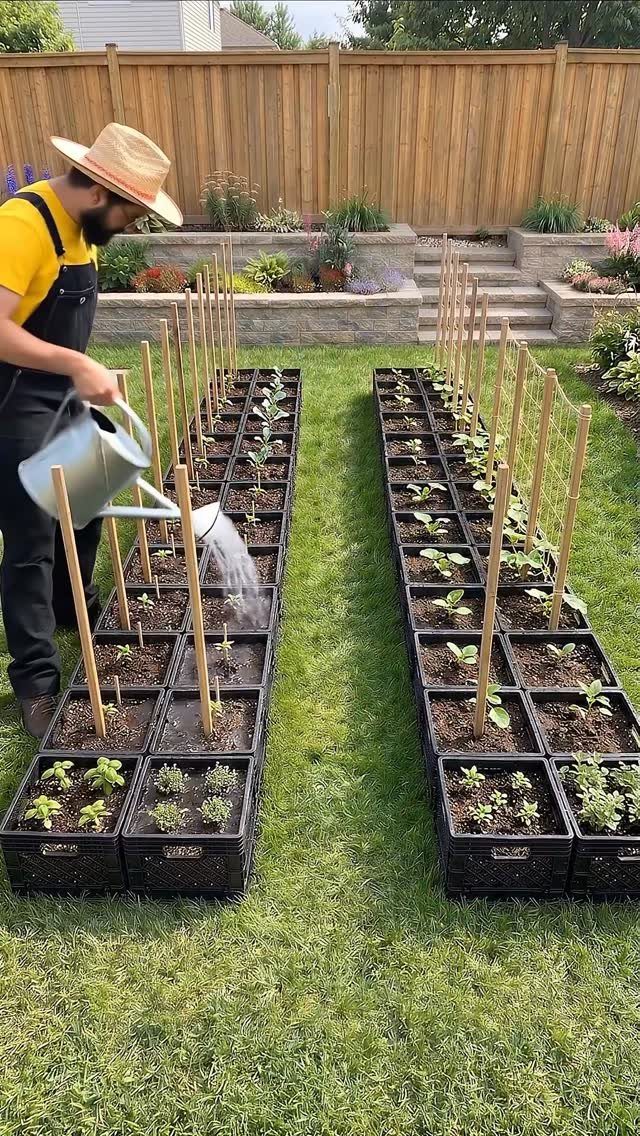
Milk crates lined up on a lawn, filled with seedlings, solve a problem I have hit before: committing to a garden bed before I know where the sun actually stays.
Black plastic containers heat soil faster in spring, and when a spot fails, you pick the crate up and move it.
Herbs in pots by the kitchen door, tomatoes where they get full sun, flowers for the spots that get less.
Renters and anyone still learning their yard’s light patterns need that kind of flexibility. Watering needs more attention than in-ground plants; containers dry faster, especially dark ones in sun.
Thrift store pots, drilled buckets, or found crates all work to start.
Soil and seedlings run cheap enough for a trial run that won’t hurt if it fails. Weeds are minimal, and if you overwater, the excess drains out the bottom instead of rotting roots in clay.

BUY "ONE" GET "TWO" - 2 In 1 Function & Easy Setup: BONLION solar spot lights outdoor function as a landscape in ground or wall flood light. Stick solar spotlight into the grass via stake and fix the light or panel with the rotary knob, use as outdoor solar spot lights for palm trees, house number signs, address plaques or Halloween/Christmas decor stuff. Or mount on wall with screws. See every part of your front yard - even let your kids have some light while jumping at night. Adjutable solar spotlights outdoor high lumen for a bright home

3 Brightness Lighting Modes Solar Light: LEREKAM Solar Outdoor Spotlight have 3 lighting modes to meet your different needs, every short press the power button to enter: Strong Light Mode 100% Brightness MAX 8Hrs. Medium Light Mode 60% Brightness, MAX 15Hrs. Low Light Mode 30% Brightness,MAX 25Hrs.LEREKAM solar outdoor lights use high-quality 40 LED beads to emit brighter light, presenting you with a gorgeous night light show, truly bringing life to your front yard and garden

Warm White Solar Spotlights Outdoor: A nightly light show! Automatically can come on when it gets dark. Really added life to Your trees and Lights up your landscaping nicely.Brighter 40 LEDs with wider 360° lighting angle & 120° adjustable bigger solar panel & longer working time with rechargeable battery. LEREKAM solar landscape light is much more durable, Across to light up a larger area and perfect brightness, perfect color compared to other 4-12 LED lights in the market.
3. Raised Garden Beds
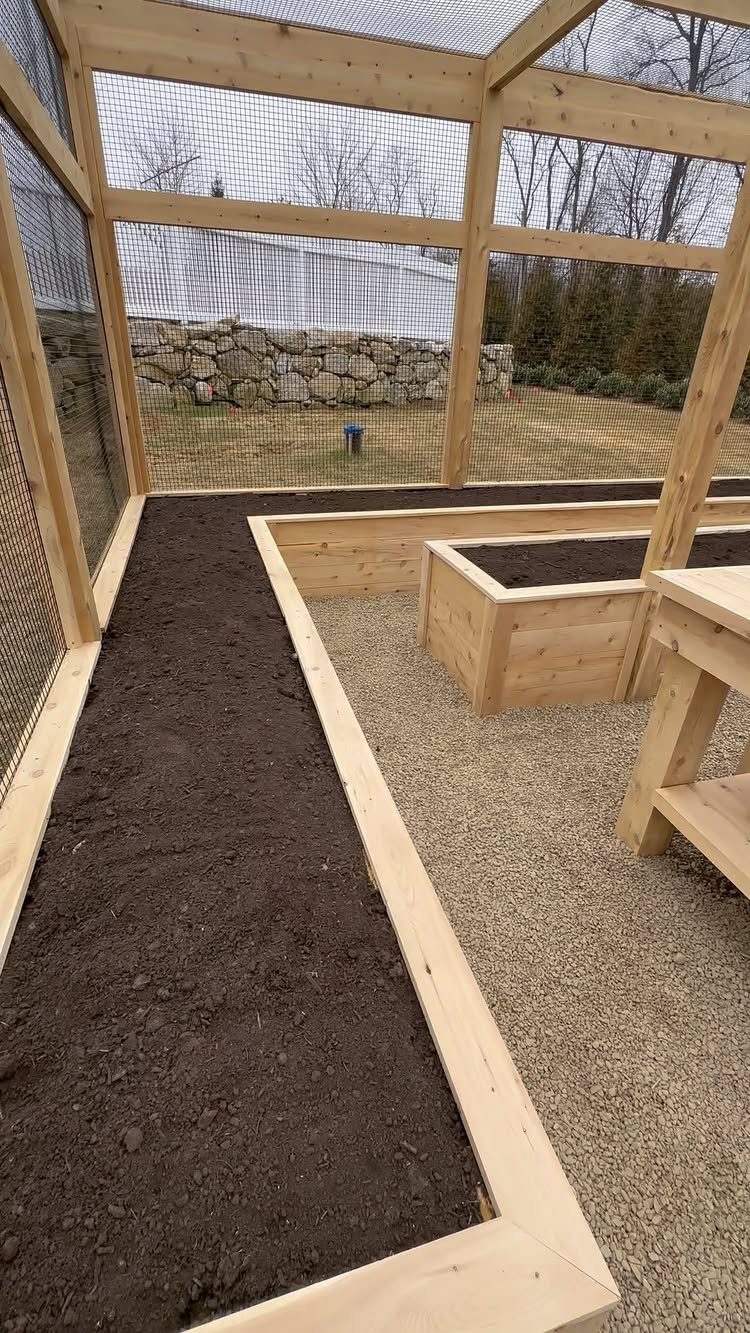
A 30-by-30 foot cedar enclosure with raised beds inside, gravel paths between them, and wire mesh overhead keeps deer out and the gardener off their knees.
Raised beds warm faster in spring and drain better than compacted yard soil; the actual growing surface sits at a height that does not require bending to weed or harvest.
Wood construction needs checking: untreated cedar outlasts pine in most climates, sometimes by years.
A mesh top over the bed is worth repeating anywhere raccoons or birds treat a garden as their buffet. One maker used cedar for the frames and the enclosure both, filled and planted the same season.
Cost scales fast with size and height; lower walls cost less than waist-high ones, and narrow paths still let a wheelbarrow through. Plan before you fill: wet soil is heavy, and moving a built bed later means emptying it first.
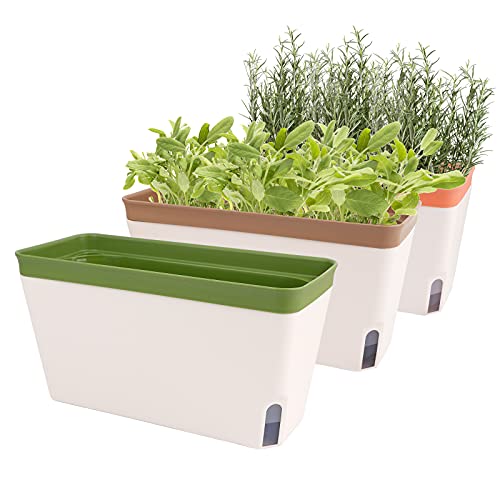
SELF-WATERING PRINCIPLE: Through two absorbent cotton ropes, the self watering pots provide water to the soil and keep the soil moist through the principle of osmosis, without having to water the plants regularly. Even if you leave home for a few days, it can help you take care of the plants and avoid plants die from water shortage.

WINDOWSILL HERB GARDEN: Set of 3 steel herb pots on a matching tray with a leather carry handle, sized for a kitchen windowsill, shelf or countertop. Move all your herbs to the sun in one go. Herbs and seeds not included

ALL-NATURAL MIX: Burpee Organic Premium Potting Mix is formulated with plant food & coconut coir to promote seed & root growth and healthy flower, vegetable & herb plants. OMRI Listed for organic use.
4. Garden Art
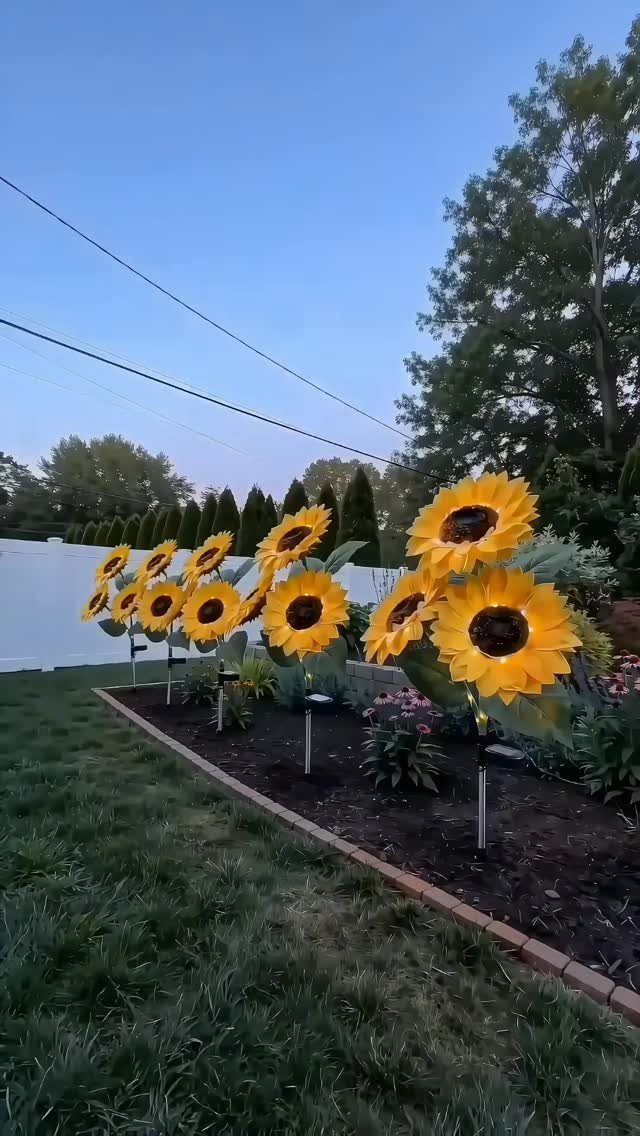
Oversized sunflower stakes in a brick-lined bed do something functional while pretending to be pure decoration.
Solar-powered lights mean no extension cords to manage, and the metal holds up better than the resin versions I have bought and watched sag after one humid summer.
Garden art works best when it carries a job: wind chimes mark a corner breezeways, painted rocks label what you planted, a sculpture becomes the focal point that distracts from the utility box.
Spend what the piece needs to last outside; cheap garden-center specials fade and fall.
I look for powder-coated metal or exterior-grade acrylic, and solar cells that sit removable in case the housing cracks. One strong piece beats a scattering of small ones around the yard.

Defend Against Unwanted Visitors: Gardening is a rewarding and fulfilling endeavor, and you'll watch your plants grow from nothing to maturity before you finally harvest them. Once the plants begin to flower and bear fruit, these unwelcome visitors visit your garden and often leave a trail of destruction. Garden netting is the best choice for protecting your plants

【Larger Size & Finer Mesh】 - 10 x 50 FT super larger size, enough to cover a large crop, and can be cut to any size you need. Ultra fine garden netting has a 0.8mm x 0.8mm ultra-fine mesh, 80 mesh per inch - more dense mesh provides more durability, and excellent protection for your vegetables, flowers, plants, crops and fruits

Package Information: The package includes 2 packs of 10 x 6.5ft garden netting, suitable for greenhouse and raised beds. The size will cover the plants in your garden well. Tip: Only garden netting is included, not support poles.
5. Native Plants
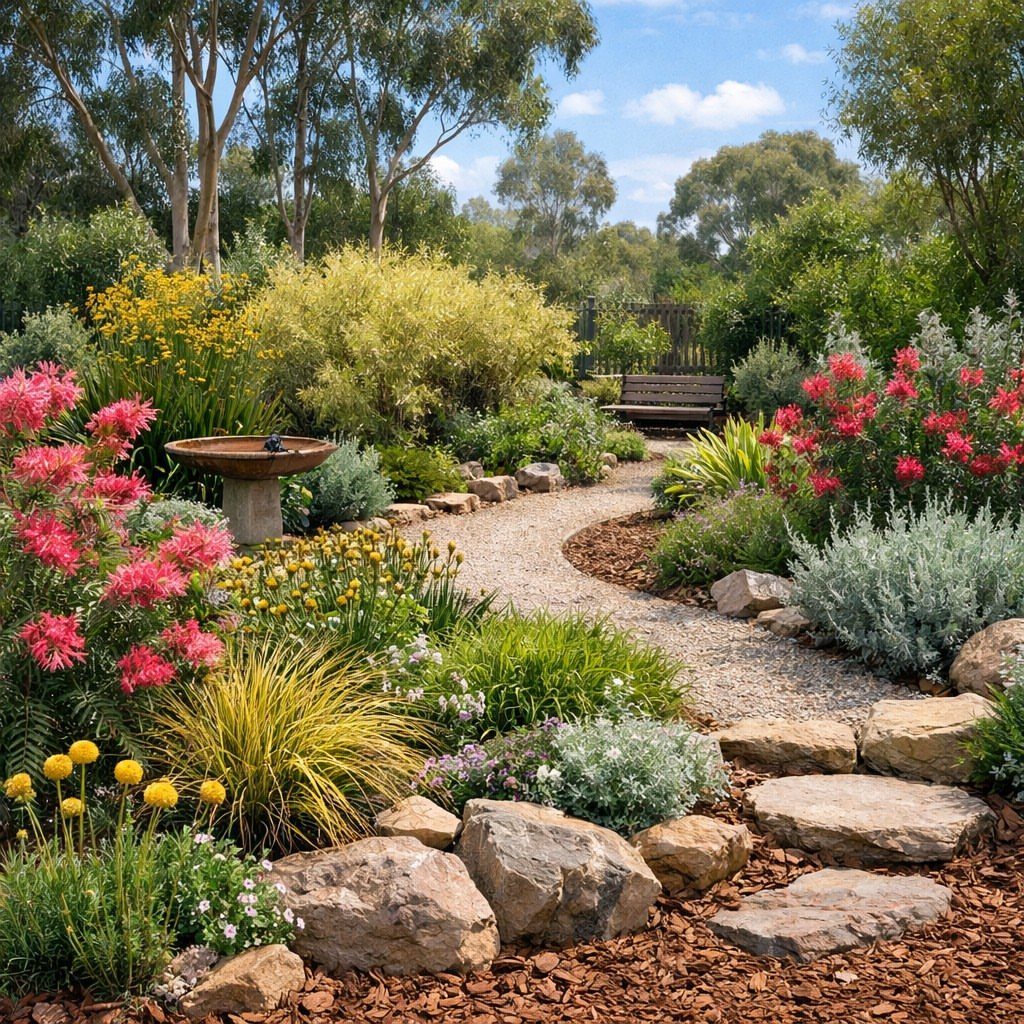
Gravel paths, flat stones, and plants that belong where you live need less from you than a lawn ever will.
Native species evolved for your rainfall and your soil; they survive the dry spells that kill imports, and the insects and birds they feed show up on their own.
Xeriscaping is not zero water, it is right water.
Group plants by need: the thirstiest near downspouts or a hose end, succulents and grasses where runoff skips. The photo’s mix of flowering height, mulch, and boulder massing gives structure even when individual plants are between blooms.
A birdbath in the mix adds movement and sound without the maintenance of recirculating fountains. Costs drop after establishment; first-year watering gets roots down, then most natives manage on rain.
Check local extension lists for species actually native to your county, not just your zone; the difference matters for butterfly and moth larvae that feed specific leaves.

Elevate Your Garden - Opt for a brilliantly engineered raised garden bed to revolutionize your gardening. Its spacious design, measuring 48x24x30 inches, allows for the cultivation of multiple vegetable varieties alongside a plethora of herbs, optimizing your gardening space for ease and diversity.

Ergonomic Height: Standing at 30 inches tall, it reduces strain from bending and kneeling, promoting more comfortable gardening.

Generous Planting Space: Ample bed space provides your plants and vegetables with room to thrive, promoting healthy growth and robust yields.
6. Outdoor Dining Area
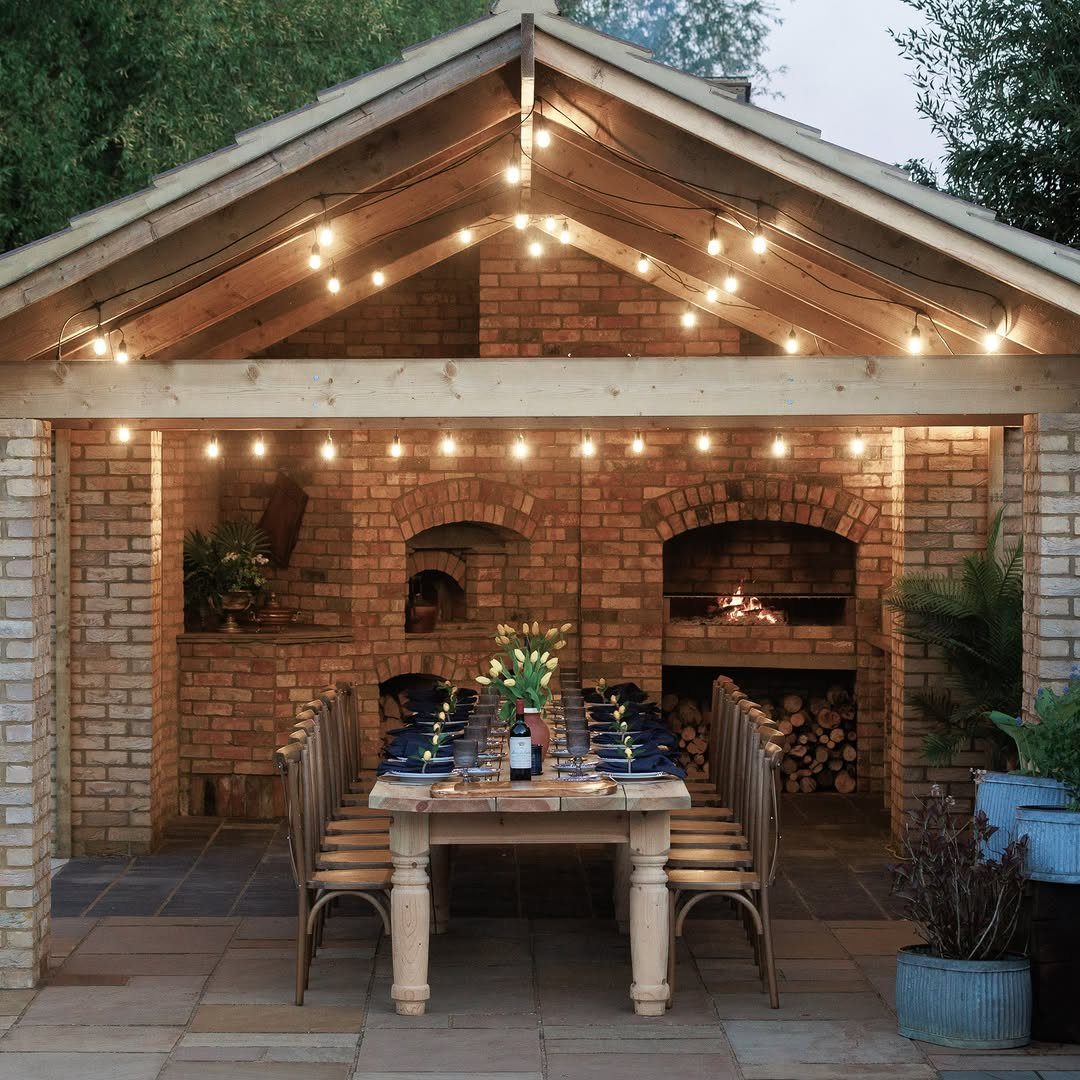
A long table under a timber roof with string lights overhead turns eating outside into something you plan for, not just something that happens when the grill is hot.
A roofed shelter with an open gable stops sun and light rain while letting heat escape; the space never feels boxed in.
Leave enough room around seated chairs for people to push back and stand without bumping.
Pathways in from the kitchen or grill need width for people to pass with trays. I place dining closest to the indoor kitchen; transport distance matters more than view when you are carrying hot plates.
A brick fireplace or chiminea extends the season into evenings that would otherwise drive everyone inside.


Space-Saving Vertical Garden – Turn fences, balcony rails, patios, and indoor walls into a compact growing area.

Space-Saving Solution: Maximize your outdoor space with our sunvara 64 Pocket succulent wall planters, planter wall, vertical farm. Transform any bare wall into a lush vertical garden, ideal for small balconies, patios, or urban gardens.
7. Outdoor Lighting
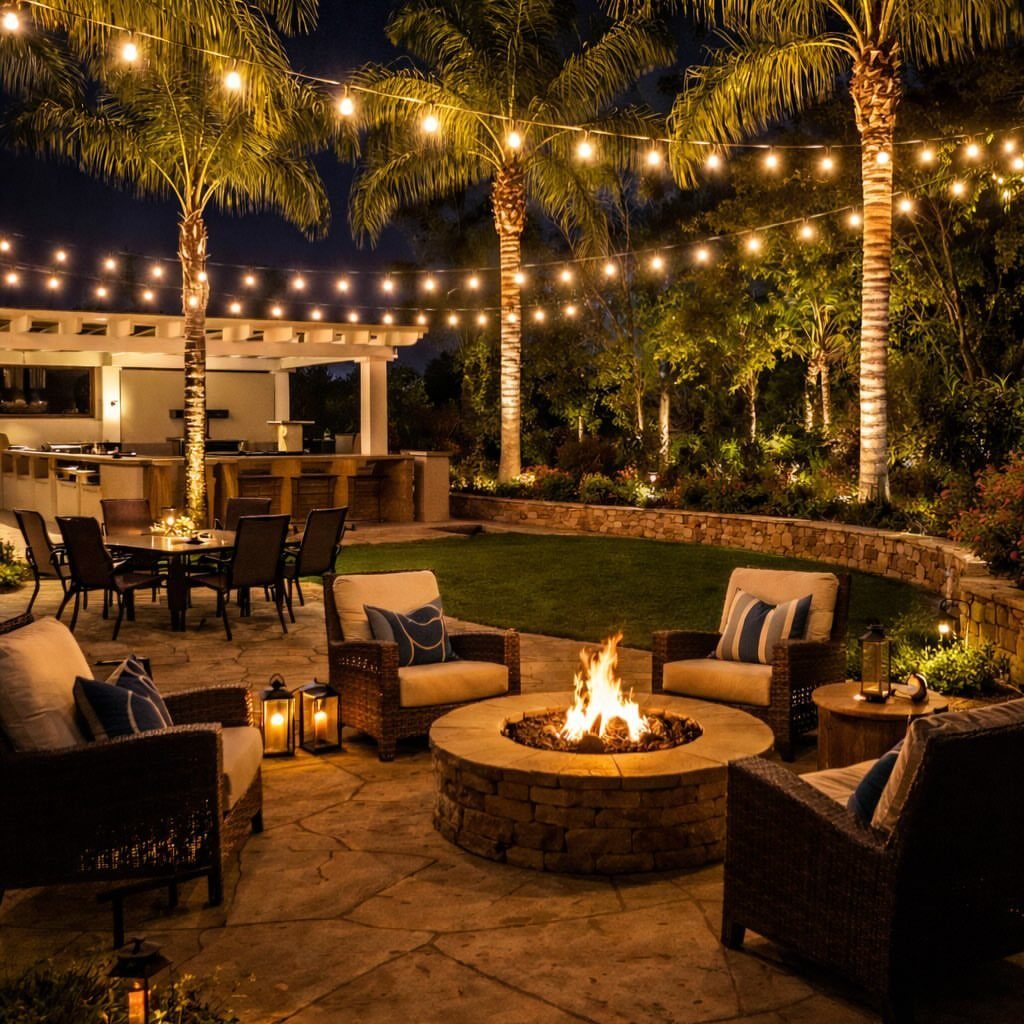
String lights between palm trees turn a patio into a space you actually use after sunset.
I run mine on a timer so the yard lights itself when I get home; no switch to remember and no bill shock if I forget.
Layer three kinds for the most use: overhead bistro strings for dining, path lights so guests don’t trip, and uplights on one tree or large plant so the yard has depth when you look out the window.
Solar path lights fail in deep shade, so I buy a few extras and swap them toward the sun as batteries weaken.
Lanterns on the table or hung from hooks move where you need them; battery ones now run warm enough to look right.
A small backyard especially benefits, since good lighting stretches the usable hours even in winter when dark comes early.

【Material】Aluminium+PC ; Product Size: 9.29"W X 6.14"D X 4.6"H

Cool White Solar Spotlights Outdoor: A nightly light show! Automatically can come on when it gets dark. Really added life to Your trees and Lights up your landscaping nicely.Brighter 40 LEDs with wider 360° lighting angle & 120° adjustable bigger solar panel & longer working time with rechargeable battery. LEREKAM solar landscape light is much more durable, Across to light up a larger area and perfect brightness, perfect color compared to other 4-12 LED lights in the market.

【1】Original Design & Focused Optic Lens Technology — Upgraded with an exclusive appearance and the LED chips covered by a physical optical lens concentrate light through refraction for a tighter, more effective beam. It delivers a noticeably brighter landscape spotlight effect without increasing power consumption.
8. Pergola
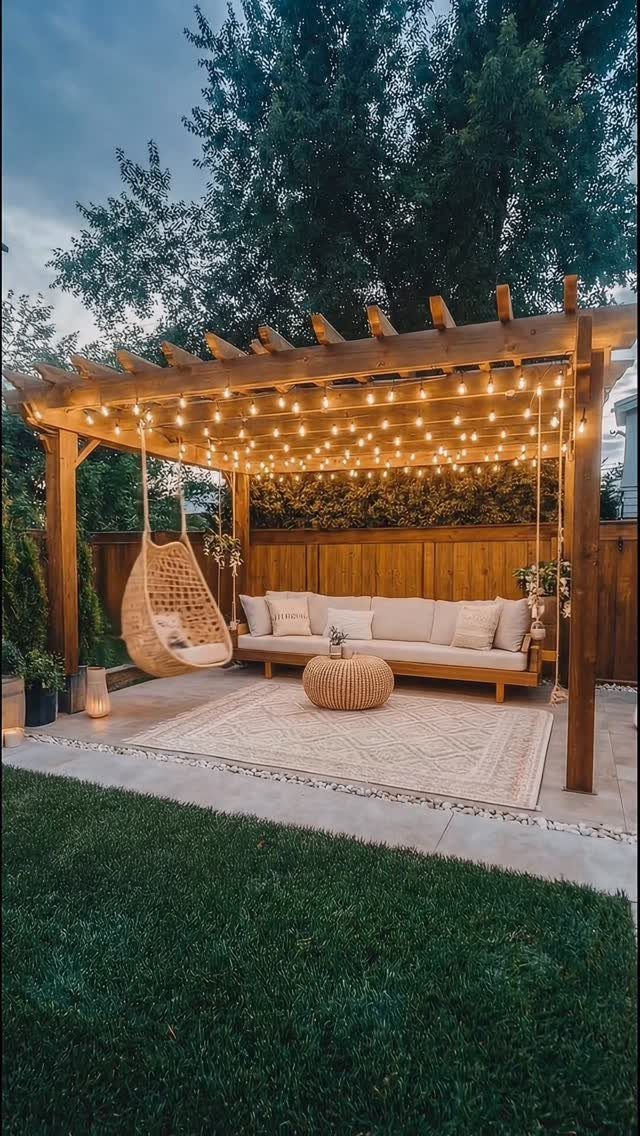
A pergola frames a space the way trim frames a window. The visible one uses Toja Grid brackets and wood posts to make a roof structure without the engineering fear that kept me from trying this for years.
The hardware costs around $1,100 total and handles the joint angles you would otherwise have to cut and bolt yourself.
I would extend the concrete pad first, the way one maker did, since a floating deck runs closer to $2,500 and the slab already sits there.
Shade cloth or slats across the top cut summer sun; string lights after that make it usable after dark. Vines on the posts give privacy from neighbors, or leave them bare for cleaner lines.
Width matters more than height. Fit your furniture plan plus walking space around it before you order posts; a too-narrow pergola becomes a tunnel.
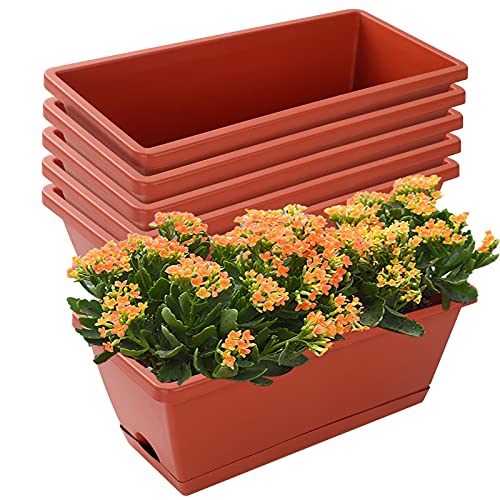
WINDOW BOX PLANTERS DIMENSIONS - Includes pack rectangular plastic planters. The size of plastic flower planters: L16.6 x W7 x H5.9 inches, large enough to support any projects and ideas. Great for herbs, flowers, foliage, grass, cactus, succulents, ferns, arborvitae and more.

【 Vertical Raised Garden Bed with Trellis】Perfect for home gardening lovers, this herb planter outdoor with 4 garden boxes let you plant vegetables, herbs, and flowers in separate plant bed while the 11-inch trellis supports climbing plants like tomatoes, strawberries, vines, and peppers. The balcony raised garden beds outdoor with legs creates an optimal environment for your plants to thrive.

9. Fire Pit
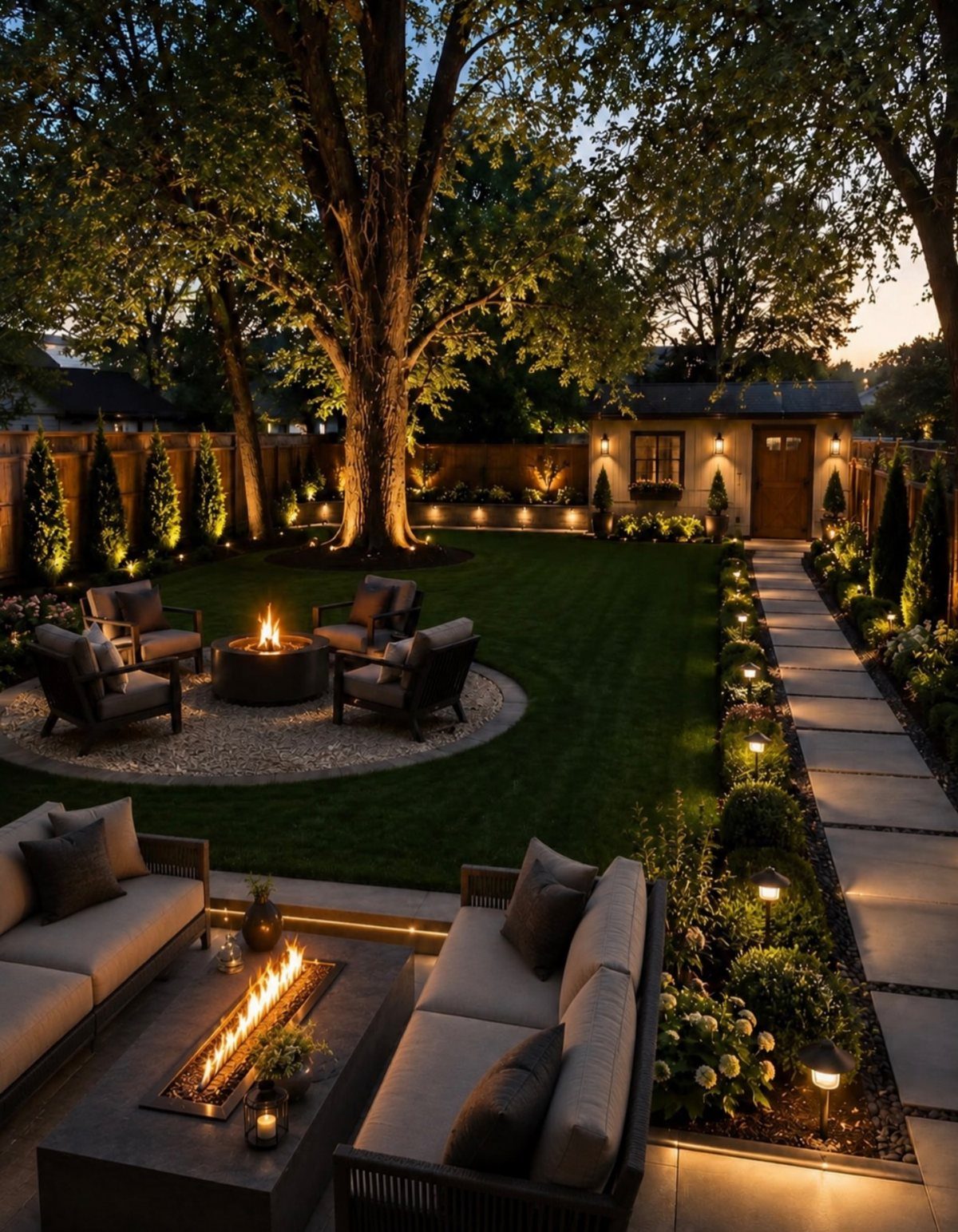
A fire pit draws people in even on nights that would send them indoors. The visible yard centers on one with gravel underfoot and seating arranged close enough to feel the heat, far enough to escape smoke shifts.
Pavers and stone let you build without concrete work; dry-stacked rings handle heat expansion better than mortared ones.
I like a sunken pit for wind protection, but raised walls double as backrests for short chairs. Pea gravel around the rim drains fast and costs less than flagstone under the whole seating area.
Plan the rest of the yard from this point outward, since the fire becomes what people remember.
A fire pit hits harder per dollar than almost anything else you could add, even on a tight budget. Pick a model that looks right unlit, too, because most of its hours are daylight.
Gas starts clean and instantly; wood smells right and costs less to feed. I keep both options near the grill and choose by the crowd.

Garden Hoops for Raised Beds: Note: There is NO netting included. You are no strangers to voracious critters, disease-ridden bugs and winter harsh weather conditions. FuBegi garden tunnel hoops helped to provide the protection your veggies needed, improving the quality of your harvests big time! You will have a lot fewer problems with insects eating your crop as well as the sun scorching the tender leaves.

Protect Your Vegetables and Fruits: LCHUANG Garden Netting is great for orchards, greenhouses, gardens, nurseries, patios, and shrubs. This Bird Netting with a zipper can protect blueberries, tomatoes, trees, fruits, flowers, vegetables, and potted plants from insects, birds, and bugs, which helps the plants grow normally.

Complete Kit Includes Everything You Need: (6/18/30) Square Mesh Panels, (30/100/100) Reusable Zip Ties, (6/18/30) U-Shaped Ground Stakes, and (5/10/10) Plant Labels for Easy Organization.
10. Small Fountain
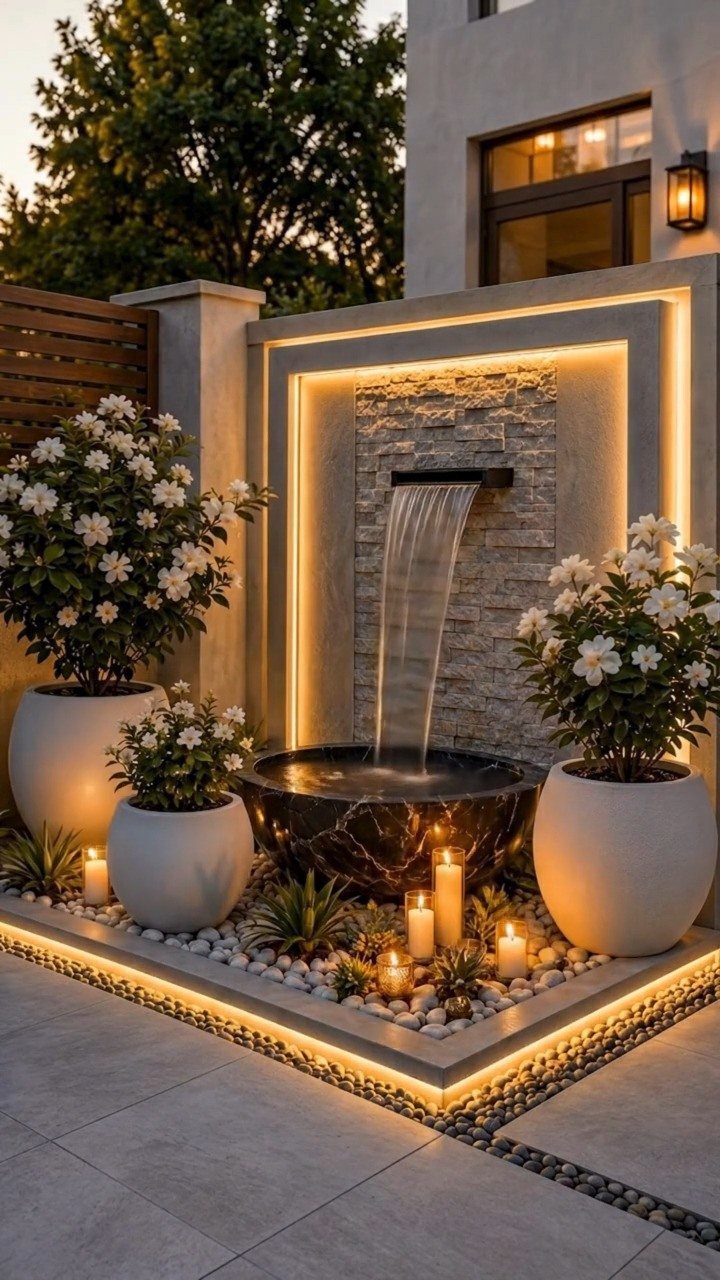
Water sound covers traffic noise and neighbor voices without blocking either completely.
A wall fountain like the visible one needs only a corner, power for the pump, and a level surface that can handle the weight of a stone basin and the water in it.
LED strips tucked nearby let it read as sculpture after dark, not just disappear. I would add a birdbath separately if you want birds; moving water in the fountain itself tends to splash too much for small birds to stand.
Maintenance is the trade: hard water stains the basin, leaves clog the intake, and pumps fail between seasons.
I buy replacement pumps in advance since the box stores stock them only from April to June. River rock around the base hides the electrical and gives wading birds a foothold if you skip the basin skirt.
Indoor-rated stone or resin fades fast outside; make sure the materials are listed for exterior use before you spend.

🪵 Solid American Cedar: Crafted from untreated 100% solid American cedar boards, it is ideal for growing vegetables, herbs, and flowers.
11. Outdoor Bar
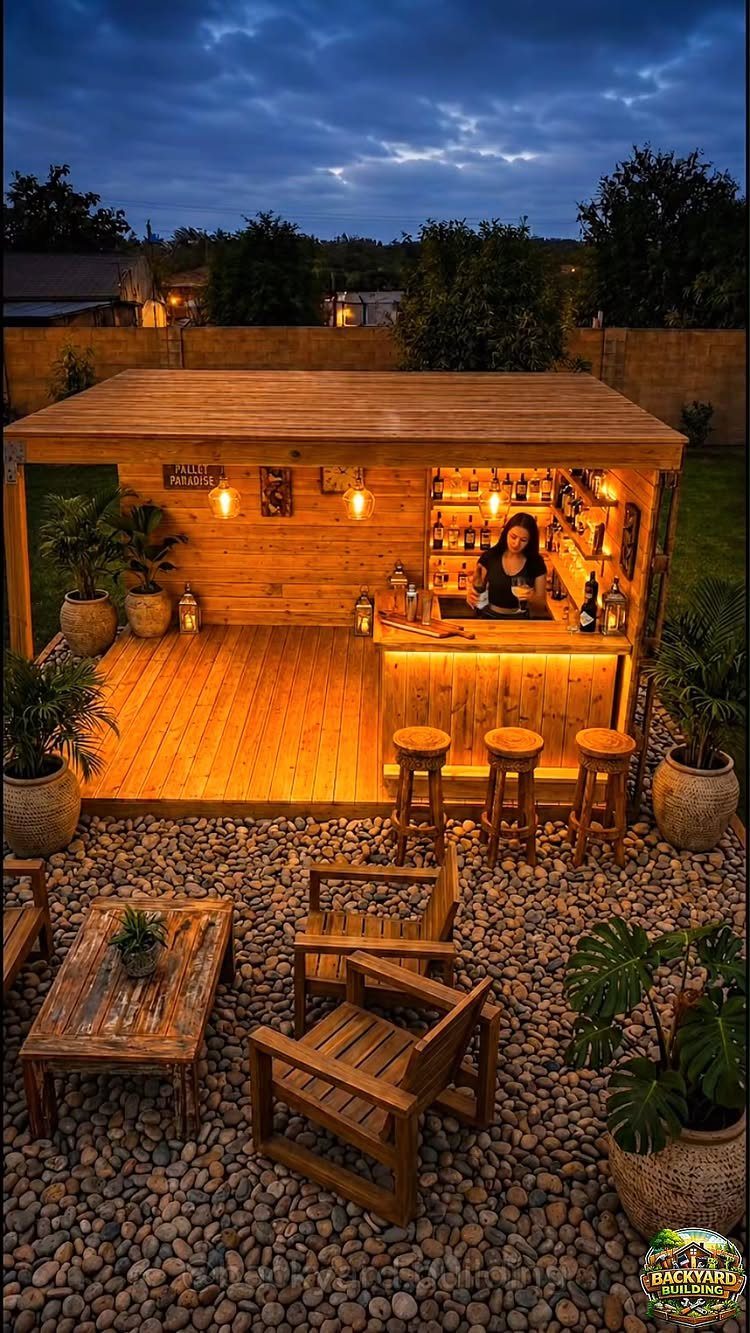
An outdoor bar turns a backyard into the default stop before restaurants.
The visible structure runs wood walls, a roof for weather, backlit bottles, and seating that stays put on a rock patio. Pallet wood builds the bar itself cheaply; the structure and electrics are where the money goes.
I would place it between kitchen door and the gathering spot, not at the far end of the yard.
The person working gets conversation, not isolation, and refill trips stay short. Bar stools that match standard counter height keep the surface near elbow level; short stools leave you staring up at a raised surface.
Weatherproofing the bottles and the wiring matters more than weatherproofing you; people move inside, inventory does not.
A mini-fridge under the counter beats ice runs every hour. One builder used reclaimed wood for the front face and painted plywood for the sides that don’t show; the face is what photographs and what guests remember.
12. Outdoor Kitchen
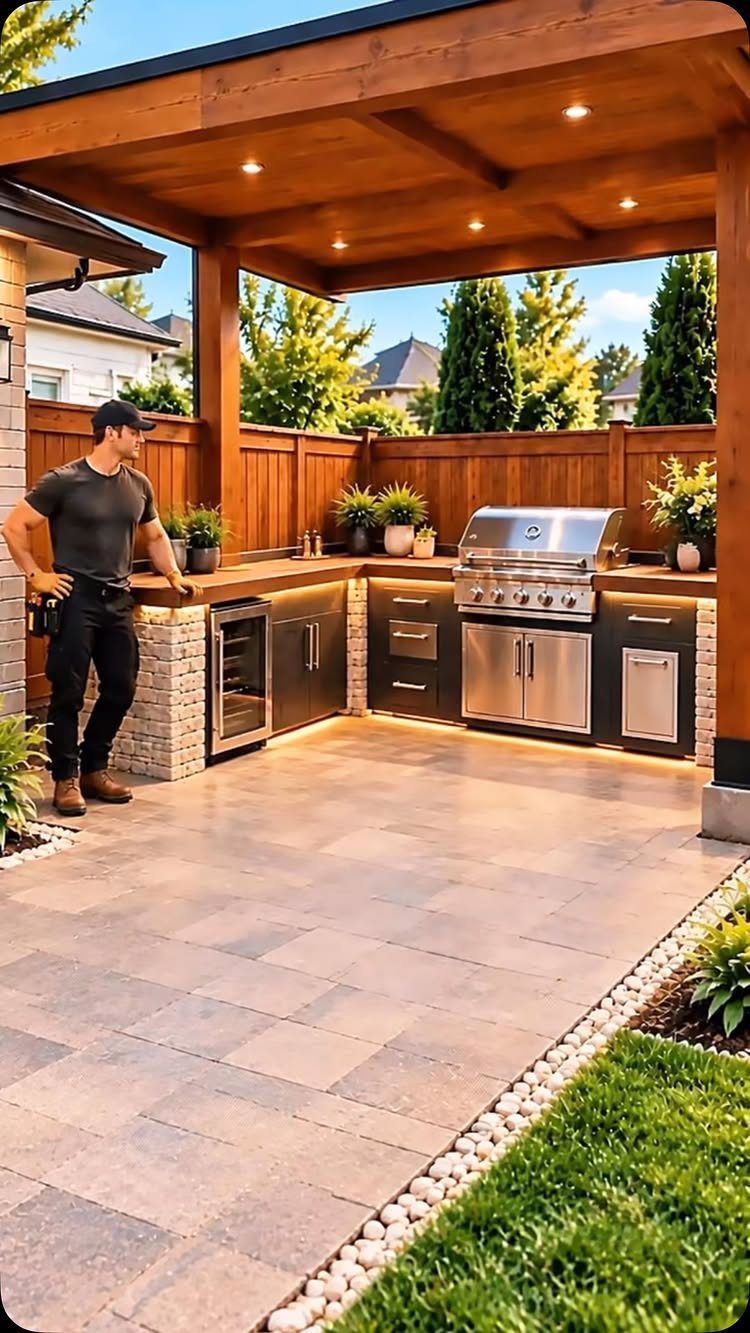
An outdoor kitchen keeps the cook with the guests instead of running in and out. The visible one tucks a grill, mini-fridge, and counter space under a pergola roof, with stone facing and wood details that match the house.
Weatherproof cabinets and countertops run from $1,000 in stock poly-resin to $52,000 in custom stone and appliances.
I would spend on the cabinet boxes first; doors and drawer fronts can upgrade later, but rotted carcasses mean rebuilding. Stainless steel near the grill handles heat and grease; stone counters away from flame zone handle prep and plating.
Store dishes and utensils out here if you mean to use it, or you will still walk to the indoor kitchen for every other thing.
A basic set of plates and tools dedicated to the space, the way rental cabins equip theirs, saves the indoor set from weather and grime.
Standard kitchen cabinets with marine-grade seal on the edges hold up better in weather than premium sets that vent wrong and warp.
Check local code before running gas yourself; a licensed line is not a place to save.
13. Built-In Seating
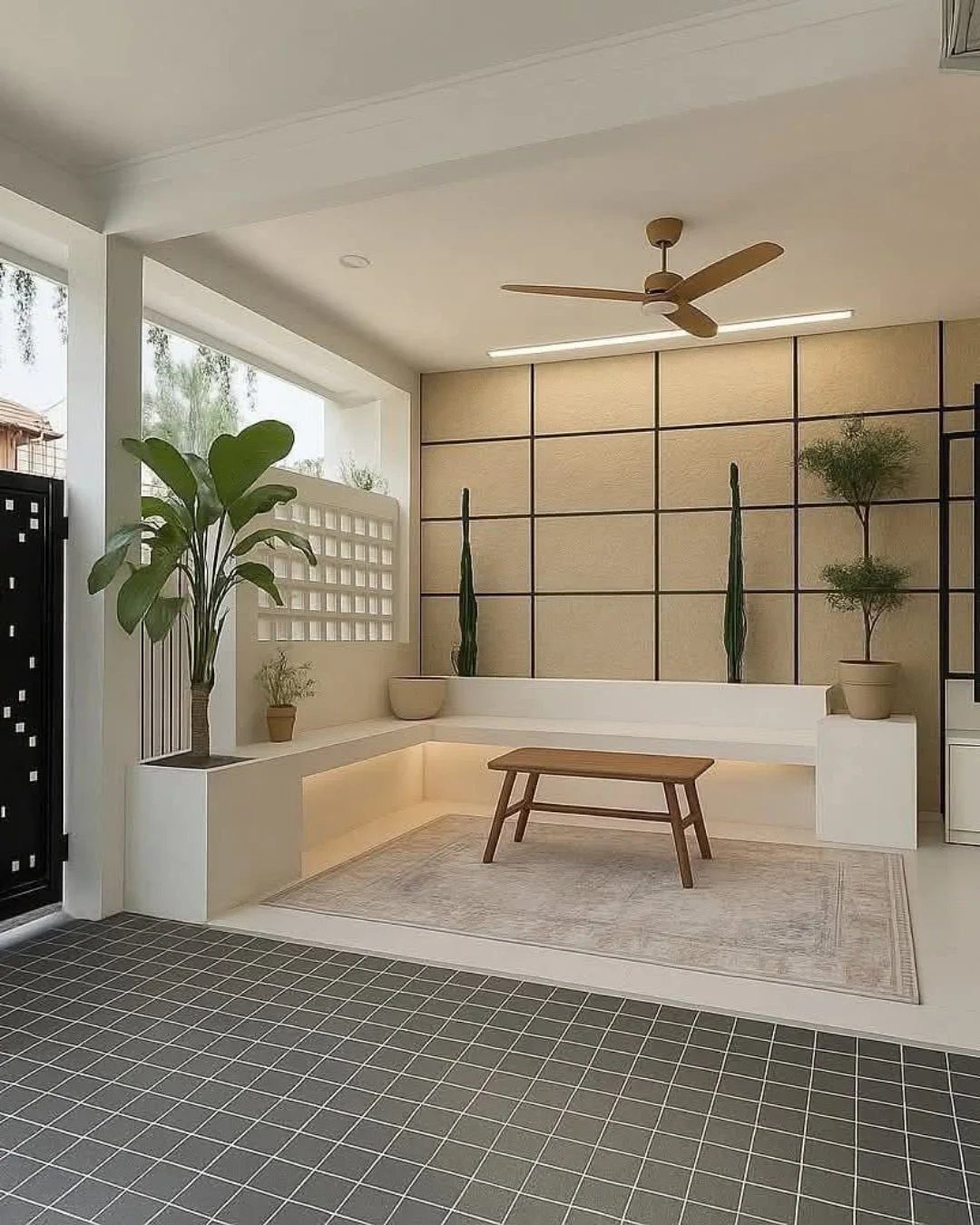
Built-in seating turns a perimeter into useful space without stealing square footage from the yard. The visible bench runs L-shaped under a roof, with planters at one end and light washing up from below the seat.
Wood framing with exterior-grade paint lasts longer than the composite boards that sag under their own weight after 2 humid seasons. I would run the lights on the same circuit as the ceiling fan so nothing needs separate switching.
Seat height that matches standard chairs keeps adults from pushing up from their knees; too low and the bench becomes a chore to leave. Planters beside the seat give structure but need drainage that does not rot the bench legs.
Cost runs lower than the equivalent number of chairs and the deck space they would need. Storage lids under the seat give cushions a dry home when rain comes.
14. Outdoor Rugs
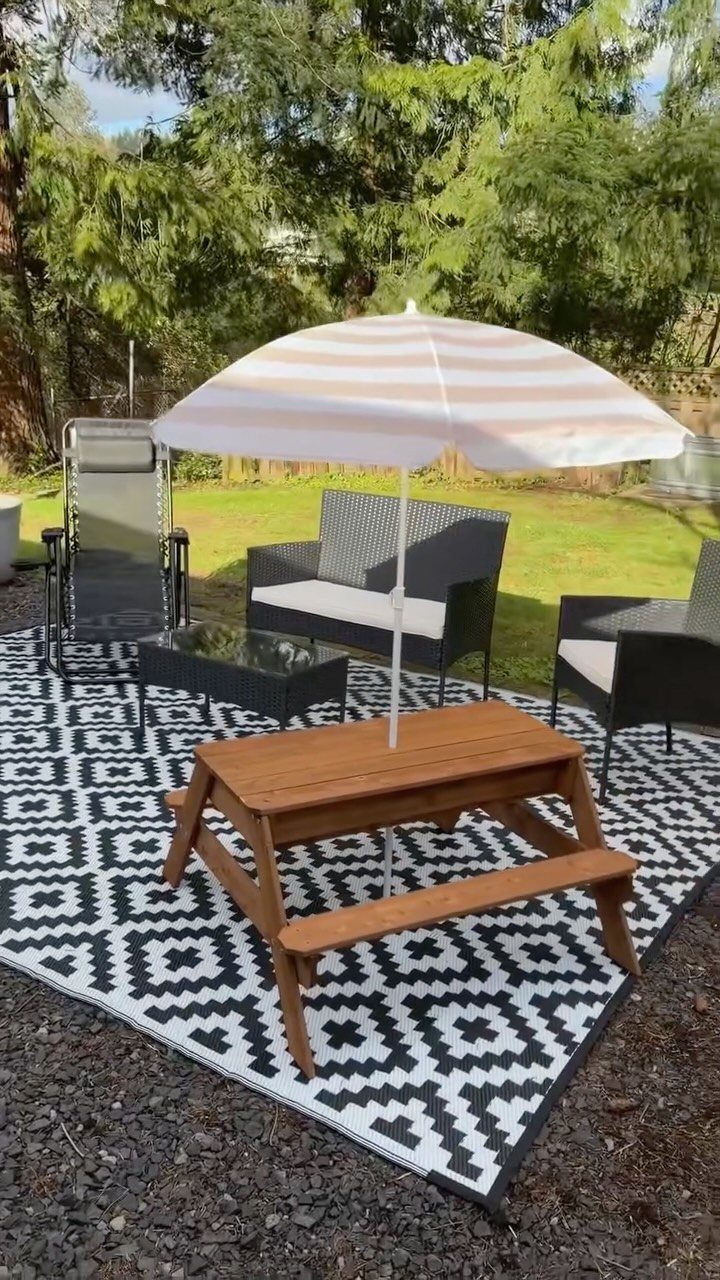
A rug underfoot signals that this patch of patio is a room, not just more yard.
The visible one runs black and white geometry under a picnic table, which works because the pattern hides the spills and grit that outdoor life deposits.
Polypropylene or PET fiber dries fast and resists mildew; natural fibers rot and stain. I buy rugs with a coated underside so they do not slide on stone or composite decking.
Patterned rugs forgive more than solid colors, and dark grounds hide soil between cleanings. A rug that extends past the furniture footprint keeps chair legs from catching the edge.
Hose it flat and let it dry in sun, or roll it for winter storage if your winters are wet enough to grow mold in the pile.
UV and foot traffic wear outdoor rugs down; plan on replacement and buy accordingly.
15. Outdoor Chalkboard
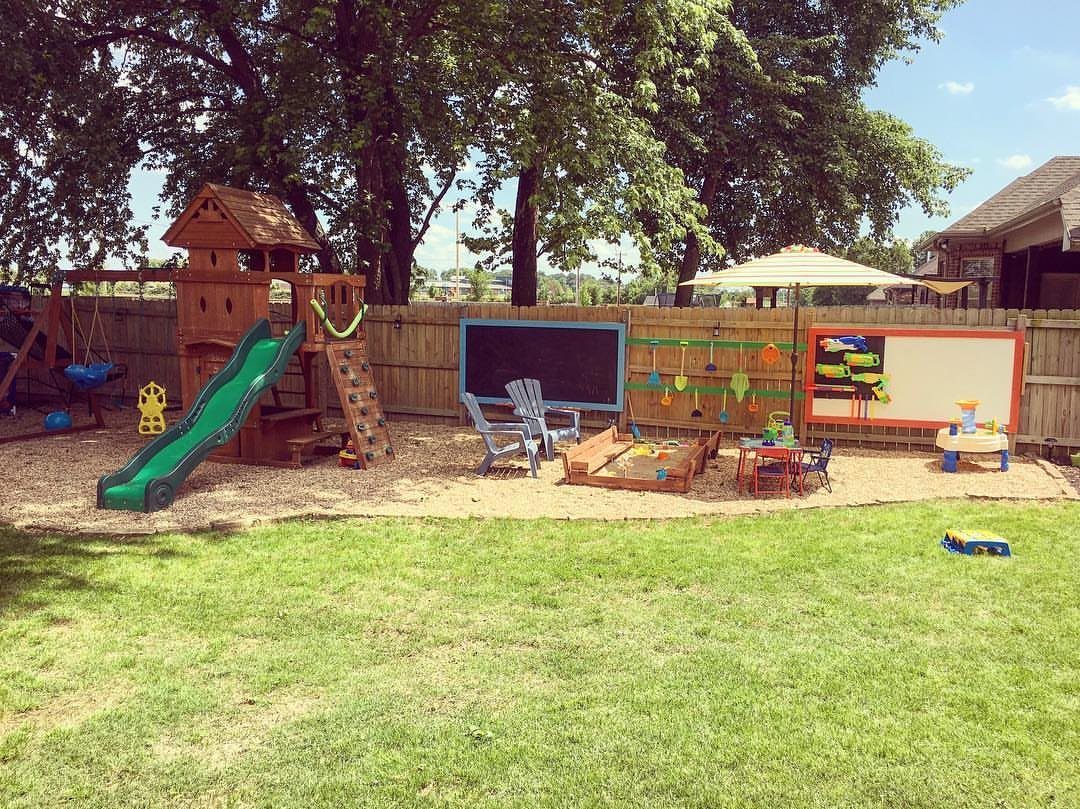
A chalkboard on the fence gives kids a vertical surface that does not use patio floor space or require supervision the way an easel on pavement does. The visible one mounts beside a playset, at height for standing children.
Exterior-grade plywood with chalkboard paint costs less than a framed school board and survives rain if you reseal the edges each spring. I would add a small shelf or tray for chalk so it does not live in the grass.
Fence mounting needs solid backing where the fence rails run; a wobbly board frustrates small artists. Screws rather than nails let you remove it for resurfacing.
A whiteboard side, if you build one, needs markers rated for outdoor use; standard dry-erase runs in humidity. One maker used marine-rated hinges to make the board double-sided for variety.
16. Natural Swimming Pool
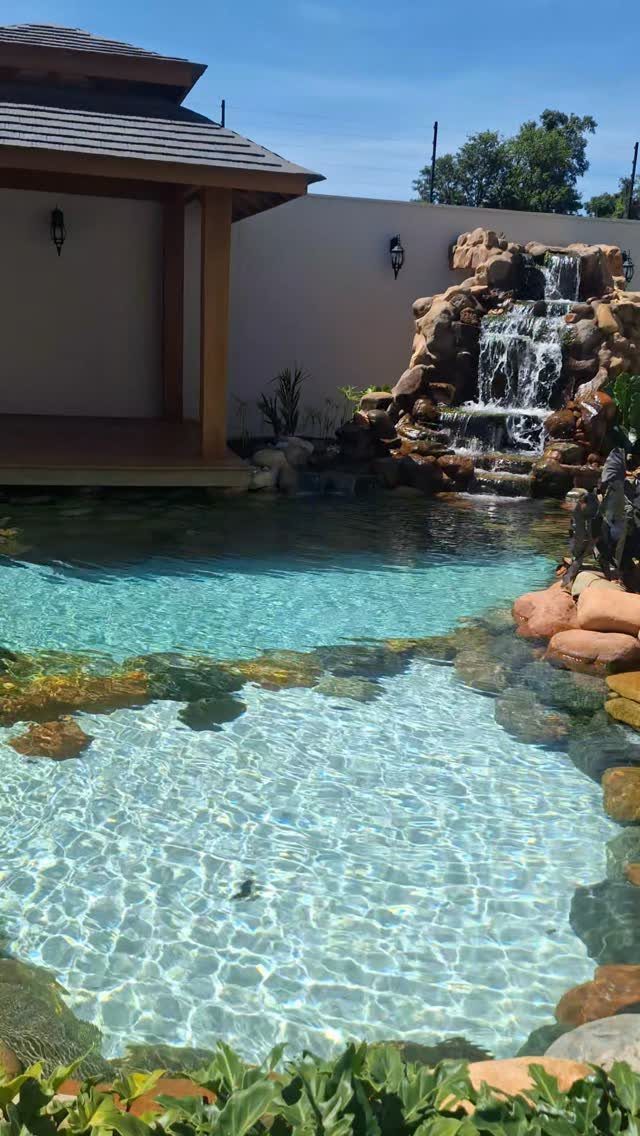
A natural pool uses rooted plants and a gravel bed instead of chlorine to keep water clear enough to swim.
The visible one tiers down with a waterfall, rocks, and planted edges so it reads as a pond that happens to be deep enough to wade in and sit on a submerged ledge.
2 zones make it work: a swimming area deep enough to actually swim, and a shallow regeneration zone where plant roots do the filtering. Water circulates between them; the system needs a pump but no chemical testing.
Construction runs roughly double a conventional pool, and the plant zone adds surface area you cannot swim. In most climates it stays usable from late May through September; winterizing means letting the pump run or draining lines.
Gravel substrate over liner, not dirt, keeps plant roots from puncturing. One builder used local stone for the waterfall to match regional geology; the more it looks like it grew there, the less maintenance reads as failure.
17. Outdoor Movie Area
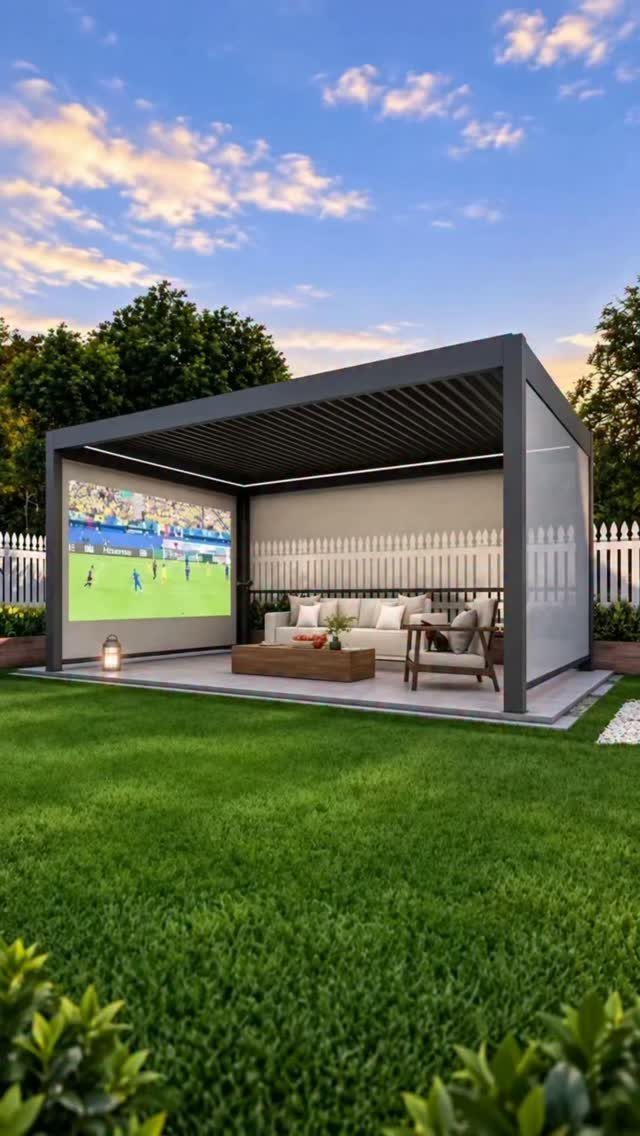
A projector and screen turn a pergola into a theater after dinner without building anything permanent.
The visible setup hangs a screen on the pergola frame, with a sofa and armchair arranged at a distance that fills the field of view.
Short-throw projectors need less throw distance and suffer less from ambient light; standard throw models are cheaper but want more distance and darker skies. I would run power to the pergola posts during construction rather than snaking extension cords.
Screens that tension with grommets and bungees stay flatter than the inflatable ones that shift in breeze. Seating at screen height or slightly below keeps necks comfortable through a feature.
Sound from built-in projector speakers carries badly outdoors; a bluetooth speaker near the seating fixes it. Start the film at full dark in summer, or the image washes out; in winter, earlier showtimes work fine.
18. Hammock
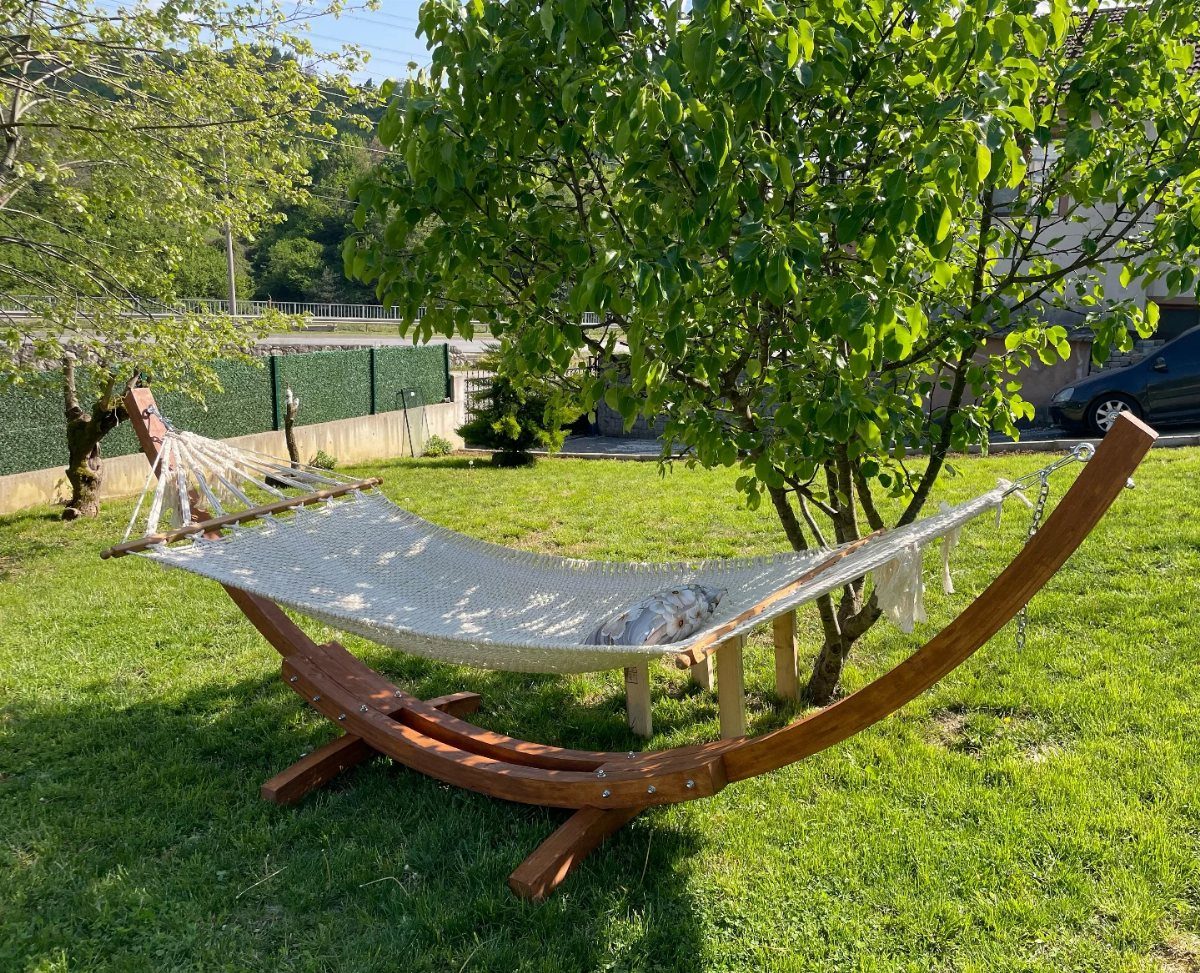
A hammock lets one person occupy shade that would not fit a chair and side table. The visible rope hammock hangs on a curved wooden stand, which matters because the tree beside it is too young to bear weight.
Spread-bar hammocks hold the fabric open for easy entry; Mayan-style gathered ends wrap around you and need practice.
Wooden stands weigh enough to stay put in gusts; metal ones cost less but need staking to the ground for the same stability.
Fabric stores sell outdoor-rated mesh that dries faster than cotton rope and does not rot. I would place it where morning or afternoon shade already falls, since mounting a shade sail overhead complicates the setup.
Stands need length clearance and enough width for the arc; measure your spot before you buy. A small side table for a drink and a book belongs close enough to reach but far enough to miss in the swing.
19. Fencing
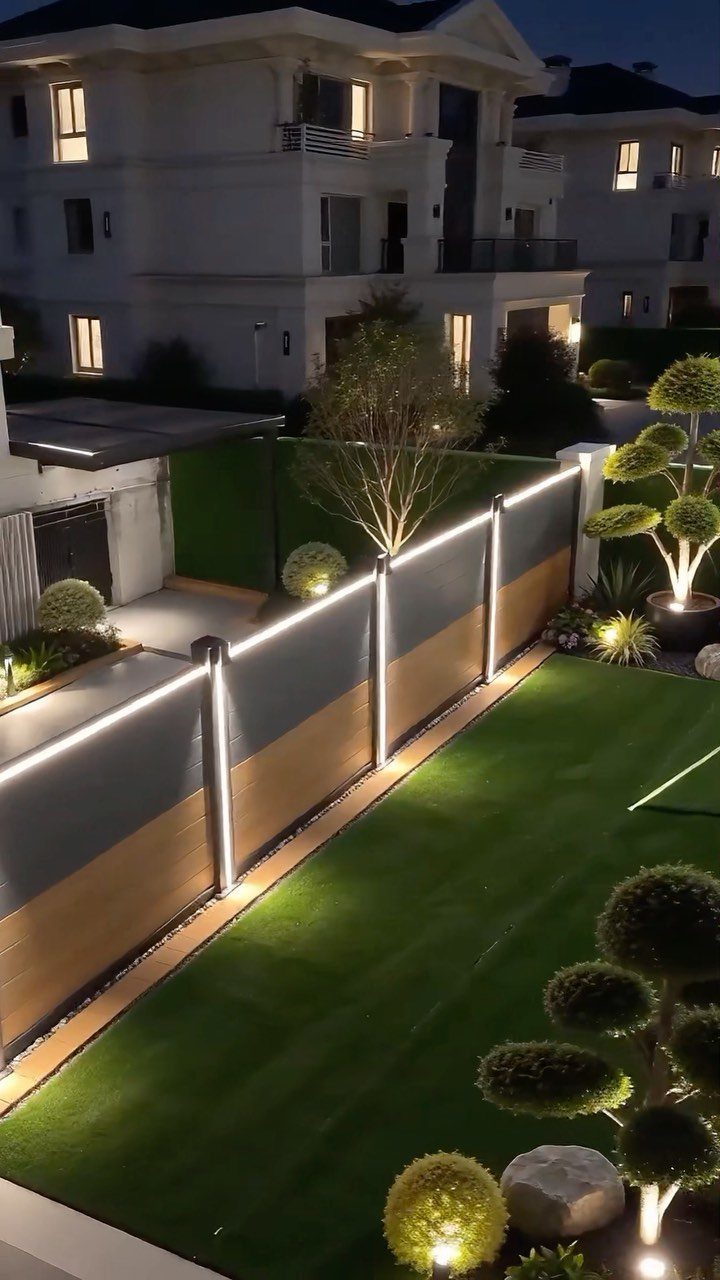
Routed channels for LED strips run along horizontal fence panels so the structure doubles as lighting without opening sightlines to the neighbor’s yard. The visible panels run warm white from top and uprights, which reads as architecture rather than decoration.
Wood species matter for horizontal layout; cedar and redwood resist warping across the grain better than pine, which cups and opens gaps.
I set posts in concrete at close enough centers that long boards stay flat and do not bow outward between supports.
Power needs outdoor-rated transformers and conduit, not extension cords buried shallow. The money sits in lumber and digging; lighting adds less than most assume and sells the yard later.
Dark stains hide the LED channels in daylight; paint shows them as stripes. Match the top rail to house trim so the fence belongs to the property, not just the yard.
20. Climbing Wall
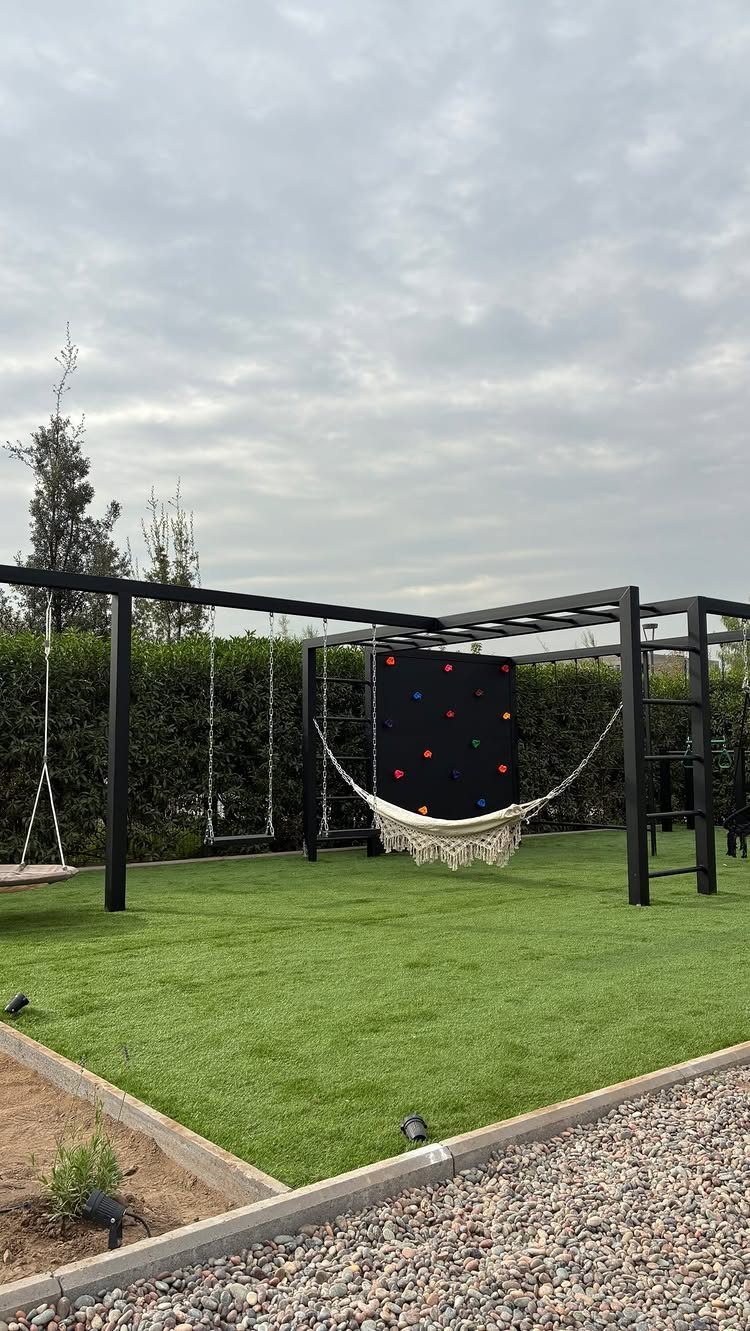
A climbing wall on a metal frame turns a swing set into something kids use after they outgrow the bucket seats. The visible holds bolt through plywood in bright colors that show footholds against the black frame.
Pressure-treated plywood backing resists rot; exterior-grade paint over primer keeps the surface from splintering. I would space the first row of holds low enough for first graders to start, with harder routes marked by color for older kids.
Fall zone padding matters more than how high the wall stands; rubber mulch or a landing mat thick enough to compress under a child’s weight catches tumbles.
The frame needs concrete footings once it stands above picking height, and local code may require engineered plans.
Holds wear smooth and bolt holes wallow out; buy replacements in standard socket sizes so wrenches match. One parent rotated holds quarterly to force new movement patterns and keep it interesting.
21. Outdoor Shower
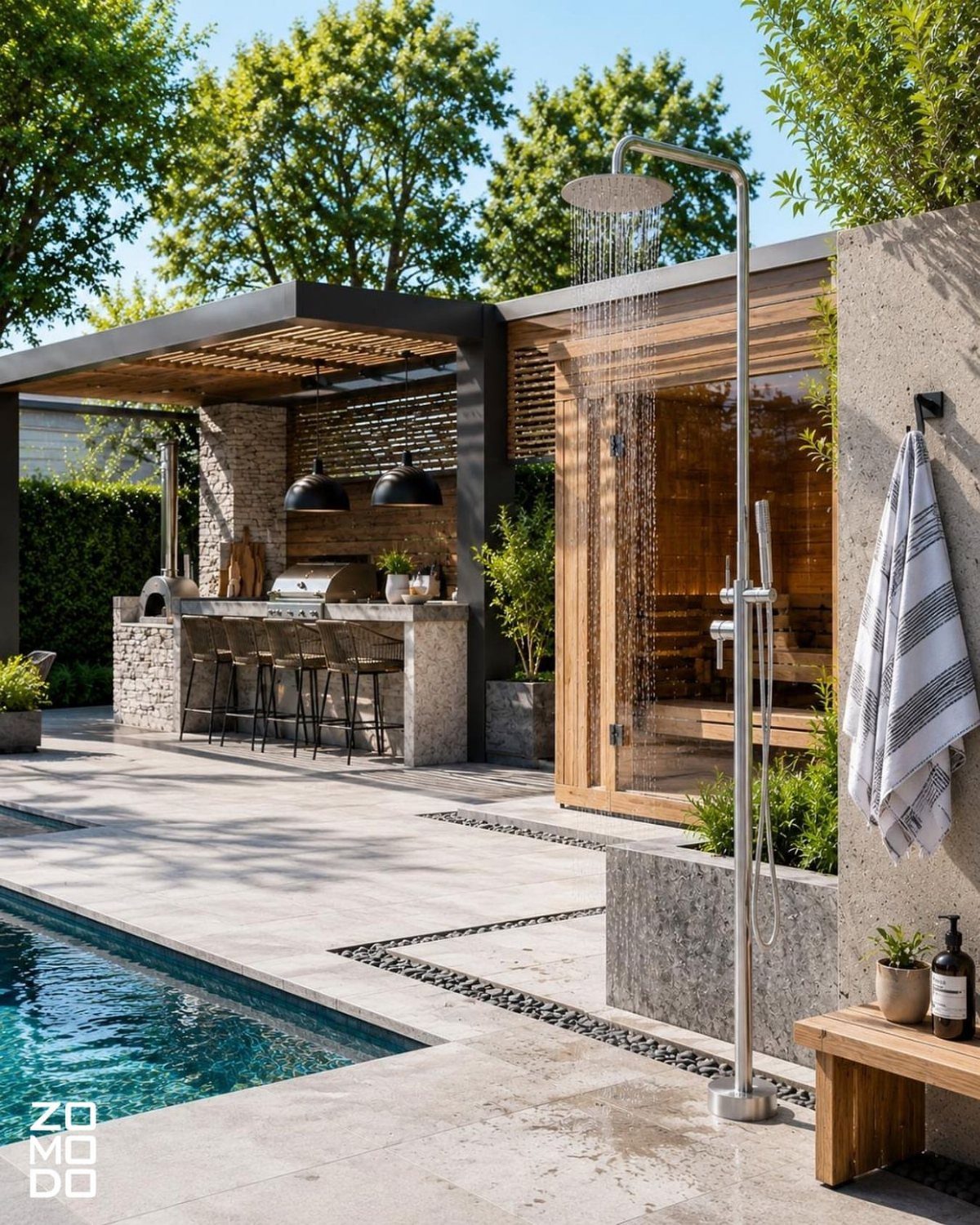
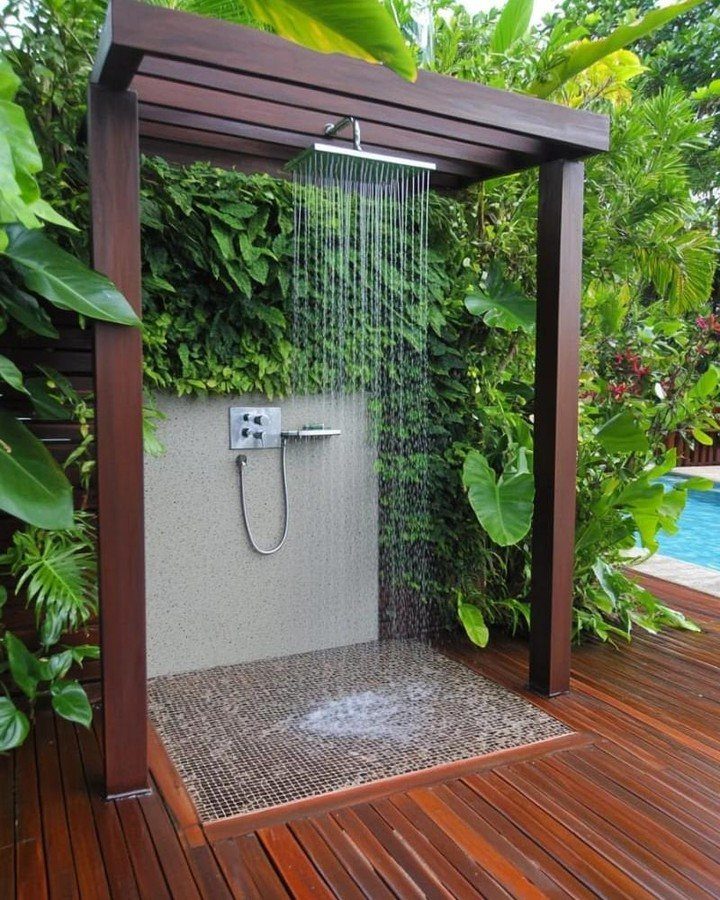
A freestanding outdoor shower lets swimmers rinse before they track water into the house or the pool filter.
The visible one runs stainless steel on a stone patio, with a rainfall head that needs no enclosure to feel like an event.
Cold-plumbed showers cost little more than a hose bib and a riser; hot water needs a dedicated line from the house or a tankless heater sized for the flow rate.
I would run hot if the pool sees evening use, since September nights cool fast.
Drainage to a gray-water bed or the lawn keeps code inspectors happy; a simple french drain of gravel and perforated pipe handles light use.
Privacy comes from placement, not walls; tuck it where the fence and a shrub already block sightlines.
Stainless or marine-rated brass survives the cycles; chrome pits in months. Floor texture matters when soap is involved; brushed finish or teak slats underfoot beat smooth metal for traction.
22. Food Sources for Birds and Butterflies
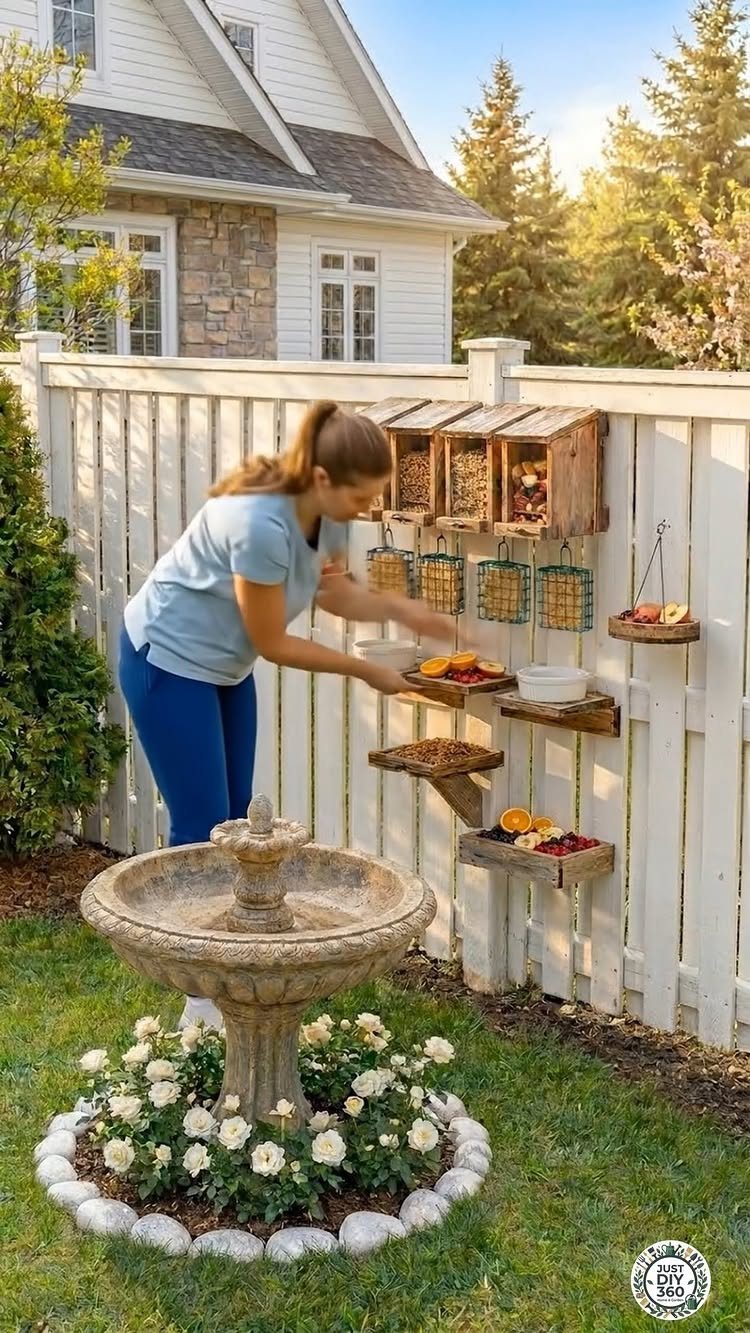
Bird feeders and fruit stations mounted on a fence bring activity to a yard’s edge without the ground space a full habitat demands.
The visible setup runs suet cages and seed trays on a white fence, with a stone bath below for water.
Black oil sunflower seed attracts the widest range; nyjer in a sock thistle feeder brings finches alone. I would add one fruit station for orioles in season, since the same fence space serves different species in sequence.
Fresh fruit needs daily replacement in heat; it draws wasps and raccoons if it sits. Suet goes in slow-spoil cakes from October through March; summer sun renders it rancid in hours.
Water in a shallow basin with sloped sides lets birds bathe without drowning; a depth birds can stand up in covers most species.
Move the bath every few days to keep mosquito larvae from establishing, or add a bubbler they cannot breed in.
Native shrubs behind the fence give cover the feeders cannot; birds flee to branches, not to open lawn. One gardener planted serviceberry for spring fruit and fall color, which fed the birds without restocking.
Budget-Friendly Options
A pressure wash on existing patio or deck costs almost nothing and changes how the space feels.
Fencing runs high upfront but pays at resale if you choose right. Chain-link and stockade fence styles each carry different price tags and lifespans; check what sells in your neighborhood before you commit.
Birdseed feeders, fruiting shrubs, and a simple water source turn a corner into something moving.
A pond with waterfall is one option; a modest birdbath is another. Both need refilling and cleaning, though the birdbath is the easier of the two, with no liner to scrub and no filter to chase down.
Mulch, string lights, and one outdoor pillow do more than their price suggests if you hit the spots that actually show. My rule is function first, beauty second, and both have to survive a real weekend.
Maximizing Small Spaces
Tight zones in a tight space work only if you keep the palette tight; too many colors and the eye reads clutter instead of room.
Foldable furniture and gas fire pits that double as coffee tables earn their floor space twice over. I would rather own one piece that flips open for storage than two that jockey for the same patch of concrete.
Wall planters and trellises grow upward because ground is what you do not have. A rug under a small table and 2 chairs turns a balcony into an outdoor room; the rug does the defining, not the walls.
Every item needs a reason or it goes.
Creating Zones
Outdoor rugs mark where the grill area ends and the living area begins.
A row of potted plants on a deck rail can split a dining table from a hot tub without permits, posts, or a single hole in the board.
The division is visual, not structural, and that matters for renters and anyone still deciding.
A solid overall plan saves time and money because you know what comes next. Style follows the house; modern against farmhouse reads as mistake, not contrast.
Technical constraints come after inspiration: square footage, elevation, what sits next to what. Banken has the right order here, and I have spent enough on wrong guesses to agree.
Defined zones let more than one person use the yard without negotiation.
One cooks, one reads, neither interferes. The backyard becomes an extension with rooms like the house has, just without doors.
Incorporating Nature
Native plants and xeriscaping drop maintenance hours enough that you actually sit in the yard you built. Artificial turf or expanded garden beds replace grass that needs mowing, water, and the chemistry to keep it green.
Lawns left perfect enough for a magazine cover tend to keep their owners busy and their chairs empty; a little mess invites the sitting first.
Sustainable choices are not a separate category; they are the low-maintenance choices by another name. Less water, fewer inputs, more time for use.
Artificial turf heats in full sun and needs replacement timelines of its own; calculate that before you rip out living grass.
Every swap has a trade, and the right answer depends on how you actually use the space, not how you imagine it.
Frequently Asked Questions
What adds the most value to a backyard?
Fire pits hit hardest per dollar, followed by outdoor kitchens and built-in seating that turns perimeter space into usable square footage.
Landscaping with native plants drops costs after the first year while still looking maintained. Fencing returns well too, though the upfront cost stings.
What are some new backyard ideas for 2026?
Built-in fireplaces with stacked stone up the full wall are showing up more as people want year-round gathering spots.
Custom treehouses have moved past kits into proper build projects with covered roofs for rain days. Natural swimming pools using plant zones instead of chlorine keep gaining traction too, though they cost about double conventional pools.
How do I make my backyard look nice for cheap?
String lights, fresh mulch, and a pressure-washed patio surface change the feel without much money spent.
Native plants cost less to keep alive than anything that needs watering through August. Pallet wood builds bars or planters free if you have source contacts, and a thrift-store pot collection beats matching sets from garden centers.