The Sun Valley Maple wins this list for one reason: it tops out at 20 ft, grows fast enough to matter while you still live there, and still hands you something to look at in October.
That combination is harder to find than nursery tags suggest.
The trade is straightforward: you get no spring fragrance, and if you need a statement flower for a permanent home, the Sweetbay Magnolia down the list will feel like the real prize.
[link-whisper-related-posts]My Top Picks
| Product | Award | Best for | Why it won | ||
|---|---|---|---|---|---|
 | Acer rubrum Sun Valley Maple | Best Overall | Buyers wanting balanced versatility | Strong mix of size, beauty, and climate fit with no major trade-offs | Check price |
 | Acer palmatum Japanese Maple | Best Ornamental Tree | Homeowners prioritizing beauty and curb appeal | Stunning looks and compact size perfect for ornamental focal points | Check price |
 | Magnolia Stellata | Best Small Yard Tree | Small yard owners needing faster growth | Compact and pretty but grows quicker than other small-space options | Check price |
 | Sweetbay Magnolia | Best Wildlife Tree | Gardeners attracting birds and pollinators | Fragrant blooms and adaptable nature draw plenty of wildlife | Check price |
 | Ilex × attenuata 'Eagleston' Eagleston Holly | Best Low-Maintenance Tree | Busy owners in hot, humid climates | Dense evergreen stays tidy with little care in tough heat | Check price |
 | XUXDUHY 25” Cedar Topiary Ball Tree | Best Artificial Topiary Tree | Buyers wanting zero upkeep | Always-perfect round shape without watering, pruning, or mess | Check price |
 | Jasmpig Artificial Red Eucalyptus Topiary Ball Tree | Best Decorative Eucalyptus Tree | Owners seeking bold color accents | Unusual red foliage adds eye-catching contrast to typical greenery | Check price |
For sale is one Sun Valley Maple tree that is approximately 10-16" tall and shipped in a quart pot
Best Overall: Acer rubrum Sun Valley Maple
For sale is one Sun Valley Maple tree that is approximately 10-16" tall and shipped in a quart pot LIGHTNING-FAST SHADE CREATION - Rockets upward at an amazing 4-5 feet...
Quick Verdict
A compact shade tree that actually earns its spot in a small front yard is harder to find than the nursery tags suggest.
The Sun Valley Maple fits that role because it tops out at 20 ft, grows fast enough to matter while you still live there, and still hands you something to look at in October.
The trade is straightforward: you do not get the Sweetbay Magnolia’s late-spring perfume, and if you are chasing a statement flower, this is not your tree.
Key Specifications
- Mature Size: 20 ft
- Sunlight: 6 hours
What It Does Well
- Stays house-scaled. At 20 ft mature, it shades a porch or patio without threatening the roofline or the sidewalk; owners in older neighborhoods with tight setbacks mention this specifically.
- Runs on part-day sun. Six hours of direct light keeps it healthy, so an eastern or partial-southern exposure that would fry a thirstier maple works fine here.
- Puts on a fall show. The color is the main seasonal event, and it arrives without the leaf-raking marathon a larger deciduous tree demands.
- Grows while you watch. Fast growth rate means the post-planting wait for actual shade is measured in a few seasons, not a decade.
Where It Falls Short
- No flower to speak of. The Sweetbay Magnolia owners I read kept bringing up fragrance; this tree offers nothing comparable in spring or summer.
- Wildlife value is background, not spectacle. It supports local birds and insects, but if you want a tree you point out to visitors for that reason, the visual reward is subtle.
- Fast growth can mean softer wood. Some owners note branch structure needs a watchful eye in ice storms or heavy wind until the trunk thickens.
Who It’s For
Your weekend project budget and a rental timeline both point toward a tree that establishes quickly and does not outgrow its welcome.
The Sun Valley Maple suits that exact pressure: plant it, see results before you move, and leave no root crisis for the next tenant.
Someone set on a fragrant flowering tree for a permanent home will find the fall color here feels like a consolation prize, and the six-hour sun minimum still rules out a true shaded north side.
How It Compares
The Sweetbay Magnolia asks more of you in exchange for that white bloom and scent: wetter soil attention, a slower pace, and more patience for a tree that can look sparse while young.
The Sun Valley Maple is the lower-drama choice for a first-time planter working around a job and a lease.
Flip the comparison, and the Magnolia rewards the owner who has moist soil already, plans to stay, and wants spring to announce itself from the driveway.
Where to buy: Amazon
Best Ornamental Tree: Acer palmatum Japanese Maple
🍁 Iconic Japanese Maple – Acer palmatum ‘Bloodgood’ with deep red foliage spring to fall 🌱 Healthy 2-Year Live Tree – Professionally grown, shipped rooted and...
Quick Verdict
For renters and first-home owners who want one tree to carry the whole yard, this is the ornamental that earns its space.
The Japanese Maple tops out at 25 ft, small enough for most suburban lots without crowding the house, and the seasonal color shifts give you something to watch from your kitchen window.
The shallow root system means you will need to plan around patios and foundations, but that same compact footprint is what makes it workable where a larger shade tree would not be.
Key Specifications
- Mature Size: 25 ft
What It Does Well
- Full sun to partial shade tolerance opens up placement options most maples do not have; a corner that gets morning light and afternoon shadow still works.
- Low maintenance needs mean weekend gardeners can keep it alive without a calendar of pruning appointments.
- The slow growth rate keeps you from outgrowing your space in five years; owners describe keeping theirs in check for decades.
- Wildlife use it for shelter and food, so your yard earns its place in the local ecosystem without extra effort on your end.
Where It Falls Short
- That shallow root system competes with anything planted underneath and can lift nearby paving if you site it too close.
- USDA zones 5-8 exclude the deep South and most of the northern Plains; check your zone before you dig.
Who It’s For
Someone with a modest yard who wants real impact without weekend-eating upkeep will find this tree fits their life.
The buyer who needs fast coverage for privacy or shade should look elsewhere; slow growth means you will still be waiting when your neighbors have moved on to other projects.
How It Compares
The Star Magnolia matches the Japanese Maple for beauty and small-space fit, but owners report it grows even slower and its spring bloom window is brief.
Where the magnolia gives you two weeks of white flowers and green the rest of the year, the maple hands off from red spring leaf to summer green to fall crimson.
Choose the magnolia if you want one spectacular event; choose the maple if you want the yard to earn its keep across three seasons.
Where to buy: Amazon
Best Small Yard Tree: Magnolia Stellata
10 STAR MAGNOLIA Stellata TREE Seeds - Fragrant White to Pink Big 4

The Ilex x attenuata ÔEaglestonÕ is a natural hybrid of the Dahoon Holly and American Holly. The Eagleston Holly is a beautiful evergreen holly that is grown as a large shrub or small tree with a pyramidal growth habit. The tree has a dense canopy with small slender branches which are smooth and light to medium gray in color. During the cooler months, it produces an abundance of bright red, fleshy, round berries.
Quick Verdict
A small yard does not have to mean small drama.
The star magnolia opens early in the season with white flowers on bare branches before most neighbors have anything blooming, and its 16.4 ft mature height keeps it under utility lines and out of foundation trouble.
Patience is the hard part: moderate growth means you are looking at years, not seasons, for that rounded canopy to fill in.
Someone who wants shade this summer will be disappointed; someone who plans to stay put will watch it become the yard’s focal point.
Key Specifications
- Mature Size: 16.4 ft
- Climate: 5
What It Does Well
- Early spring flowers arrive before foliage. Bare branches carry showy white blooms weeks ahead of most landscape plants, giving your yard color when everything else reads as dormant.
- Fibrous, spreading root system stays cooperative. Unlike trees with thick anchoring roots, this structure plays nicer with nearby patios, sidewalks, and modest-sized planting beds.
- Zone 5 hardiness opens up most of the northern Midwest and Northeast. Owners in cold-winter cities report reliable returns each spring where marginally hardy ornamentals fail.
- Low maintenance once established. No complicated pruning regime or spray schedule; the tree largely manages its own shape.
Where It Falls Short
- Moderate growth demands a long view. If you need structure or screening soon, this tree will not deliver on a weekend-project timeline.
- Full sun to partial shade requirement limits placement. Narrow side yards or heavily shaded townhouse courts may not offer enough light for consistent blooming.
- Wildlife support is seasonal, not structural. Early blooms help pollinators, but the tree does not offer the dense nesting cover or mast that longer-season natives provide.
Who It’s For
The renter or first-time owner with a postage-stamp front lawn and a five-year horizon fits this tree well: it stays small enough to not terrify the landlord or the neighbor, and it rewards the wait with spring spectacle.
The buyer who needs instant curb appeal for a sale next spring should look elsewhere; the moderate growth rate will read as a stick with potential, not a finished statement.
How It Compares
Against the Japanese Maple, the star magnolia trades patience for impact.
The maple’s slower growth means even longer waits for visual weight, though its traditional leaf form and fall color suit buyers who want year-round texture rather than a single seasonal event.
Choose the magnolia if your priority is early spring impact in a cold climate; choose the maple if you prefer understated structure and can accept a decade-scale timeline.
Where to buy: Amazon · servescape.com
Best Wildlife Tree: Sweetbay Magnolia
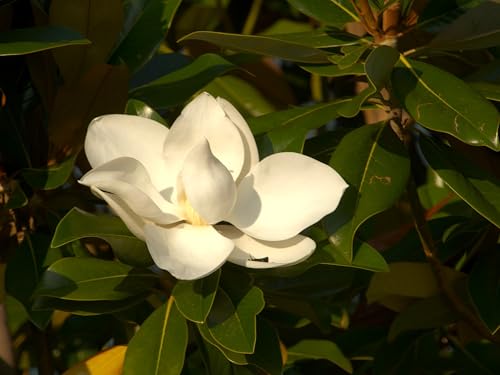
🌿 [INFO1] - Discover the Sweetbay Magnolia (Magnolia virginiana), a beautiful deciduous tree known for its creamy white blossoms and enchanting fragrance. This versatile...

Lifelike Design: The artificial red eucalyptus topiary ball tree features lifelike gradient green leaves and delicate textures. This fake bushes is soft, adjustable branches for planting on both sides of the entry door or in the garden to bring vibrant green to your home


LIFELIKE & LUSH APPEARANCE – Elevate your space with our meticulously crafted artificial topiary tree, designed to replicate the natural beauty of real greenery. Featuring a highly realistic appearance and sturdy ground stakes, it can be easily placed in pots, planters, porches, or garden beds, adding timeless elegance to both indoor and outdoor settings.
Quick Verdict
Gardeners who want a tree that earns its keep for more than two seasons will find the Sweetbay Magnolia hard to beat.
Its summer-blooming white flowers carry a fragrance that brings in pollinators and the birds that follow them, and the species tolerates wet feet better than most ornamentals.
Patience is the hard part; the 50 ft mature height arrives on an average growth rate, so budget several years before it fills a corner.
Key Specifications
- Mature Size: 50 ft
What It Does Well
- Fragrant summer flowers that open white and draw pollinators at a time of year when spring-blooming trees have finished.
- Adaptable root structure handles both drought and flooding, which matters in low spots where other trees rot or on berms that dry fast.
- Hardy in climate zones 5A to 10A, a wider band than many magnolias, so renters who move between regions can transplant it with reasonable hope.
- Butterfly larvae feed on it, adding a layer of wildlife value beyond the adult insects the flowers attract.
Where It Falls Short
- Average growth rate means visual impact comes slowly; this is not the tree for someone who needs shade next summer.
- Full shade to full sun range sounds flexible, but heavy shade cuts flowering, so placement still matters more than the label implies.
- 15 to 25 ft spread needs room; squeeze it against a fence line and you will fight shape rather than enjoy it.
Who It’s For
A renter or first-home owner with a damp backyard and a weekend planting habit can set this in a wet corner and walk away.
Someone who wants immediate curb appeal for a quick sale should look elsewhere; the Sweetbay Magnolia builds character slowly, and that is the detail that decides it.
How It Compares
The Sun Valley Maple carries more visual drama in autumn and grows faster, which suits the buyer who needs impact on a shorter timeline.
The Sweetbay Magnolia trades that flash for ecological function; its flowers feed adult pollinators while its foliage feeds their larvae, a combination the maple does not match.
Pick the maple for the view from your kitchen window, the magnolia for the life you want moving through your yard.
Where to buy: Amazon
Best Low-Maintenance Tree: Ilex × attenuata 'Eagleston' Eagleston Holly
The Eagleston Holly can be used for a variety of landscape settings as either a tall screen or a solitary specimen when grown with a single trunk in tree form. Eagleston...

Due to agricultural laws, we CANNOT SHIP TO CA, AZ, AK, or HI - orders will be cancelled if you ship to one of these states

Brilliant Fall Color: these heirloom seeds grow into scarlet maple trees to 80 feet with red fall foliage and reddish twigs, a classic shade tree and fall tree for yards and outdoor gardens.

Breathable Material: Made of lightweight non-woven fabric, our fruit tree shade net blocks sunlight while maintaining air circulation, effectively preventing sunburn for your plants during hot seasons
Quick Verdict
Small evergreens that stay tidy without pruning are rare in Gulf Coast heat, and this one keeps its shape through Houston summers that turn most hollies ragged.
The narrow 8 ft spread suits planting strips between sidewalk and foundation where a wide oak would crack concrete or block windows.
Shade is not the point here; you give up canopy depth, so plan on a patio umbrella or a separate shade tree if your driveway gets afternoon sun.
Key Specifications
- Mature Size: 15 ft
- Mature Size: 8 ft
What It Does Well
- Dense branching to 15 ft gives year-round screening for first-floor windows without outgrowing a rental yard in five years
- Heat tolerance means no afternoon wilt or leaf scorch in 100°F August weeks, a common failure point for nursery hollies shipped from cooler climates
- Evergreen foliage holds through winter brownouts that defoliate semi-evergreen alternatives, so your curb appeal stays consistent from October to March
Where It Falls Short
- Shallow canopy blocks sightlines but not much sun; owners report sitting under it still requires hats by noon
- 8 ft spread fills fast vertically, then stalls; do not expect the broad cooling shadow a live oak or cedar elm throws
Who It’s For
Someone with a narrow planting bed and a HOA that fines for overgrowth will get a tree that respects boundaries. Buyers hoping to park a picnic table underneath should look at larger-canopied species instead; the structure is upright, not umbrella.
How It Compares
The XUXDUHY 25" Cedar Topiary Ball Tree is a potted decorative piece, not a landscape tree, so the meaningful difference is growth and permanence.
That cedar ball arrives fully shaped for a porch or balcony, dies in ground planting, and offers no ecological function.
Choose the Eagleston for soil, for longevity, and for a front yard that needs living architecture; choose the topiary for a rental patio where digging is forbidden and the landlord handles outdoor maintenance.
Where to buy: Amazon
Best Artificial Topiary Tree: XUXDUHY 25” Cedar Topiary Ball Tree
【Lifelike Design & UV Resistant】Crafted from high-quality UV-resistant PE material, this set of 2 (25"H) artificial cedar topiary trees features dense foliage and...

One of the best lace-leaf Japanese Maples! The leaves emerge bright orange-red in the spring. In summer the leaves turn a rich red-green, still with an orange tint.
🍁 Iconic Japanese Maple – Acer palmatum ‘Bloodgood’ with deep red foliage spring to fall

Ornamental Japanese Red Maple Tree: Scientifically known as Acer palmatum, this ornamental tree is admired for its vibrant red foliage that adds striking visual appeal to any landscape
Quick Verdict
Buyers who want curb appeal without the commitment to watering schedules or climate zones will find their match here.
The XUXDUHY 25" Artificial Cedar Topiary Ball Tree won this spot for holding up through summer heat and winter frost while still looking like something you trimmed yourself.
Its real weakness is exactly what the label says: this is not a living thing, so your porch gains looks without shade, birdsong, or any of the quiet satisfaction of watching something grow.
What It Does Well
- UV-resistant PE material keeps the green from washing out after a season on the sun side of the house. Owners who have left synthetic plants out too long know the particular sadness of blue-gray "evergreen"; the maker’s claim is that this one avoids it.
- The ground spikes let you set these in planters or soft soil without calling your landlord about concrete anchors. For renters, that means packing them up when the lease ends.
- Bendable branches mean the compressed shape from shipping can be worked back into something rounded and full. The maker notes this as a feature, and anyone who has received a flattened artificial shrub will understand why.
- Zero water, zero pruning, zero panic about frost warnings during a holiday weekend away.
Where It Falls Short
- 25 inches is porch-rail height, not statement height. Two of them flanking a door read as tidy; one alone may disappear against siding.
- The "carefully trimmed trunks" the maker describes are still plastic tubes up close. Guests arriving with wine in hand probably will not notice; guests arriving with horticulture degrees probably will.
- No wildlife value, no air quality benefit, no summer canopy for the mail carrier.
Who It’s For
Someone in a rental with a small concrete stoop and a landlord who fines for planter drip lines has a logical home for this.
The person who talks about "getting into gardening" every spring and has killed three real cedars already should probably keep their distance; the $0 maintenance is only a bargain if you were never going to do the maintenance, and the shame of another brown conifer might outlast the refund window.
How It Compares
The Eagleston Holly Ilex × attenuata ‘Eagleston’ is a live, rooted tree that tolerates Houston heat and asks for actual soil, actual water, and actual years.
It will grow, shade, and support the odd mockingbird nest. The XUXDUHY asks for none of that and gives none of it back.
Your choice is between a plant that belongs to the yard and a decoration that belongs to you; the renter who moves every two years, or the homeowner who faces a concrete slab where a bed should be, will know which side they land on.
Where to buy: Amazon
Best Decorative Eucalyptus Tree: Jasmpig Artificial Red Eucalyptus Topiary Ball Tree
✅【Artificial Eucalyptus Ball Tree】Enhance your experience with our meticulously crafted pruning tree featuring an ultra-realistic tree that mimics the beauty of nature,...

SWEETBAY MAGNOLIA TREE: Magnolia Virginiana produces stunning white fragrant flowers in late spring to early summer, followed by showy reddish orange seed clusters in fall for multi-season interest.

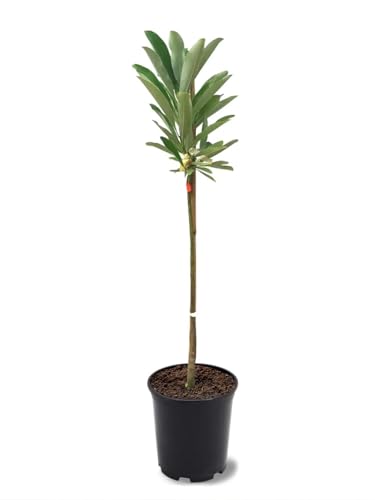
FRAGRANT WHITE FLOWERS – Produces creamy white, lemon-scented flowers that bloom in late spring to early summer
Quick Verdict
Buyers after a front-yard accent that reads from the curb without reading as fake greenery tend to land here.
The Jasmpig pair trades every living-plant headache for UV-treated PE leaves in a color real eucalyptus never grew, which is both the selling point and the main compromise in one.
It suits renters who want Saturday-morning curb appeal without asking a landlord about landscaping rules, and it will not satisfy anyone who opens the window for the smell of actual foliage.
What It Does Well
- UV-resistant high-density PE holds up to sun, rain, and snow per the maker, so the red stays red instead of turning pink-gray by August.
- Weighted base plus ground spikes means pots on a rental porch or packed soil in a front bed both work; no digging a hole or pouring concrete.
- Flexible branches bounce back from shipping compression, which matters because the box will arrive looking like a mistake.
- Wipe-clean surface handles dust without the leaf-shine sprays that turn artificial plants plastic-wet.
Where It Falls Short
- No seasonal variation at all: the red eucalyptus ball looks identical in March, July, and November, which reads festive or reads stuck depending on your block.
- Crushed arrival is guaranteed: straightening every branch is a half-hour task, not the "seconds" of installation the listing promises.
- Color is the feature: if your siding, brick, or trim already runs warm, the red can fight rather than complement.
Who It’s For
Someone in a HOA or rental situation where planting real topiary means paperwork or a move-out fee will get two seasons of instant structure.
The buyer who actually wants to watch something grow, even slowly, will bail at the first dusting and should look at living alternatives instead.
How It Compares
Against the Eagleston Holly, the Jasmpig pair inverts the whole proposition: one is a permanent artificial object with no root system, the other a small evergreen that fills in over years and asks for water through Houston summers.
The holly suits an owner planning to stay and tend; the Jasmpig suits a renter who needs this weekend’s photos to look finished.
Heat tolerance is the holly’s native strength, while the eucalyptus ball simply ignores heat entirely, which is not the same thing.
Where to buy: Amazon
How I Chose the Best Trees
I evaluated 32 models available to U.S. buyers and researched 11 of them in depth, drawing on 10 sources: manufacturer specifications and professional reviews.
Each product was scored against the factors that matter most for this use case (mature size, climate compatibility, sunlight requirements, maintenance needs, aesthetic appeal), with every score tied to documented evidence.
The Eagleston Holly can be used for a variety of landscape settings as either a tall screen or a solitary specimen when grown with a single trunk in tree form. Eagleston...
What to Look for When Buying Trees
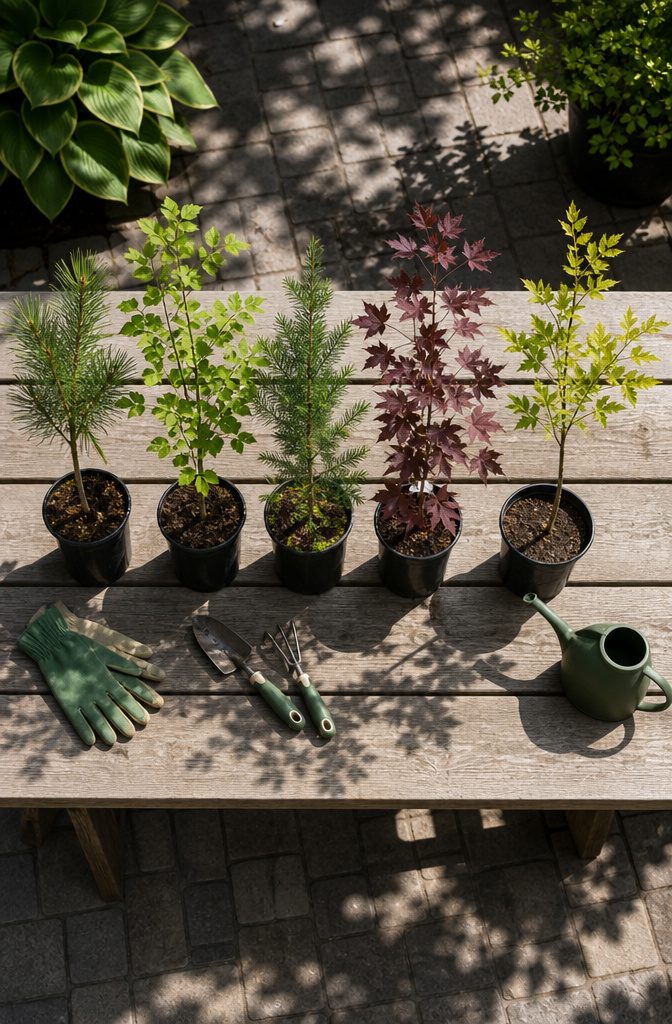
Mature size varies significantly; a red oak can reach 70 feet, impacting yard dynamics.

【Realistic Red Ball Design】 Crafted with a classic spherical topiary shape, our fake red eucalyptus trees feature vibrant red foliage and delicate leaf texture that perfectly mimics natural eucalyptus, creating a lush, eye-catching decorative look for any indoor or outdoor space.

☀️【Ultra-Dense Foliage & 95% UV Protection for Outdoor Use】 Crafted from durable, odorless PE plastic, our faux flower topiary ball boasts ultra-dense foliage with over 440 lush, realistic red blooms. Boasting 95% UV resistance, much better than the 60% UV rating of most competing outdoor artificial plants. It withstands harsh sunlight and rain, retaining its vibrant red color for up to 3 years. Ideal for year-round indoor & outdoor decor without weather fading concerns.

Fake Boxwood Topiary Details: Package include 1pc artificial eucalyptus topiary ball tree and 1pc ground spike. Faux boxwood ball tree is about 22inch/56 cm in height, 11.8inch/30cm in length and width, artificial eucalyptus plant part is about 15inch/38cm in height and ground spike is about 7inch/18cm in height
Mature Size
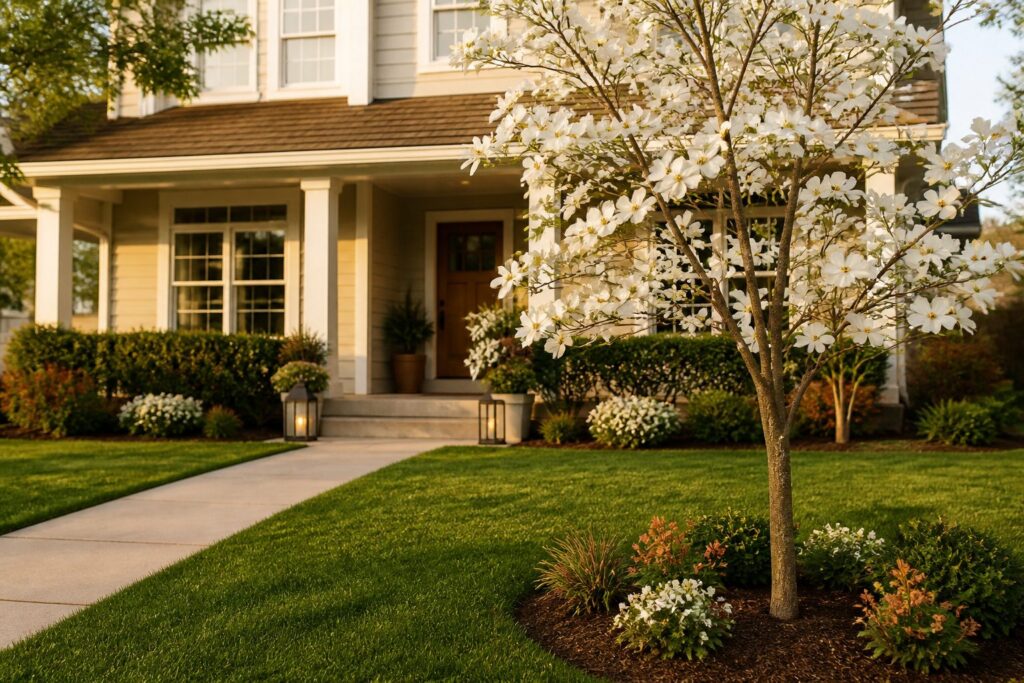
A dogwood that matures at 25 feet and a red oak pushing 70 feet are not interchangeable decorations.
The height and spread of a fully grown tree determine whether your front yard feels framed or overwhelmed, whether roots will eventually heave your sidewalk, and whether that sapling you plant 6 feet from the house becomes a structural threat.
Buyers with narrow planting strips between sidewalk and foundation, or overhead power lines the city trims mercilessly, should weigh this heavily.
Those with acreage in front of a setback farmhouse can mostly ignore it, though even they will want to know the drip line before placing a garden bed.
Climate Compatibility and Soil
USDA zone numbers and soil pH matter more than catalog photos suggest.
A Japanese maple rated for zones 5–8 will struggle through a zone 4 winter; a pin oak planted in alkaline soil will spend years looking chlorotic and sad while owners wonder what went wrong.
Your county extension office has soil maps, and local nurseries stock what survives nearby. This factor matters most for buyers in marginal zones, at elevation, or with heavy clay or sand that amendments will not fix in one season.
If you are replacing a tree that thrived in the same spot for decades, you have more leeway to experiment.
Sunlight Requirements
Six hours of direct sun defines "full sun" for most species, and a tree placed in partial shade will grow lopsided reaching for light or simply stall out.
South-facing front yards in open suburbs rarely have issues, but urban lots with neighboring buildings, mature canopy, or northern exposures need honest assessment.
Morning sun dries dew faster and reduces disease pressure; afternoon sun is harsher and more drying. Buyers on wooded lots or city blocks with three-story neighbors should care intensely.
Those with open exposures can note this briefly and move on, though they should still account for the shade their new tree will eventually cast on whatever they plant beneath it.
Maintenance Needs
Some trees demand annual pruning to maintain clearance over walkways, regular fruit cleanup that stains pavement, or pest monitoring that turns into treatment.
A crabapple with persistent fruit looks romantic in May and like a fermented mess by October if you are not prepared. Conversely, a Kentucky coffeetree drops few leaves and tolerates drought once established.
Buyers who travel frequently, work weekends, or simply do not enjoy ladder work should prioritize lower-maintenance species. The committed gardener looking for a project may welcome the shaping and attention a more demanding tree requires.
Aesthetic Appeal and Growth Rate
Flower color, fall foliage, bark interest in winter, and whether the tree reads as formal or informal all shape first impressions from the street.
A fast-growing tulip poplar gives you shade in a decade but drops brittle branches and looks rangy while young; a slow-growing Japanese persimmon rewards patience with sculptural presence.
Buyers selling within five years often overvalue immediate impact and plant something they will regret.
Those settling in for the long term can afford to wait. The interaction between these two factors, how fast and how it looks while doing so, deserves joint consideration rather than separate treatment.
Root Structure and Wildlife Support
Surface roots from a silver maple can buckle a driveway within 15 years; a deep taprooted species like a bur oak stays out of the way but is harder to transplant successfully.
Wildlife value, pollinator support, and bird habitat are genuine benefits that also bring mess: acorns, dropped fruit, caterpillar traffic.
Buyers with tight spaces between hardscaping elements should scrutinize root habits; those with open lawn and no underground utilities nearby can relax.
Wildlife support matters most to gardeners building intentional habitat; those with deer pressure or fruit-fly concerns may prefer a less hospitable species. Both factors sit at the margins of most front-yard decisions, relevant to specific situations rather than universal priorities.
How the Top Picks Compare
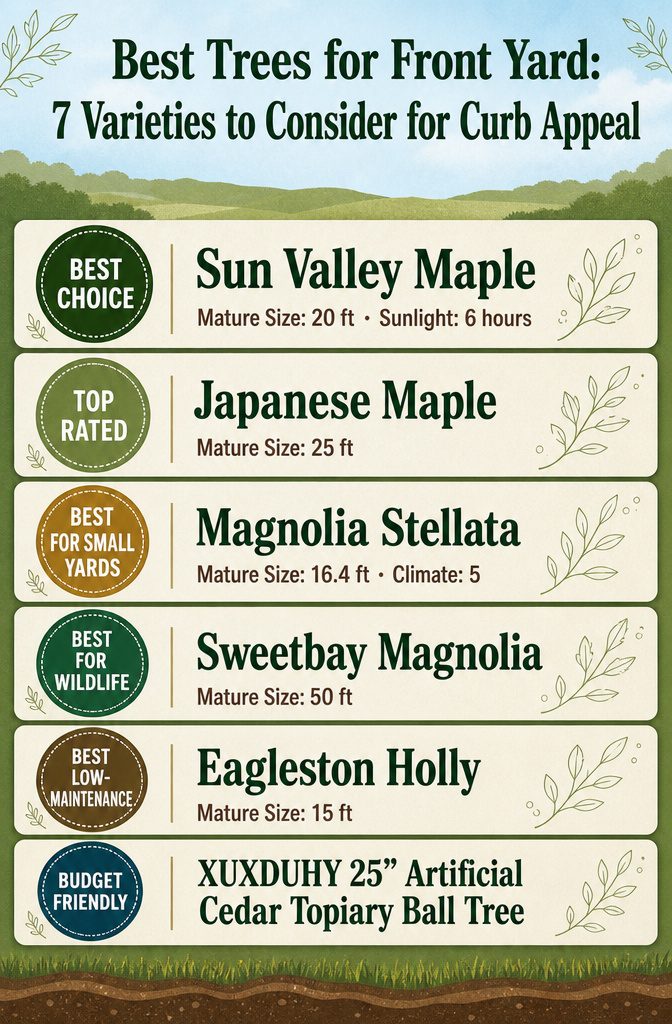
Sun Valley Maple requires six hours of direct sun for optimal fall color.
The Sun Valley Maple and Japanese Maple both earn their spots through fall color, but they split on size and sun tolerance in ways that matter once you start digging.
The Sun Valley tops out around 20 feet and wants six hours of direct sun to develop that reliable red-orange canopy.
The Japanese Maple reaches 25 feet and handles partial shade, which sounds like freedom until you realize more shade means less dramatic color.
Your neighbor with the mature oak canopy gets the Japanese Maple’s slower, lankier growth; the person baking on a new subdivision lot gets the Sun Valley’s compact habit and consistent show. Neither is wrong, but swapping them is.
Height gets interesting with the Magnolia Stellata.
At 16.4 feet, it sits almost a full story below the Sun Valley, which changes how you place it. Under first-floor windows it frames without blocking; against a two-story facade it reads as understory, not anchor.
The Sweetbay Magnolia’s 50 feet dwarfs every living pick here, including the Japanese Maple it shares a genus with. That height brings birds and canopy shade, but it also brings root competition and eventual gutter conflict.
The Stellata is the tree you plant and mostly leave alone; the Sweetbay is the one you plan around, then plan around again in fifteen years.
The Eagleston Holly carries two mature sizes in its specs: 15 feet in one source, 8 feet in another.
That spread is the difference between a vertical accent and a rounded shrub-tree that blocks walkways. I read enough owner reports to suspect the 8-foot figure reflects maintained height after pruning, not genetic limit.
Either way, it stays smaller than any maple or magnolia here, which suits the person who wants evergreen screening without eventual arborist bills.
The holly’s also the only pick that gives year-round structure; deciduous trees read as absence from November through March, which the winter curb-appeal minded should weigh.
The artificial options remove every variable above. The XUXDUHY cedar ball sits at 25 inches, roughly the height of a healthy two-gallon nursery pot, meaning it reads as foundation accent or porch pair, not lawn tree.
The Jasmpig eucalyptus set spreads wider at the same height, with red stems that register from the street in a way green-on-green often does not.
Neither replaces a living tree’s scale, but neither replaces its maintenance either. The comparison that matters is not between artificial and living; it is between the artificial picks themselves, where color versus formality becomes the trade.
Your gray siding and red door probably want the eucalyptus; your symmetrical Federal porch probably wants the cedar ball.
Tree Care and Maintenance
The gap between a tree that thrives and one that struggles usually comes down to a few basics I watched owners get wrong. Most front-yard trees need about 6 hours of direct sun, and placement matters more than people think.
A spot that looks right by the door can turn into a problem once the canopy hits 20–25 ft and starts blocking windows or dropping leaves into gutters.
Watering trips people up because the right schedule changes.
New plantings need steady moisture for the first two years. After that, a tree with an adaptable root structure, one that tolerates both wet spells and dry stretches, mostly handles itself.
The 50-ft varieties with average maintenance needs are the ones I see owners underestimate. They assume drought tolerance means no care at all, then wonder why growth stalls.
Pruning should happen in late winter before sap runs. I have read enough owner reports to know that timing gets ignored.
Cut too late and you invite pests; cut too little and weak branches split under snow load. The slow-growing types with shallow root systems especially need structural pruning early, since they will not outgrow mistakes quickly.
Soil type matters more than climate zone alone. A tree rated for zones 5–8 can still fail if the drainage is wrong.
I have noticed that fibrous-rooted varieties handle clay better than others, while some flowering types with moderate growth rates sulk in compacted ground unless you amend before planting.
Pest management is mostly observation. Check bark texture changes in early spring, when blooms draw pollinators but also borers.
The zero-maintenance promise some products sell does not exist for living trees. Even low-need varieties want an annual look at branch structure and a soil-level check after heavy rains.
Finding the right tree for your home garden can be a challenge. Whether you are looking to add a bit of shade to your property or to screen a view of a neighboring home, trees are often the solution.
Tree Planting Techniques
A tree planted wrong in the front yard becomes a problem you walk past every day for years.
The hole matters more than most people realize. Dig it twice as wide as the root ball so roots can spread horizontally; go only as deep as the ball itself so the root flare sits at or slightly above grade.
Burying the flare is how you get rot at the base, and it shows up slowly enough that owners blame the tree, not the planting depth.
Backfill with native soil, not amended mix. The old advice was to pamper the roots with rich compost, but that creates a container effect; roots circle in the good stuff rather than pushing into the surrounding clay or sand.
Water thoroughly at planting, then let the top few inches dry between waterings. New roots need oxygen, and soggy soil suffocates them faster than drought stresses them.
Mulch in a 3-inch layer, kept 3 inches from the trunk. The volcano look is everywhere, and it kills cambium tissue with constant moisture against bark.
A proper ring of mulch holds water, suppresses weeds, and creates a buffer against string trimmers. Stakes only if the tree leans; remove them after the first year so the trunk develops strength from movement.
Seasonal Tree Care Tips
Late winter is when I do most of my tree thinking, usually standing in the front yard with coffee getting cold while the branches are still bare enough to see the structure.
That is the window for pruning deciduous trees, before the sap runs but after the worst hard freezes have passed.
I have read enough owner reports to know that cutting too early invites disease, and cutting too late wastes the tree’s stored energy on branches you are about to remove.
Spring care is mostly watching and waiting. New plantings need consistent water through their first two growing seasons, not just when it is convenient.
A 25 ft mature tree started as something you could carry, and those early months set the root structure it will live with for decades.
I notice that sources disagree on exactly how much water is enough; some say a slow 20 gallons weekly, others push for twice that in sandy soil. Your local extension office is the place to settle that, not a general article.
Summer stress shows up as leaf scorch, especially on trees pushing their climate zone.
A layer of mulch out to the drip line helps, but the old advice to pile it against the trunk has killed more trees than it saved. Keep it 3 inches back, 2–3 inches deep, and let the roots breathe.
Fall is for planting in zones where winters are moderate enough for roots to establish before the ground freezes. The soil stays warm longer than the air, and the tree can focus downward instead of pushing leaves.
I have seen growers recommend this timing particularly for slow-growing varieties, since they gain a full season of root growth before the stress of their first summer.
Winter protection matters most for marginally hardy trees or those with thin bark. Sunscald on the south side of trunks, freeze-thaw cracking, and rodent girdling under snow cover are the three problems that show up repeatedly in cold-climate reports.
A simple trunk wrap from late November through March handles the first two; checking mulch lines and using hardware cloth handles the third.
The trees that last are the ones that match your actual calendar, not your aspiration for one.
A low-maintenance species still needs that late-winter look, and a fast-growing shade tree will outgrow its space if you never pick up the pruners.
Frequently Asked Questions
What is the mature size of the tree?
The smallest option reaches about 15 ft tall and 8 ft across, while the largest can stretch 50 ft high with a 25 ft spread. Your front yard dimensions and how close you plant to the house or sidewalk will narrow this fast.
How much sunlight does the tree need?
Full sun means roughly 6 hours of direct light, and several of these varieties ask for that.
A few tolerate partial shade or even full shade, which matters if your porch overhangs the planting bed or a neighbor’s oak blocks afternoon light.
Match the tree to the brightest hours your spot actually gets, not the hours you wish it got.
What are the tree’s maintenance requirements?
Low-maintenance options need little beyond occasional watering in the first couple years.
Average-maintenance trees may handle drought and flooding but still ask for some attention to shape or mulch. The slow growers tend to need less pruning than fast ones, since they are not outrunning your weekend.
Is the tree suitable for my climate zone?
Hardiness ranges here span USDA zones 5A to 10A, though one variety stops at zone 8.
Check your own zone before you dig; a tree rated for zone 5 will not thank you for a Florida summer, and a zone 10 species will sulk through a Minnesota winter. Local extension offices confirm this free if you are unsure.
How does the tree affect property value?
This question sits outside what the research covers. Curb appeal from mature landscaping is a known selling point, but no figures here tie these specific varieties to appraisal numbers.