These house garden ideas outdoors range from a few painted tin cans on a porch rail to a full glass greenhouse, and the deciding factor is how much structure you already have versus how much you are willing to build.
A solid-core door becomes a bar with nothing new but hinges; the aquaponics system needs a pump, a basin and the patience to balance fish against greens.
The jigsaw appears in both the tiered crate planter and the slat garden, which are two of the builds here that call for a cut you cannot fake with a handsaw.
[link-whisper-related-posts]1. Vertical Slat Garden
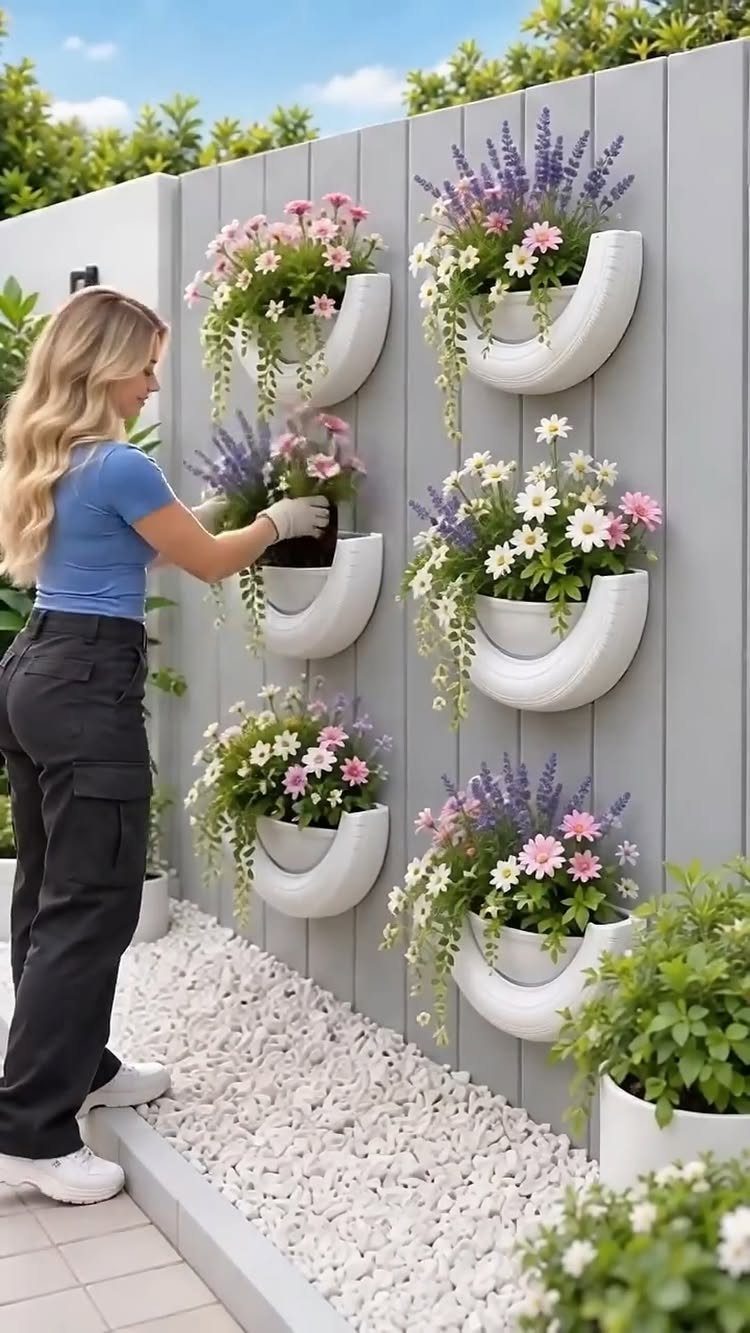
Sanded pine slats, a brad nailer, and crescent wall planters turn a fence line into living storage. Anchor the slats vertically with gaps for airflow, then hang planters at heights you can still reach without a step stool.
Infills like bougainvillea or sweet potato vine soften the edges; upright herbs sit higher where light hits first.
A friend of mine built this on a narrow balcony, so the footprint had to stay tight from the start. Water dripped straight through at first, so she slipped plastic trays behind each planter, painted to match.
The raw pine will grey on its own, or you can oil it before hanging anything.
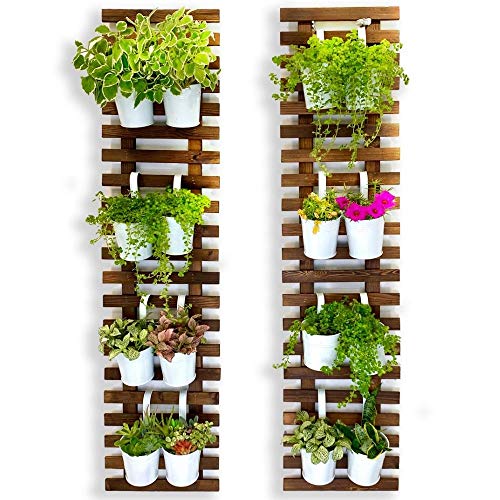
29x120cm (11.4" x 47.2") x 2 pcs. Plants, flowers, pots, decorations are NOT included
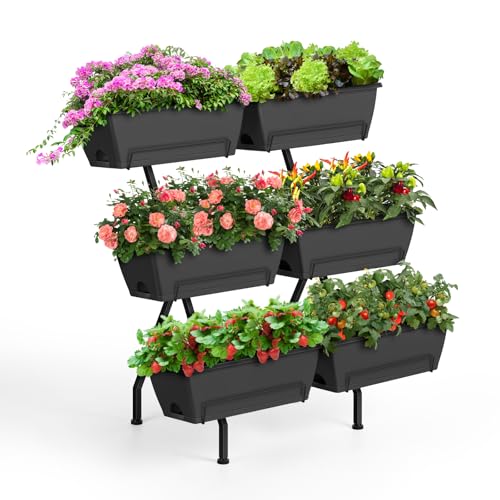
【Space-Saving Vertical Garden System】 Six stackable planters transform tight spaces into lush gardens – perfect for urban balconies, small patios, or indoor greenery. Strategically alternate herbs, flowers and vegetables across tiers to create your perfect mini ecosystem.
2. Beverage Station
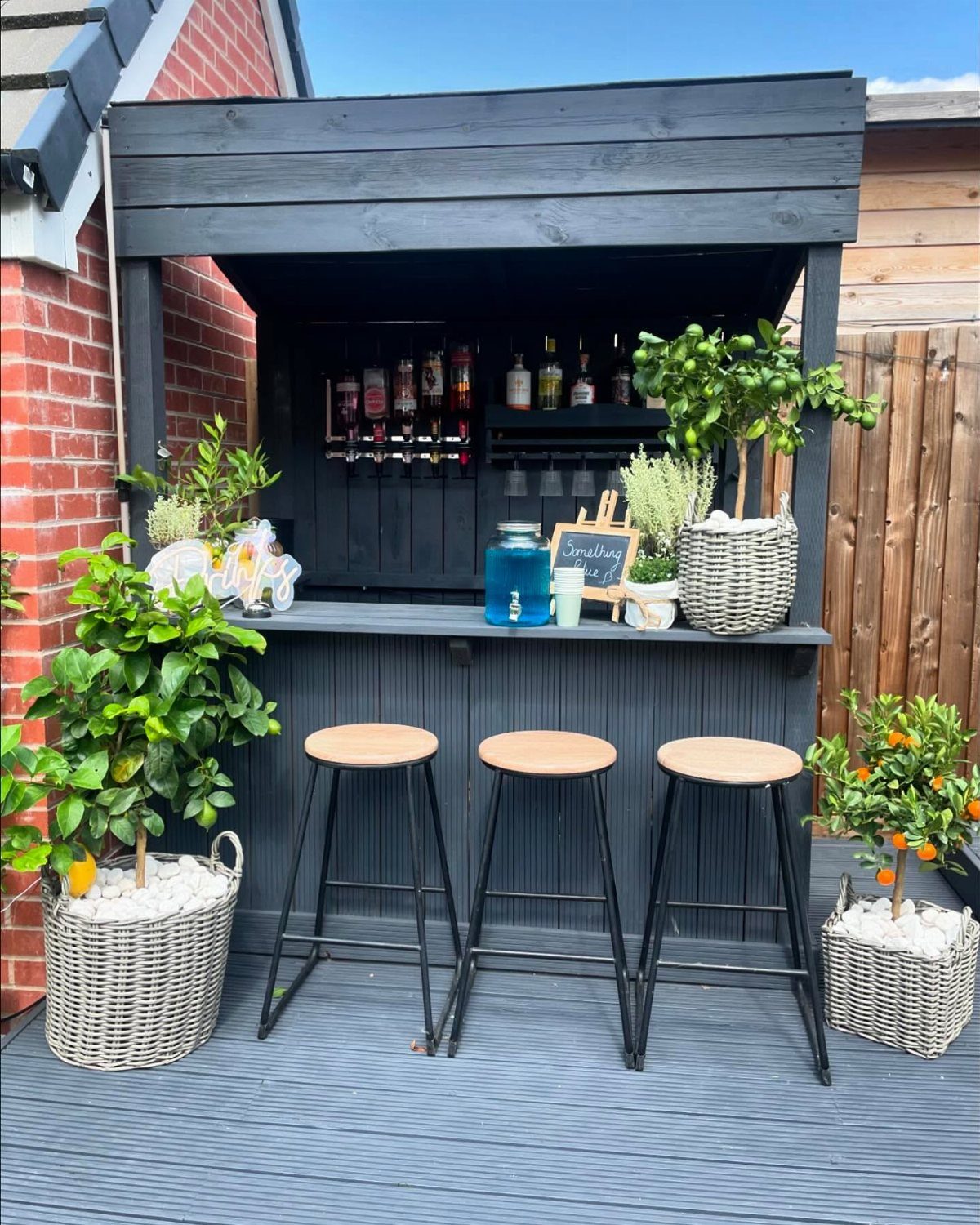
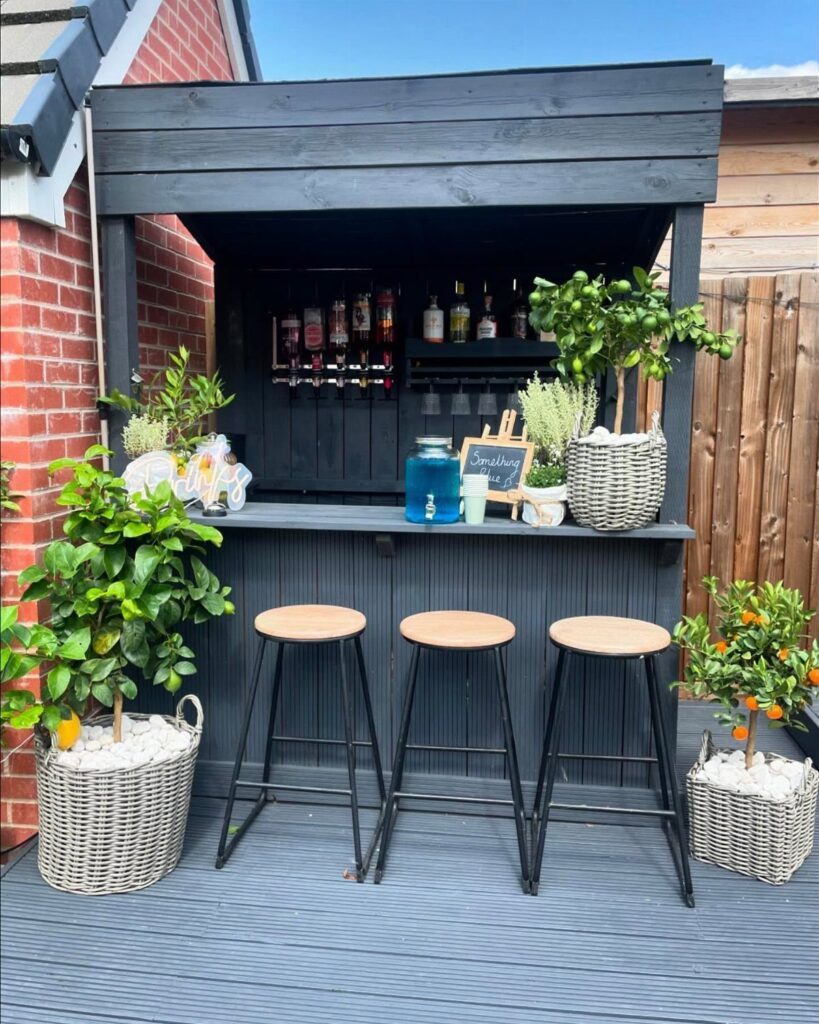
An old solid-core door, sawn to counter height, becomes the backbone of an outdoor bar with zero new structure needed.
Hinge the cut-off top back on for a fold-down serving surface, or fix it permanently and use what’s left for the front panel.
3 backless stools tuck underneath when the party ends. The drink optics I saw bolted through from behind, not glued, and the potted citrus sit in drip trays cut from boot mats.
Paint it something that hides fingerprints between gatherings. Charcoal, forest green, a deep slate blue.
Storing glassware outside is asking for dust and spiders. I keep a lidded crate underneath for that.

Bring balance and serenity to your desk at work, great for momentary escapes or channeling creativity

✔COMPLETE ZEN DECORATION KIT: Our mini Japanese zen sand garden kit includes all the accessories for a peacefully moment of meditation: solid wood tray 8.5 x 6.7 x 0.5 inches, white sand, bamboo rake, rocks, 2 figures. Ideal for desks, tables, countertops & more

Bring balance and serenity to your desk at work, great for momentary escapes or channeling creativity
3. Mini Zen Rock Garden
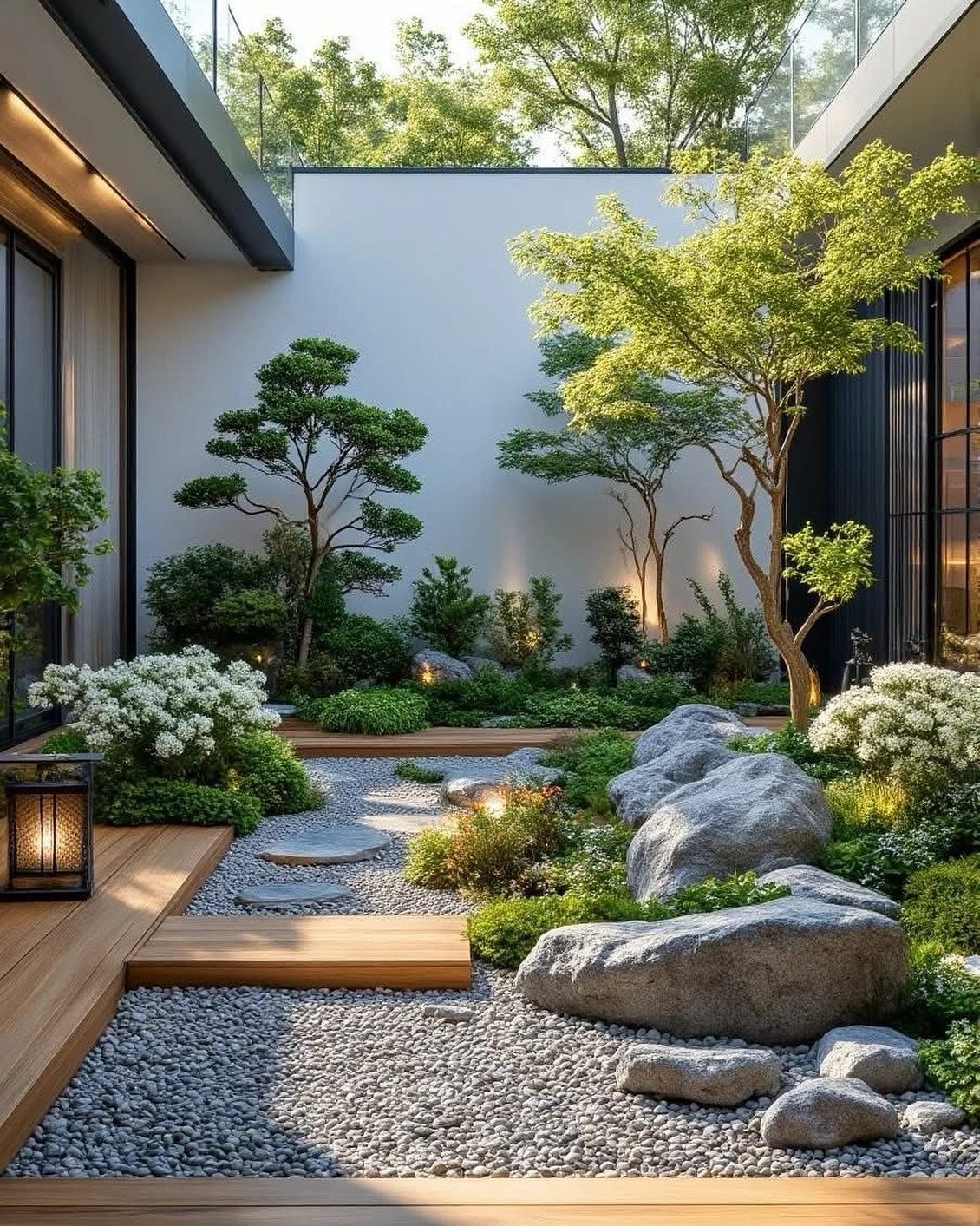
A single basalt cairn, hand-stacked wet so the friction grips, anchors a corner where nothing else settles. Rake the surrounding gravel to ripple away from it, not toward it, so rain doesn’t pool at the base.
Full sun burns them out by August.
Stepping boards let you walk through without disturbing the pattern. Space them one comfortable stride apart, and sink them level with the gravel surface so nobody trips.
A solar lantern beside the stones gives it presence after dark without wiring.

【SIZE】: Vertical garden planter size: 33.1*18*28.7 inches.

Spacious 5-Tier Growing Area: Designed with 5 separate planting boxes, this garden planter provides generous room for growing fruits, succulents, vegetables, or colorful flowers while keeping your gardening area neatly organized in one place.

✔️WHAT IS INCLUDED? Wood Box with Plastic Liner (Flower/plant is not included) (Sell in Set of 2 Boxes)
4. Tiered Crate Planter
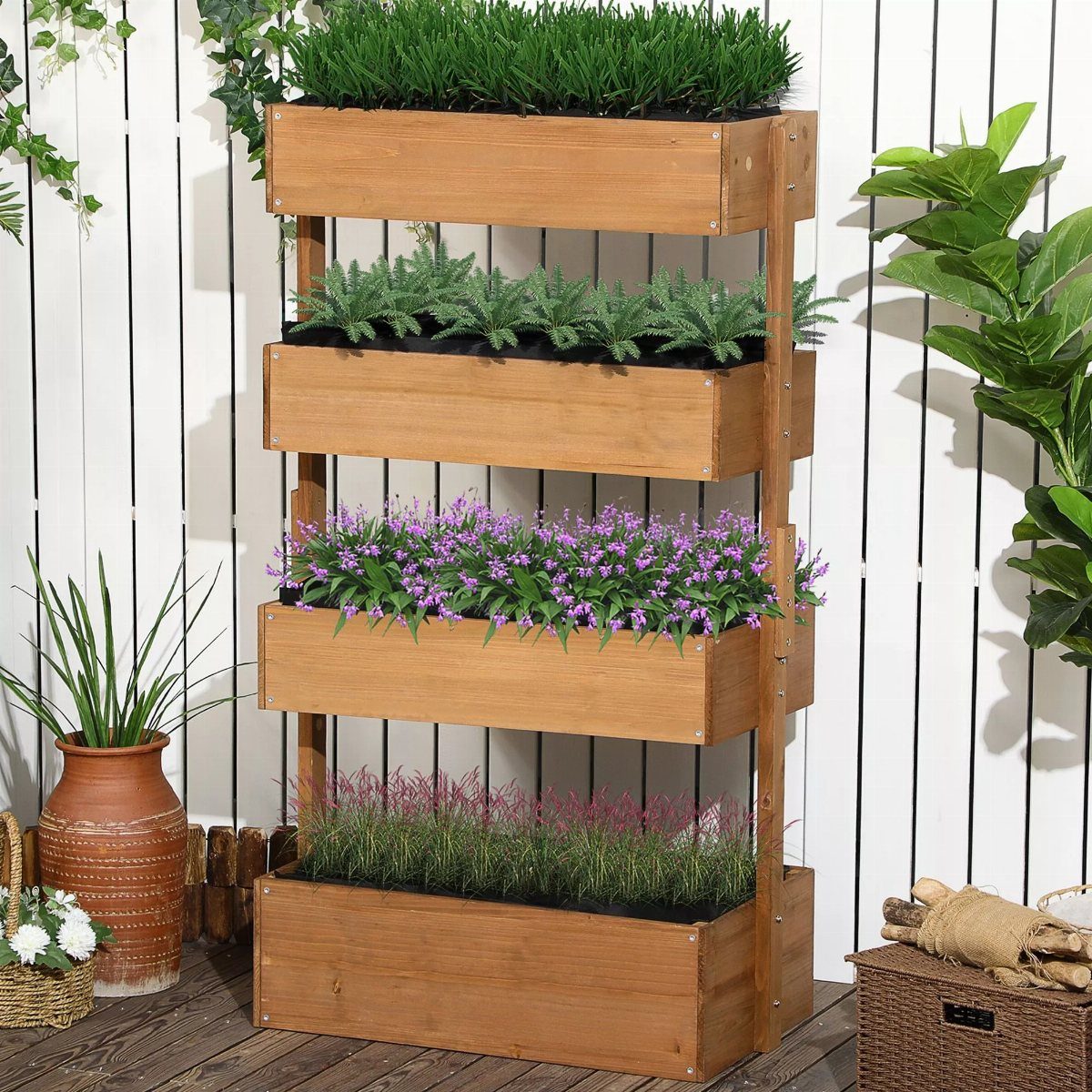
Raw pine crates stack to four tiers without hardware if you notch the corners so each sits into the one below. The notching takes a jigsaw; the stability it gains matters more once soil goes in.
Grasses survive the top shelf where wind hits first. Ferns and trailing things own the lower two, catching runoff.
Line each crate with landscaping fabric, then a cut-to-fit piece of perforated cardboard.
It’ll last one season, maybe two. Plastic inserts work longer but I like the cardboard; it rots exactly when the roots are ready to hold the shape.

Easy installation: the quarterthread design ensures installation and removal, making it userfriendly for all skill levels,transfer pump,electric water pump High efficiency...
5. Vintage Tea Cup Succulents
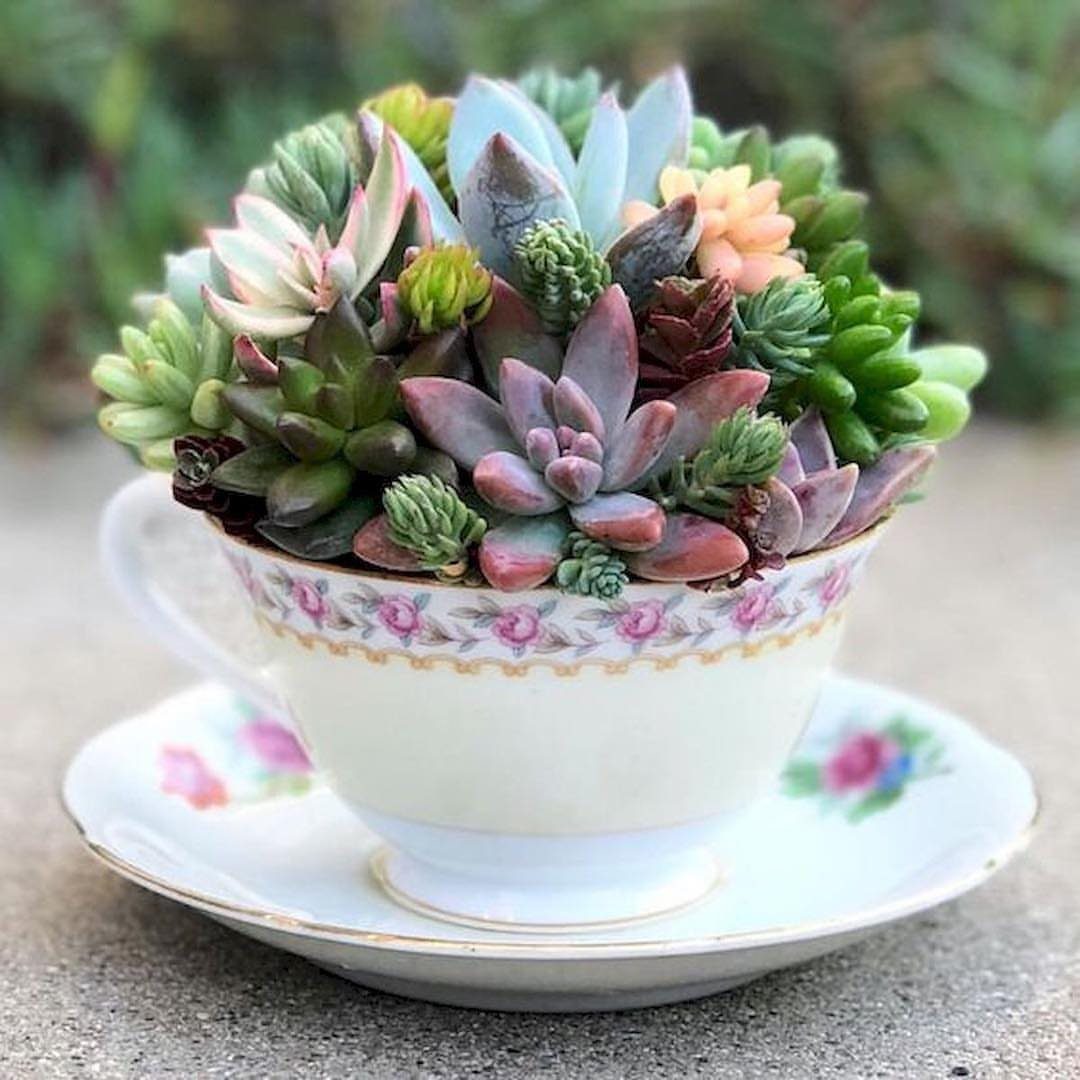
A porcelain teacup with no drainage demands restraint: gravel layer first, cactus mix after, and water measured in tablespoons, not cups.
Succulent cuttings root faster than established plants in this setup. Lay them on dry mix for a week so the wounds callus over, then nestle the stems in just far enough to stand.
The saucer catches what little runoff there is, but I add a thin cork pad underneath when the surface matters. Concrete, wood, slate, it all stains eventually.
China patterns this busy hide soil and the occasional dead leaf. A plain white cup shows every flaw and looks modern instead of storybook, which is its own valid choice.
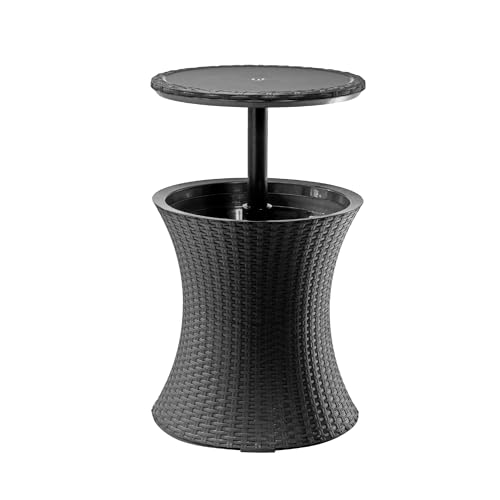
OUTDOOR BAR TABLE: Elevate your next gameday party. This portable bar table allows your guests to grab chilled beverages while never being far from any of the action.
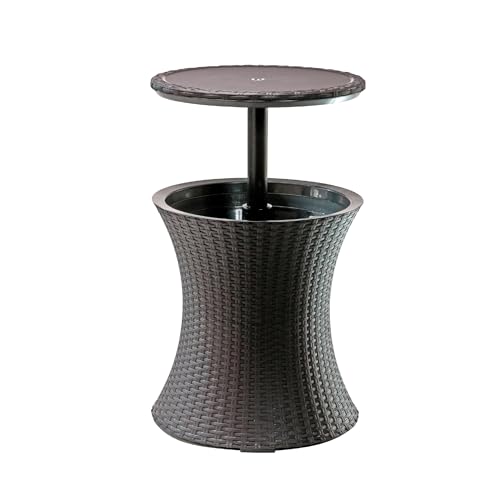
OUTDOOR BAR TABLE: Elevate your next gameday party. This portable bar table allows your guests to grab chilled beverages while never being far from any of the action.

Heavy Duty Countertop: 35.4" x 18.9" stainless steel top resists rust and stain and is easy to clean. You can place drinks, snacks, or even a tiny unfired grill on the outdoor kitchen cart to prepare food for dining and serving
6. Aquaponics System Setup
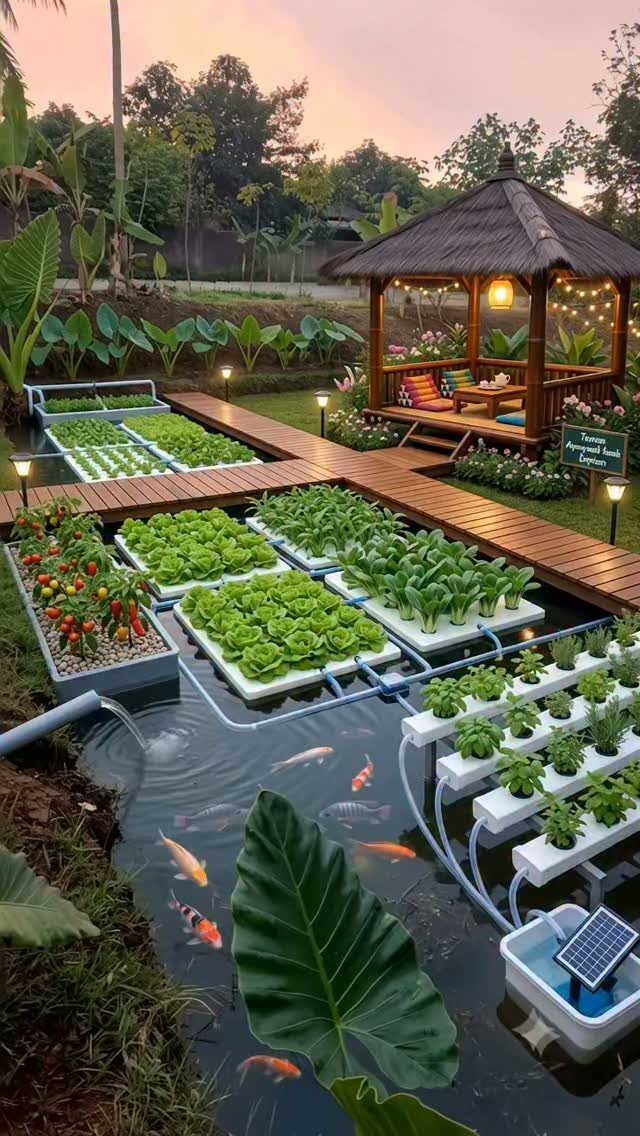
A small pump runs the loop, and the balance means neither side crashes from a single mistake.
Basin depth matters more than surface area for temperature stability. The boardwalk keeps you from compressing the liner edge where it meets soil, a common failure point that is easy to miss.
Start with leafy greens. Root vegetables need substrate the trays don’t provide, and fruiting plants want nutrients that throw off the fish side.
Thatched roofing looks traditional but sheds poorly in snow load zones. Polycarbonate panels or a shed-style slope handle northern winters without replacing every spring.
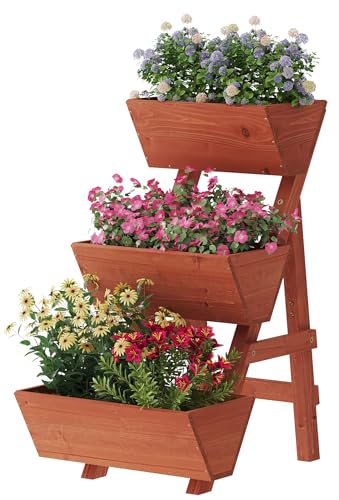
【SIZE】: Vertical garden planter size: 16.5*17*27.8 inches.

VERSATILE DESIGN: Perfect for growing herbs, flowers, vegetables, and small plants both indoors and outdoors with multiple planting tiers for space-saving gardening

Space-Saving : This strawberry planter maximizes your gardening space by stacking 5 layers to grow more plants in a compact area. The strawberry tower planter is ideal for patios, balconies, or indoor use.
7. Plant Covered Teepee
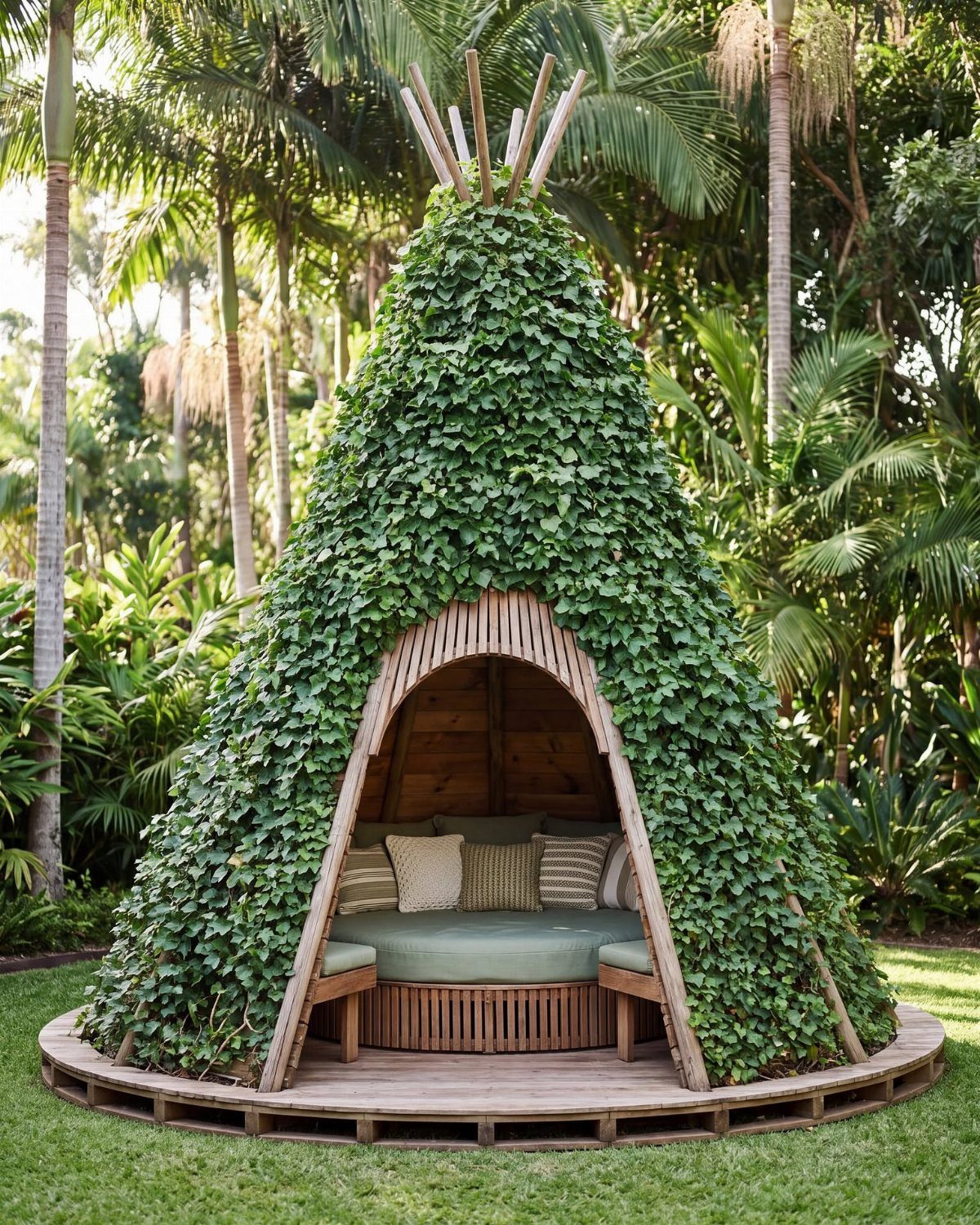
Bamboo poles lashed at the peak make a frame light enough to move but rigid enough to hold mature ivy.
The climbing variety you want roots along the poles as it ascends, so rough-sanded wood grips better than sealed or painted.
The daybed inside needs a slatted base, not solid, or condensation from the canopy will mildew the cushion in 2 seasons. A friend who built one in Houston swaps the padding to mesh in July and August.
Morning shade and afternoon sun give the most even coverage on the vines. Full southern exposure greens the top and leaves the base bare. ====

Wonderful High End Japanese Gift- Reward yourself or bring calm & happiness to loved ones. Japanese Zen Garden for desk; gorgeously packaged with the elements for inner peace. A deluxe, Zen gift set

Stress Anxiety Calming: this desk zen garden kit serves as a portable sand tray therapy tool, featuring fine sand, multicolor crystals, and a tactile resin stone; Engaging with the sand and stones can redirect focus from work deadlines or study stress; It's ideal for office breaks, study sessions, or quiet home moments, offering a gentle way to unwind and reset your mood

【Reliable Material】The zen garden rake is made of quality wood with a smooth surface, strong and wear-resistant, not easy to break, and can be used for a long time. You can enjoy and create your version of Japanese zen garden even in a limited space.
8. Tire Planters
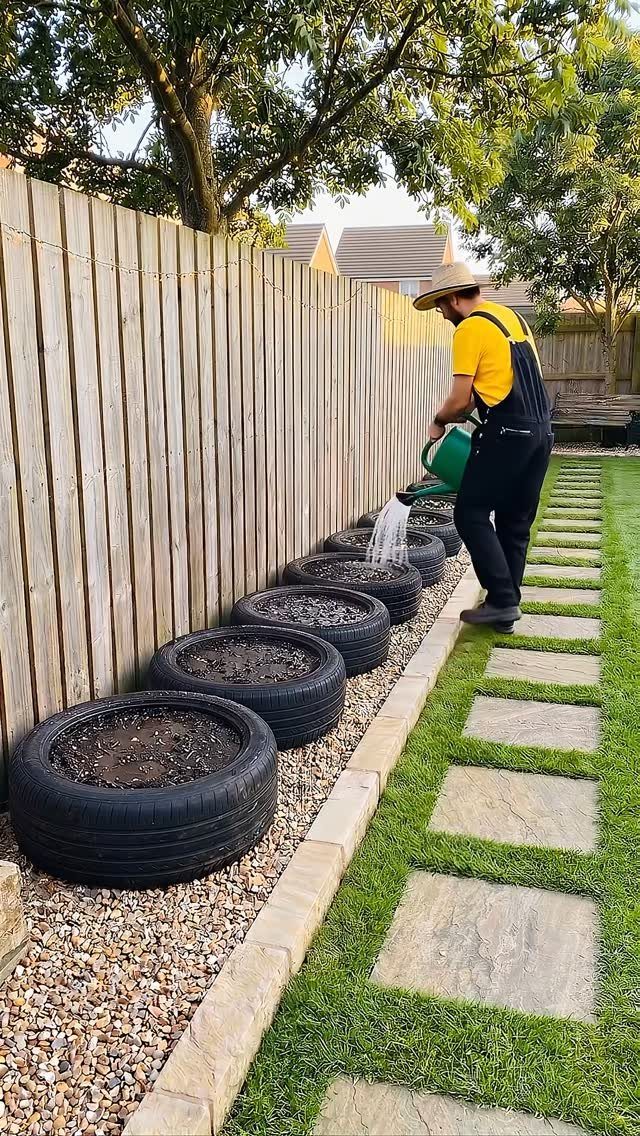
Car tires buried to their sidewalls do not wander; half-buried ones frost-heave and tilt by spring. A row along a fence reads as boundary, not afterthought, because the line is deliberate.
Matte black against tropical foliage works when the leaves are large and the tires stay clean. Rim paint, WD-40 residue, or brake dust all bleed into soil; wash with dish soap and a stiff brush before filling.
A single tire as accent looks like refuse. Three or more, spaced evenly, signal intention.
Drainage means drilling, not hoping: half-inch holes through the tread, packed with gravel so they do not seal shut with soil. ====

Natural Fir Wood Construction: Made of unpainted natural fir wood, this raised garden bed is well sanded for safe use. Thick solid wood boards are fixed with metal hardware, providing a stable structure for long-term outdoor use. The natural wood grain adds a rustic look to your garden or patio.

【Perfect Design】: The 3-tier planter box design will not take up too much floor space, which can separate and organize the sections as well as grow different kinds of plants. In addition, the trapezoidal design allows all plants to enjoy full sunlight for better growth. The box bottom of each tier is equipped with drainage holes to help drain excess water and prevent root rot.

🪴【Perfect Design】: The 3-tier planter box design will not take up too much floor space, which can separate and organize the sections as well as grow different kinds of plants. In addition, the trapezoidal design allows all plants to enjoy full sunlight for better growth. The box bottom of each tier is equipped with drainage holes to help drain excess water and prevent root rot.
9. Curved Garden Corridor
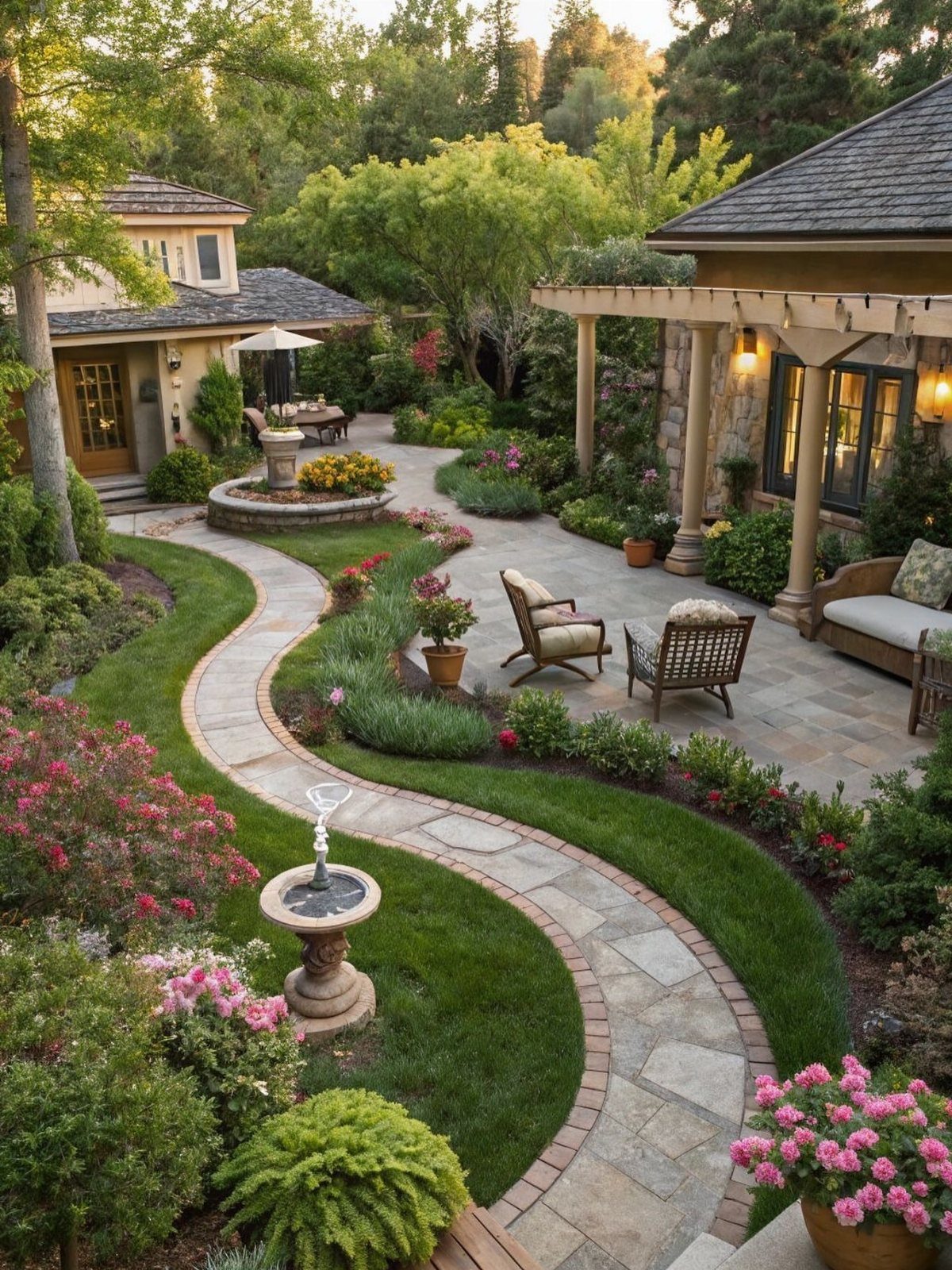
A path that bends hides what comes next, so the garden reads larger than its lot. Stone set on sand, not poured concrete, lets you lift and re-grade if the curve settles unevenly.
Boxwood edges want shearing 3 times a season to keep the line crisp against the wander of the walk.
The birdbath sits at the outside of a curve where approach is natural; centering it on a straight section stops movement dead.
Slope the walk toward planted beds, not the patio, so rain feeds flowers instead of pooling at the door. ====
10. Suspended Macramé Planters
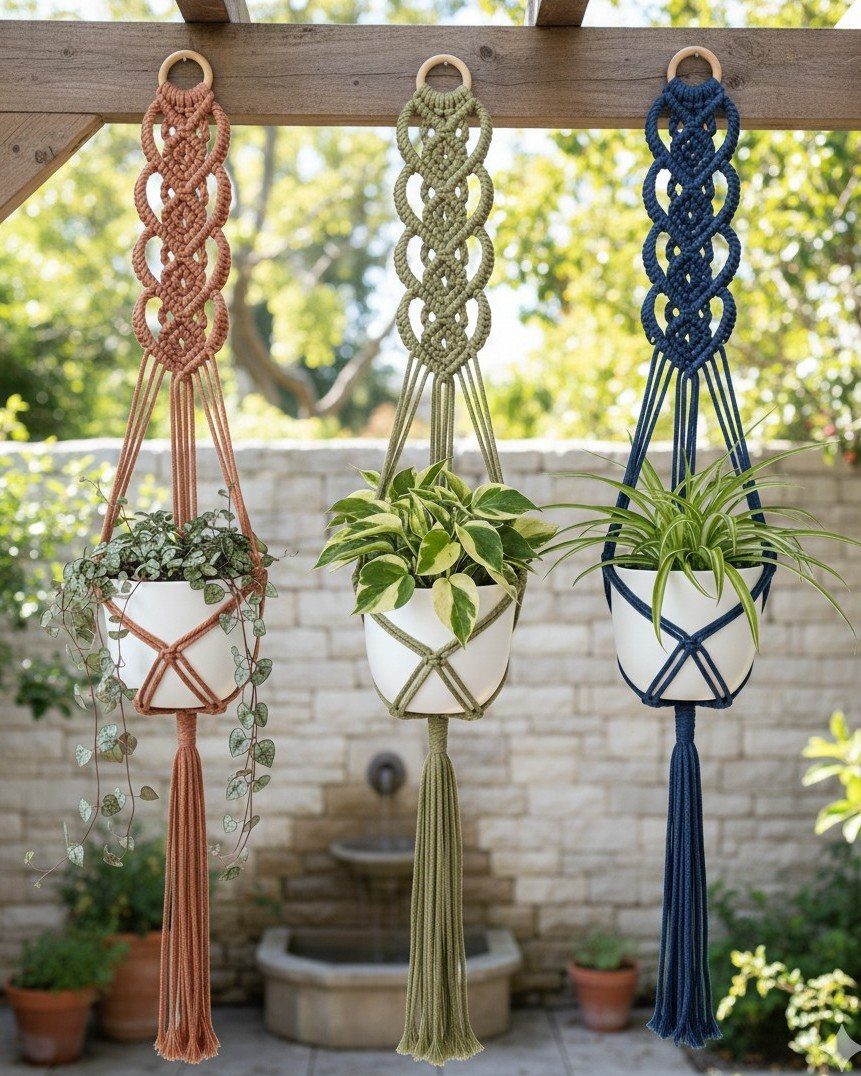
Cotton cord rots in full weather; these hangers are synthetic, softer than sisal, with a slight shine that reads as craft-shop rather than dock-line. 3 knots hold: wrapped, square, and gathering at the base.
A decorative pergola slat bows and cracks; lag-bolt through to the main header, or hang from eye hooks rated for ceiling fans.
3 planters at staggered lengths, none at full drop, make a cluster that does not read as marching. Identical heights feel schoolhouse.
Drip trays are non-negotiable. Macramé wicks water straight down to the stone below. ====

【Modern Patio Bar Cart】Featuring a 5mm black tempered glass top and an enclosed wicker storage cabinet, this outdoor bar cart seamlessly blends beauty with practicality, making it a must-have for your poolside, patio, or outdoor kitchen. Total 74 gallons storage capacity (54 gallons enclosed cabinet + 20 gallons open shelf), it offers ample space for all your outdoor essentials

All-Weather HDPE Built for Real Outdoor Living: This outdoor grill table is made from premium HDPE and designed to handle everything from hot summer sun to unexpected rainstorms without fading, cracking, or peeling. Whether you're setting up for a weekend BBQ or prepping dinner outside, the easy-to-clean surface makes it a reliable outdoor food prep table or bbq table you’ll use every day.

Multifunctional Cooler Table: This ice cooler table is designed to meet your diverse needs. It functions as a hot tub cooler table for storing chilled drinks, fresh fruit and snacks; serves as a coffee table for daily outdoor relaxation; and can transform into a high-top cocktail table. Whether for backyard gatherings, beach parties, garden picnics, or outdoor excursions, this patio cooler is your ideal companion, effortlessly handling your outdoor beverage storage and item placement needs.
11. Desert Cactus Garden Bed
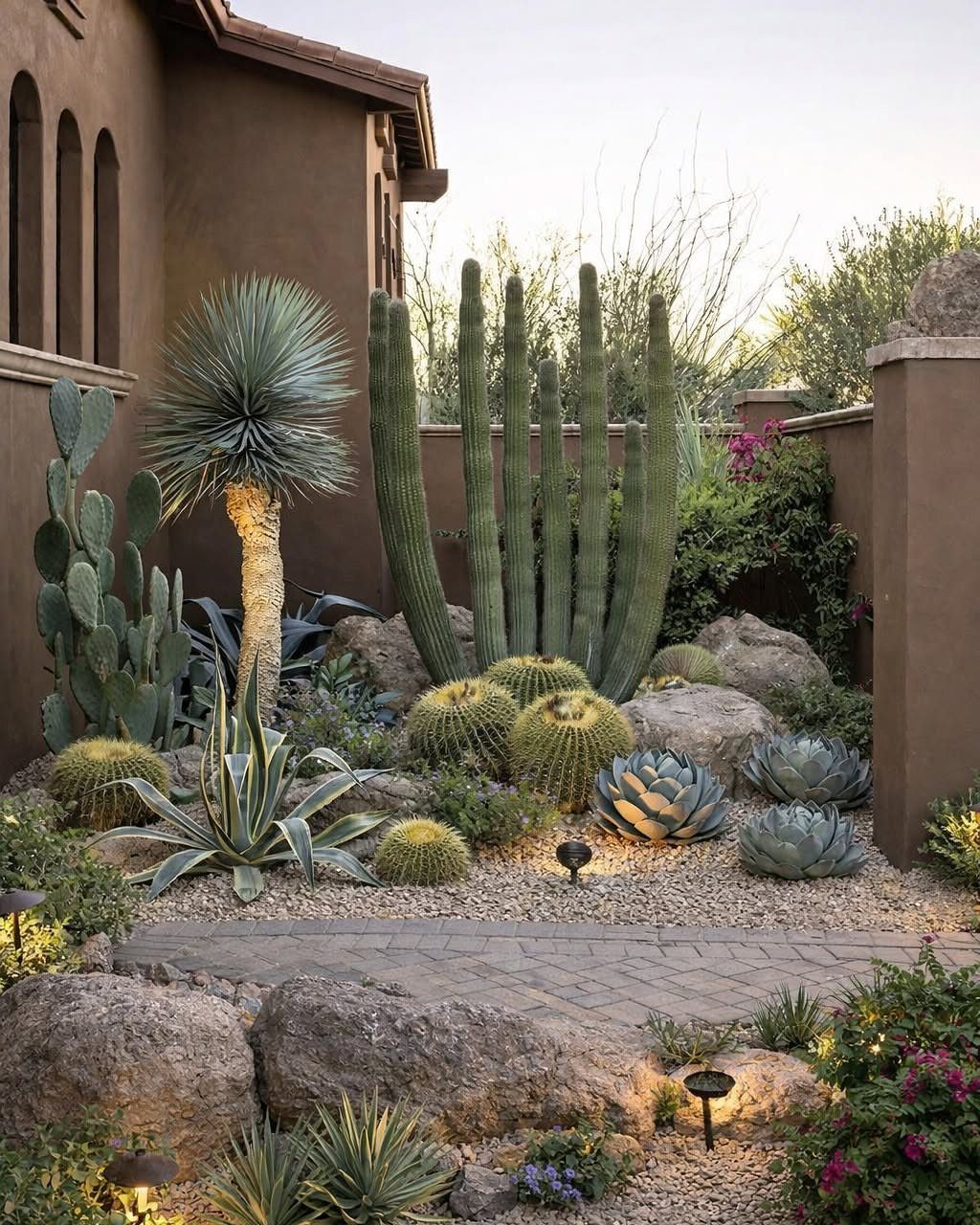
Gravel top-dressing, not bark, sits right with cacti; organic mulch holds moisture against skin and rots the crown. The mix reads crushed, tan to match the brick walk.
Organ pipe cactus wants no competition at its base; the agave and yucca stand far enough apart that mature spines do not cross.
A straight-line planting of mixed heights would look formal. The scattered placement here reads as found, not arranged, though it was.
Landscape lighting at cactus level throws shadows upward that are dramatic and slightly menacing. Uplight from the ground, not fixture height, gives the effect.
Winter hardiness varies by species; a New Mexico mix dies in Nashville. Check zone before you dig. ====
12. Pergola Shaded Garden Bench
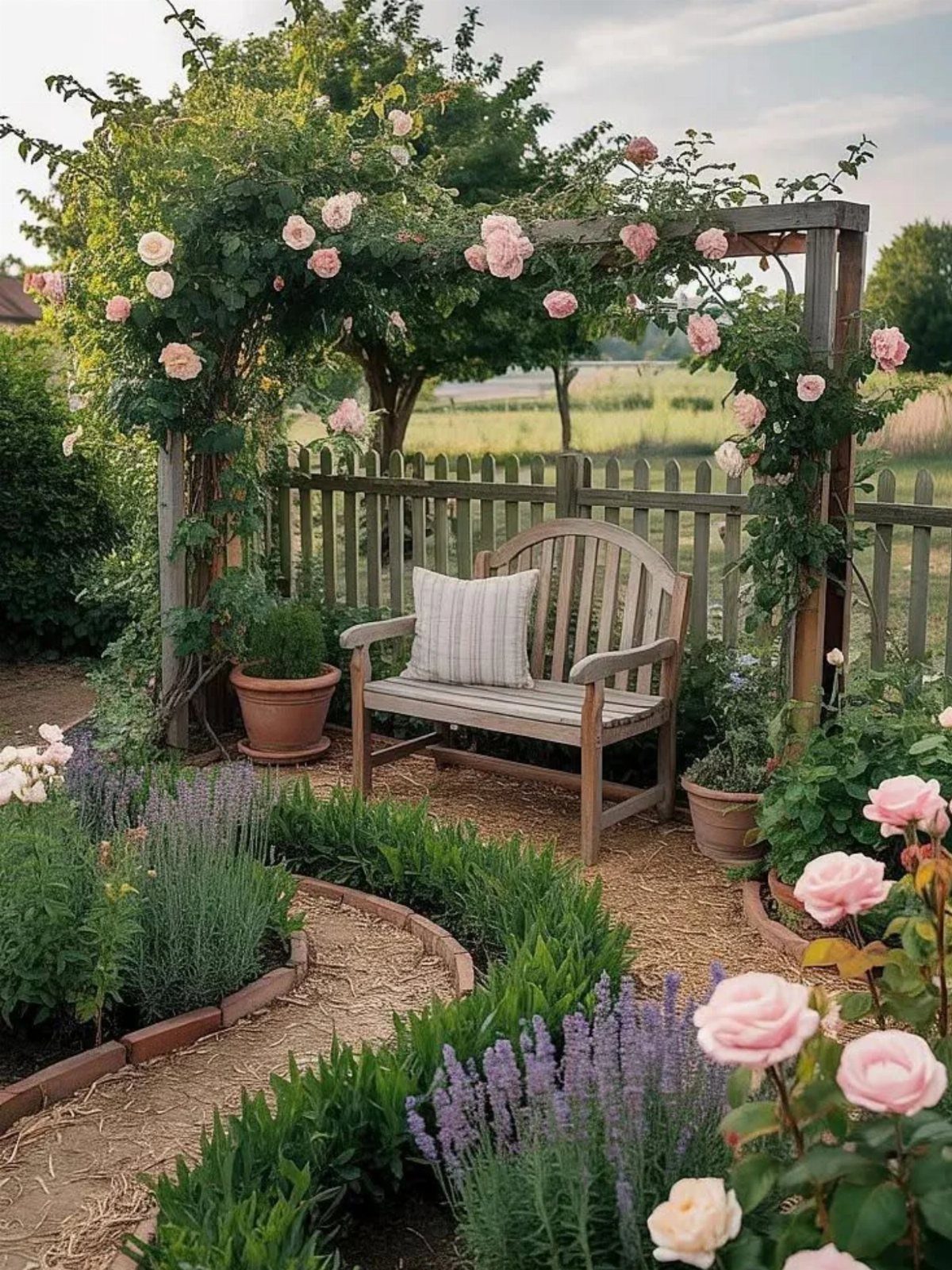
A pergola without climbers is a skeleton; the roses here drape from wires strung beam to beam so growth fills the plane, not just the edges.
First-year planting looks sparse. Second year covers.
The bench cushion is white, which only works in partial sun and with regular laundering. I would choose charcoal or leaf green for the same calm without the vigilance.
Pink roses against pale wood need a painted pergola; natural cedar shifts to silver-grey and muddies the flower color in 3 seasons. Stain or paint, or accept the fade.
Picket fence behind reads as garden room wall, not barrier, because the height stays low enough to see over from seated eye level.
13. Repurposed Painted Tin Can Planters
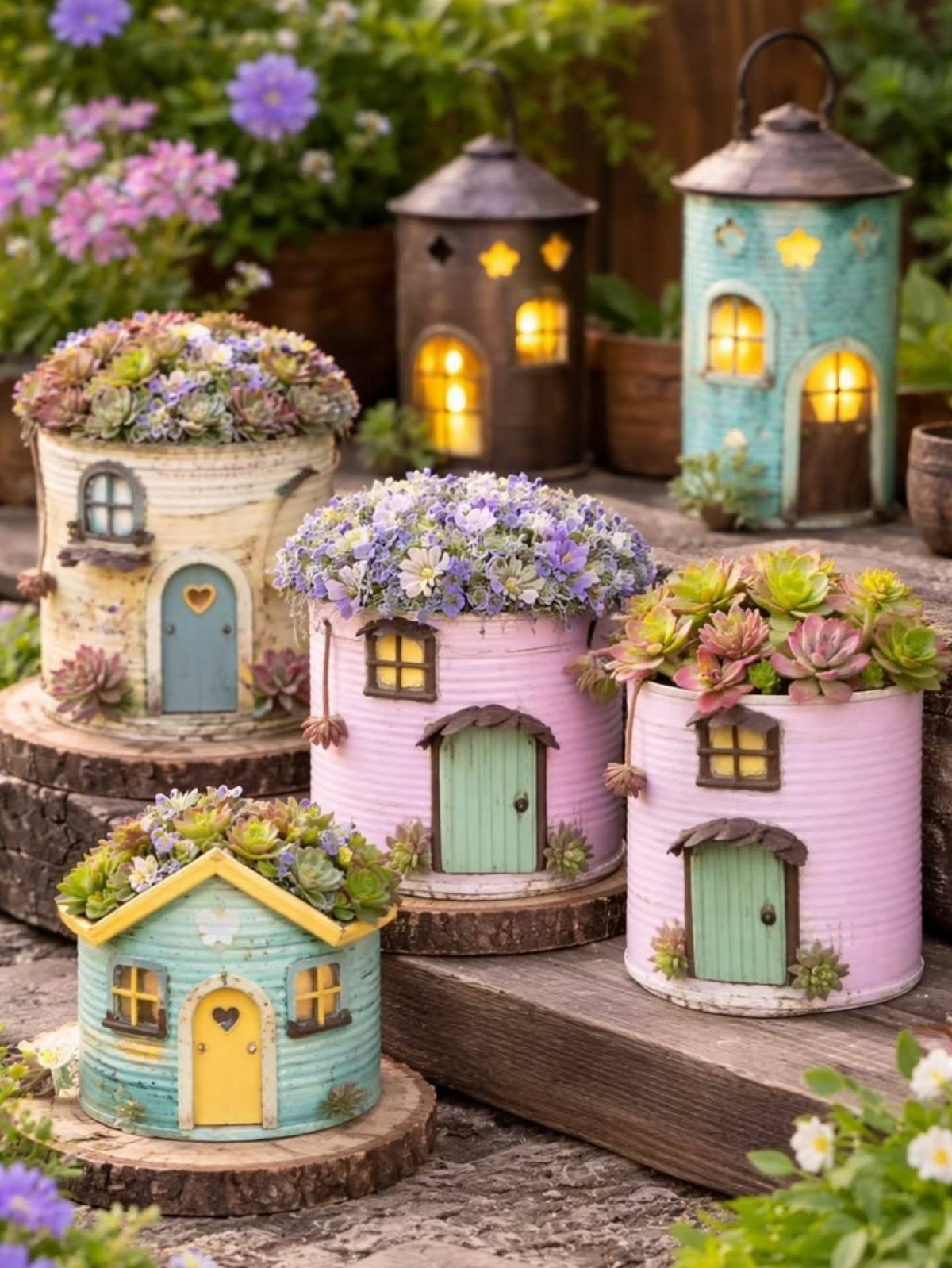
Any tin can with the label soaked off becomes a planter once you punch drainage holes through the bottom. A church key opener works faster than a drill bit and leaves a cleaner rim.
These carry house paint on the outside, not inside where soil meets metal. Rust still forms at the base where water sits, so they last two or three seasons outside, longer on a covered porch.
The fairy doors are acrylic craft paint sealed with varnish; without it, the details blur by June.
A single motif reads accidental. Clustered, with mismatched heights on wood rounds or bricks, they read as village.
Gravel or sand in the bottom layer lets you overwater once without drowning the roots.
14. Fabric Grow Bag Garden
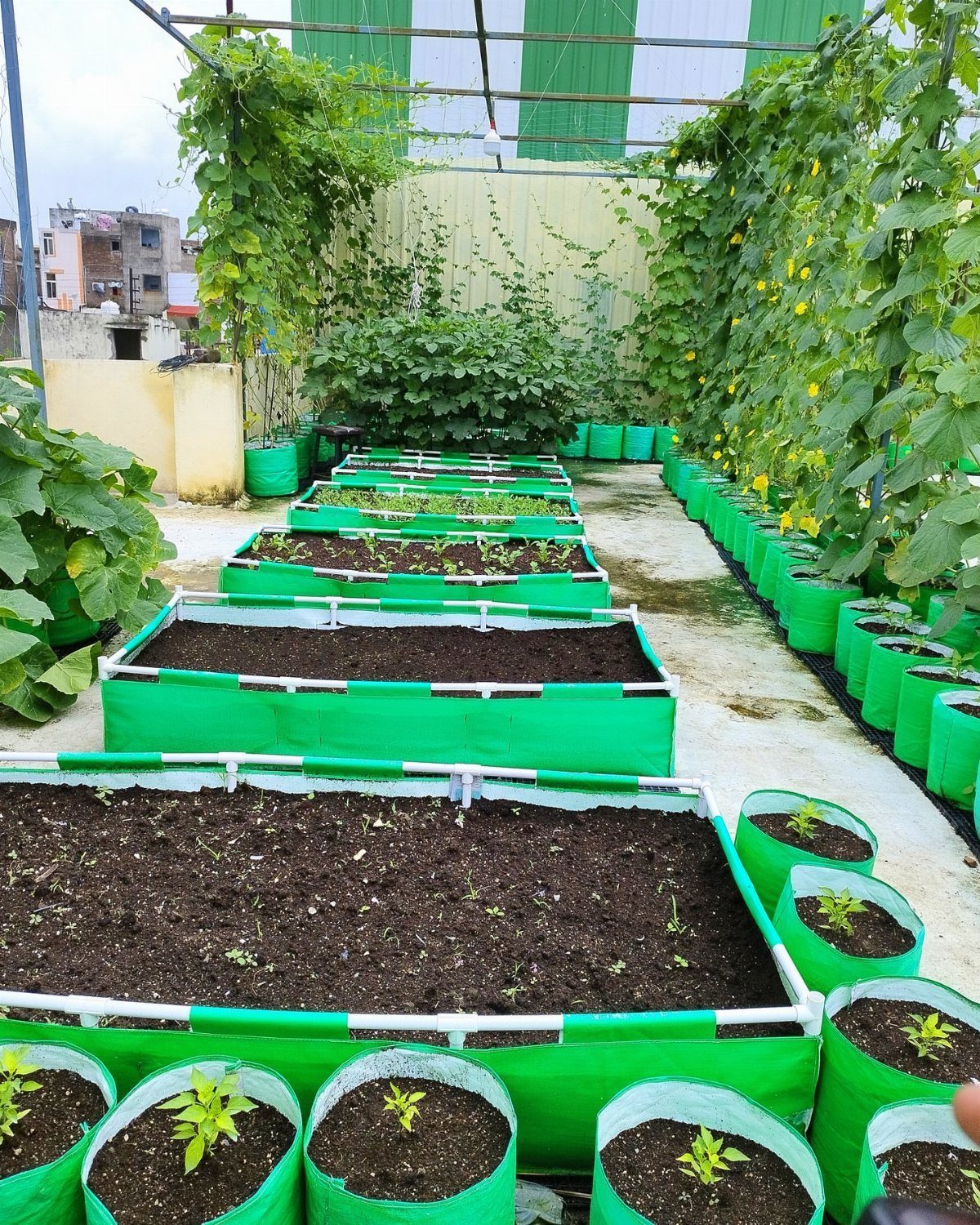
Fabric grow bags breathe in a way plastic pots do not; roots air-prune when they reach the porous wall instead of circling. The green ones here sit in PVC frames that keep the cylinder upright when the soil slumps.
Rectangular beds suit row crops; the single cylinders isolate tomatoes or peppers that spread disease if crowded. On concrete, a pallet underneath lifts drainage clear of puddles.
The topsoil volume costs more than the bags themselves. A single 15-gallon bag holds roughly two cubic feet; calculate from there before you order bulk.
White PVC reflects summer heat; black irrigation tubing would absorb it. Small difference, but the tomatoes notice.
15. Potted Succulents on Porch
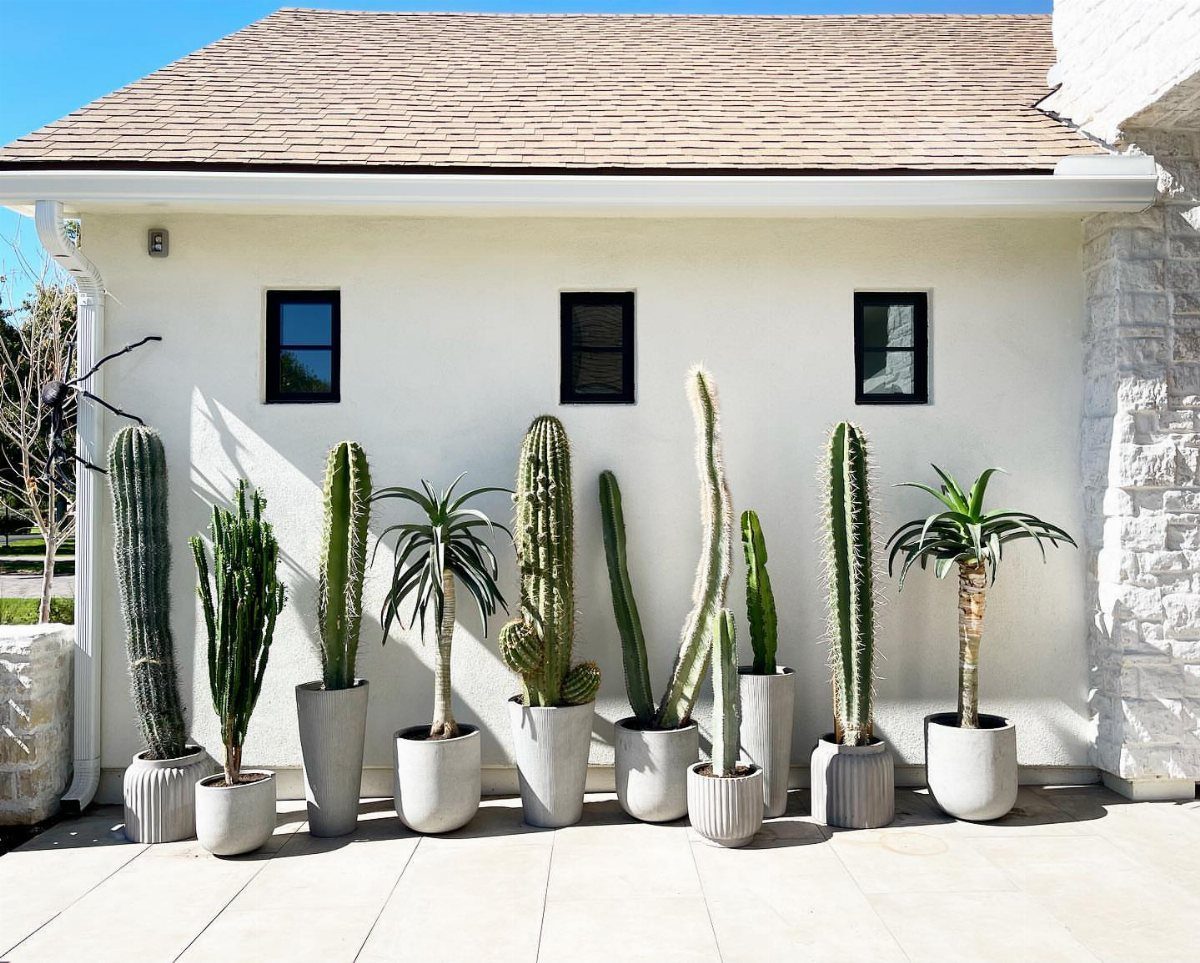
Straight rows of matching pots against a wall read as architecture, not garden. The grey here is concrete composite, lighter than true stone and easier to slide when you need to sweep.
Cacti want the wall’s thermal mass: sun-warmed stucco holds evening heat through cool nights, and the reflected light fills shadowed corners. Without it, compact varieties stretch and lean.
The scale matters.
A wide pot carries a tall specimen that would topple in anything smaller; a modest rim suits plants that stay low. Mixing sizes breaks the lineup but needs more complex watering rounds.
I would cluster by water need, not height. The tall column cacti want less than the aeoniums, and mixed schedules mean one side suffers.
16. Cozy Garden Shed Lounge
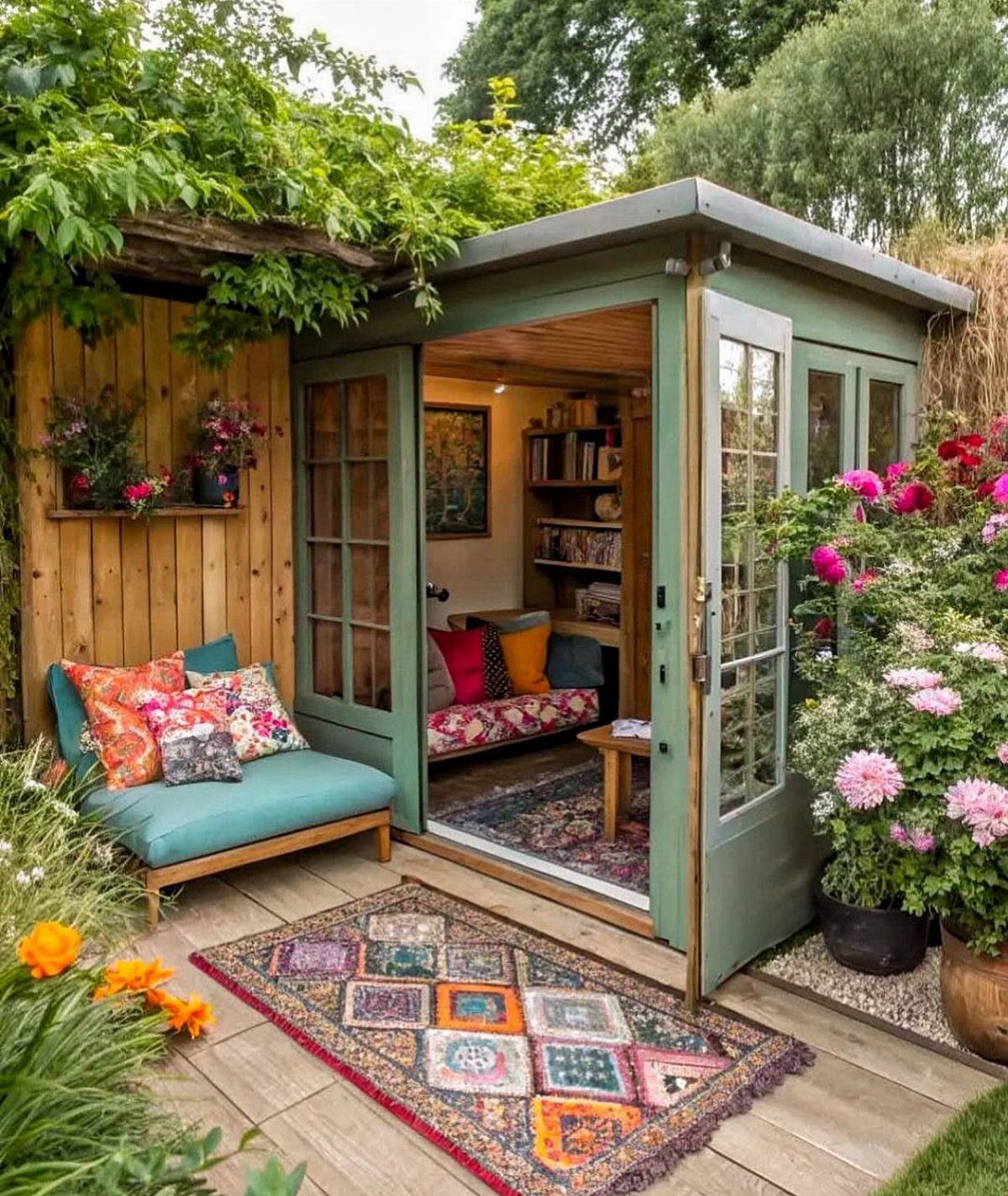
A shed becomes a room when the door opens wide enough to erase the wall. The green paint here matches the garden, so the structure reads as grown-in, not placed.
Bookshelves inside demand the same moisture care as a boat cabin: marine varnish, not house paint, or the joints swell and the backs warp. A small dehumidifier runs cheaper than replacing soggy paperbacks.
The deck outside extends the floor line visually; the lounge chair faces the garden, not the shed, so the sitting looks outward. A rug on decking collects leaf litter and needs shaking weekly, but the color anchors the space.
I would hinge the doors to fold flat against the outer walls, or remove them entirely for the heavy reading months. The threshold is trip enough without negotiating a door swing with tea in hand.
17. Modern Slatted Fence Border
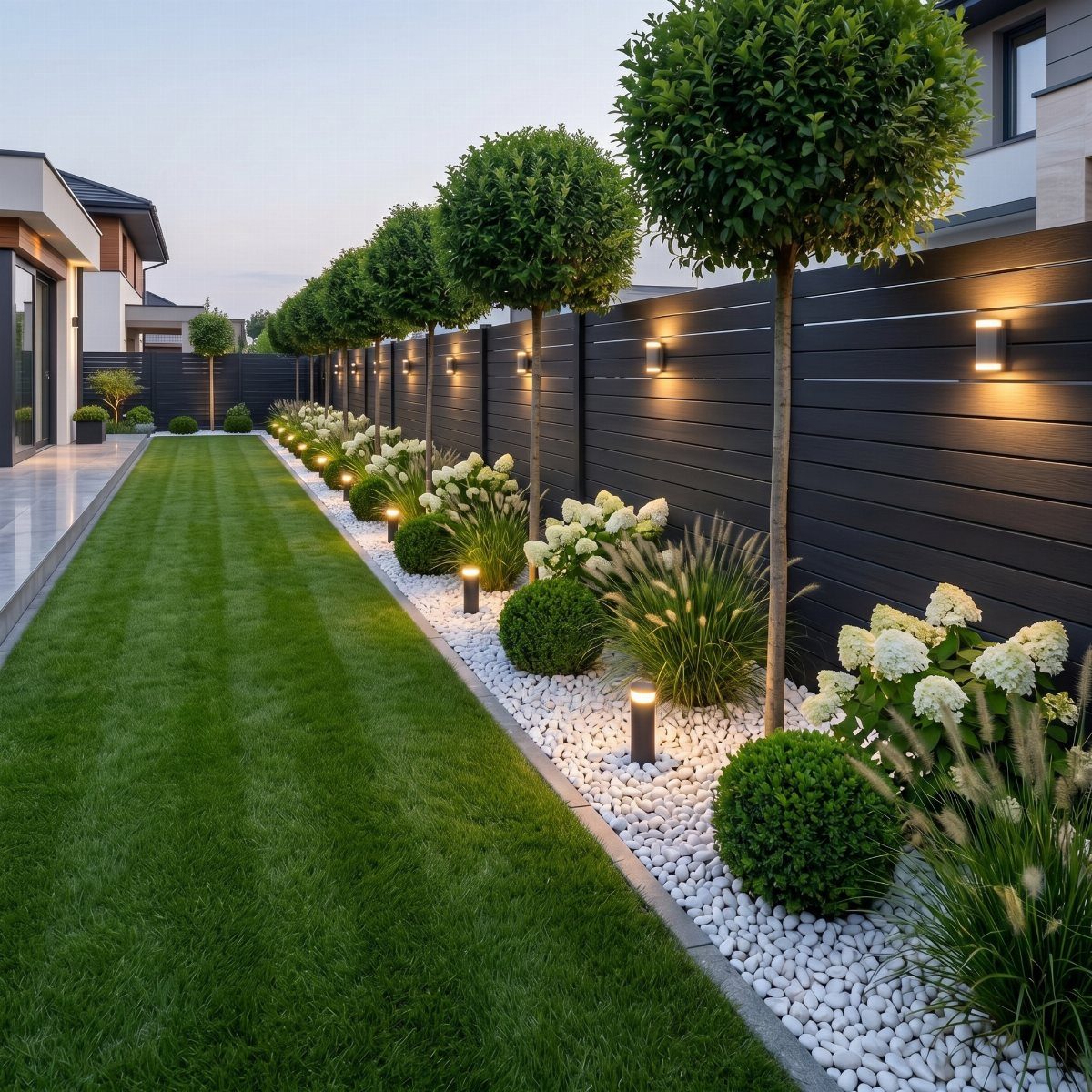
Horizontal slats read lower than vertical boards at the same height; the eye travels the long lines instead of climbing. Dark stain on this fence absorbs light, so the planting in front carries the visual weight.
White pebble mulch reflects upward into the shrub canopy; it also shows every fallen leaf, which is either discipline or chore depending on the gardener.
The round topiary repeats at intervals that match the fence slat spacing, a rhythm too regular to be accidental.
Sconce height matters: mounted at seated eye level, they graze the faces of guests on the patio behind. Higher, at standing height, they serve the path and leave the social zone darker.
The hydrangeas want afternoon shade; the fence orientation here blocks western sun by mid-day, which is why they bloom without browning.
18. Brick Patio with Conservatory
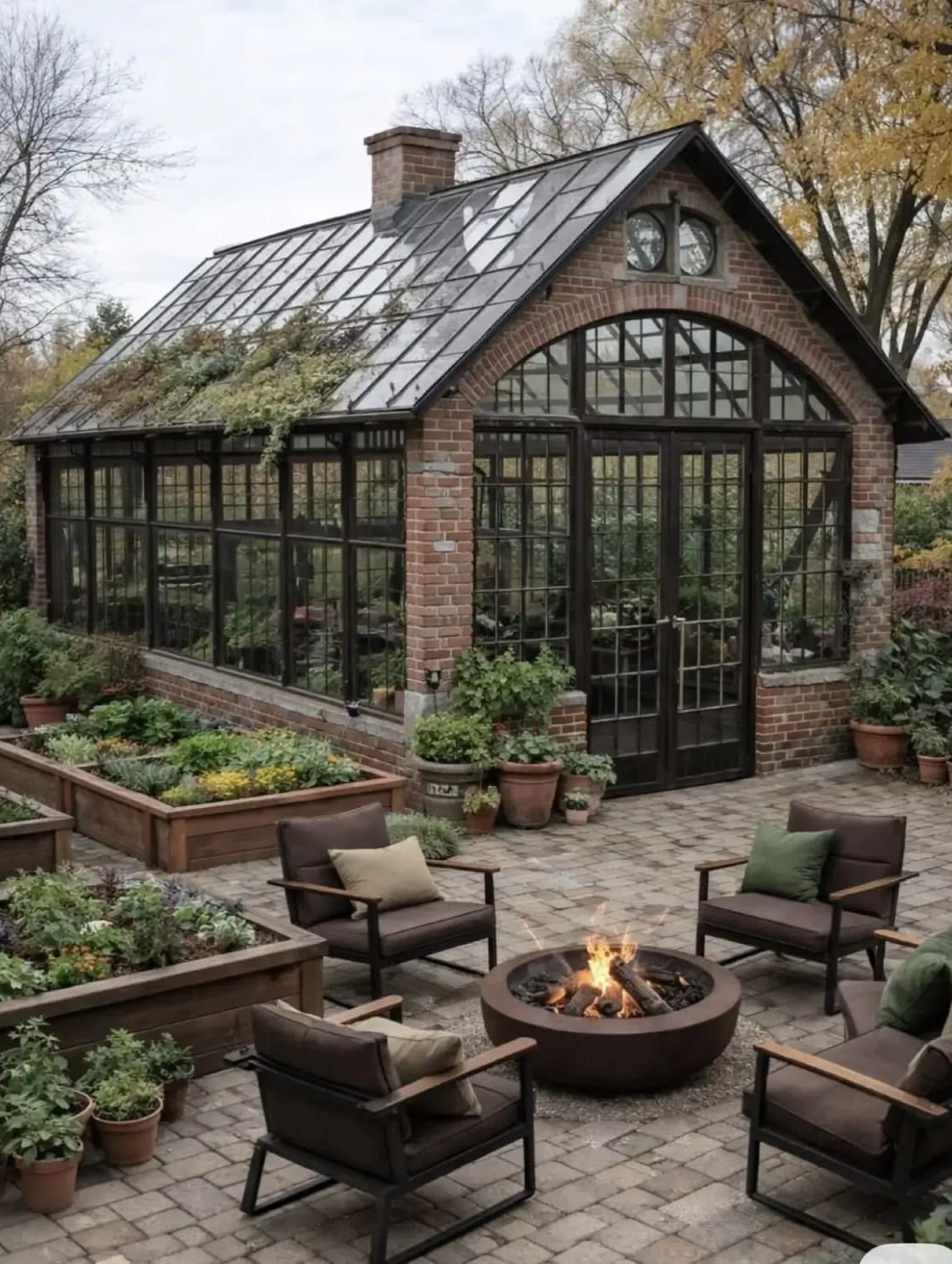
The circular pit shape gathers conversation inward, though half-moon seating would face more toward the garden.
The conservatory wall behind the patio works as windbreak and borrowed backdrop.
Inside it, the temperature swing from day to night suits ferns and starter trays; the brick mass moderates the swing by absorbing noon heat and releasing it after dark.
Raised beds flanking the pit keep cooking smoke off lettuce and leafy things that pick up bitter flavors. A tomato or pepper bed belongs at the downwind end, where the charcoal ash drifts least.
I would size the pit for armchair spacing that feels snug in real use, not the wider gap that looks generous on paper and wastes fuel heating empty brick.
19. Backyard Glass Greenhouse
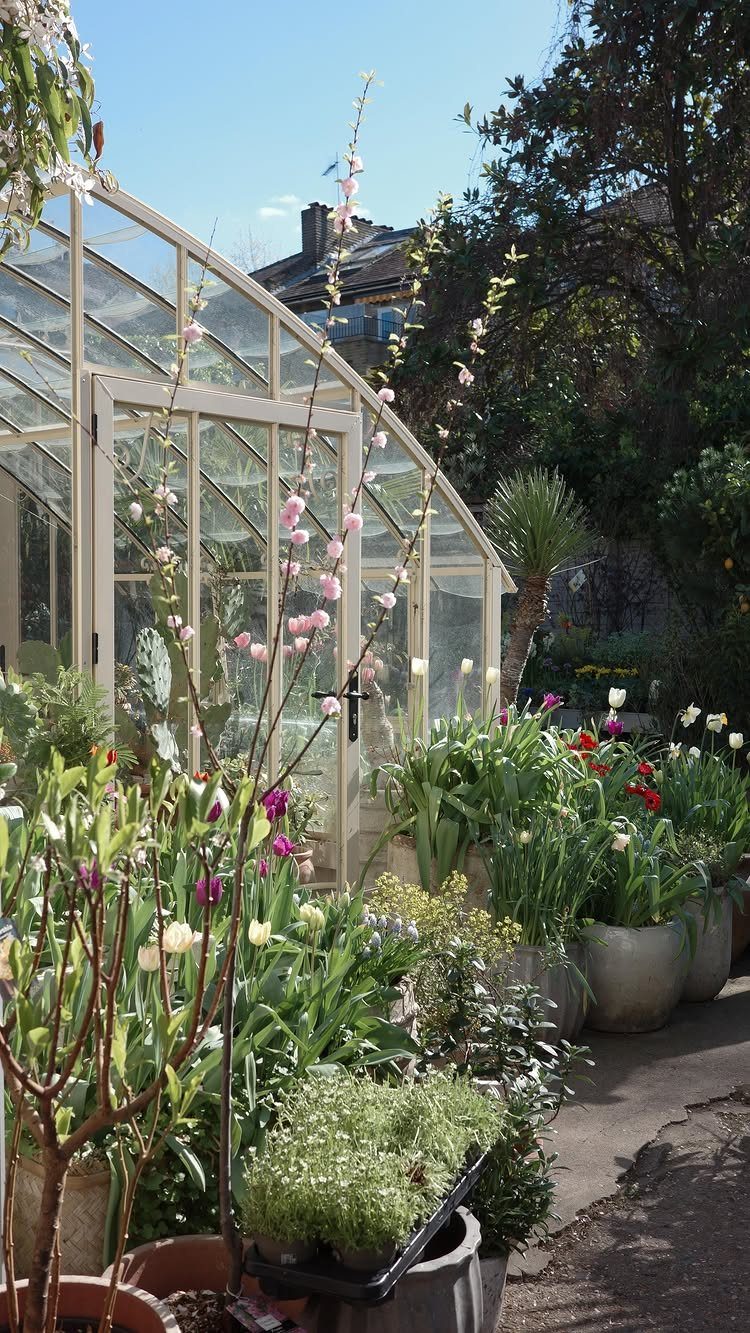
A freestanding glass house keeps tender stock alive through hard frost, gets seeds started earlier in spring, and gives a dry shelf for tools. It needs a level pad; frost heave cracks the frame.
The door in the photo props wide, so summer ventilation is built in. Without it, June heat cooks plants that survived January.
Budget the structure first, then the foundation. A greenhouse on shifting ground is a cabinet full of cracked glass.
20. Stacked Terracotta Herb Tower
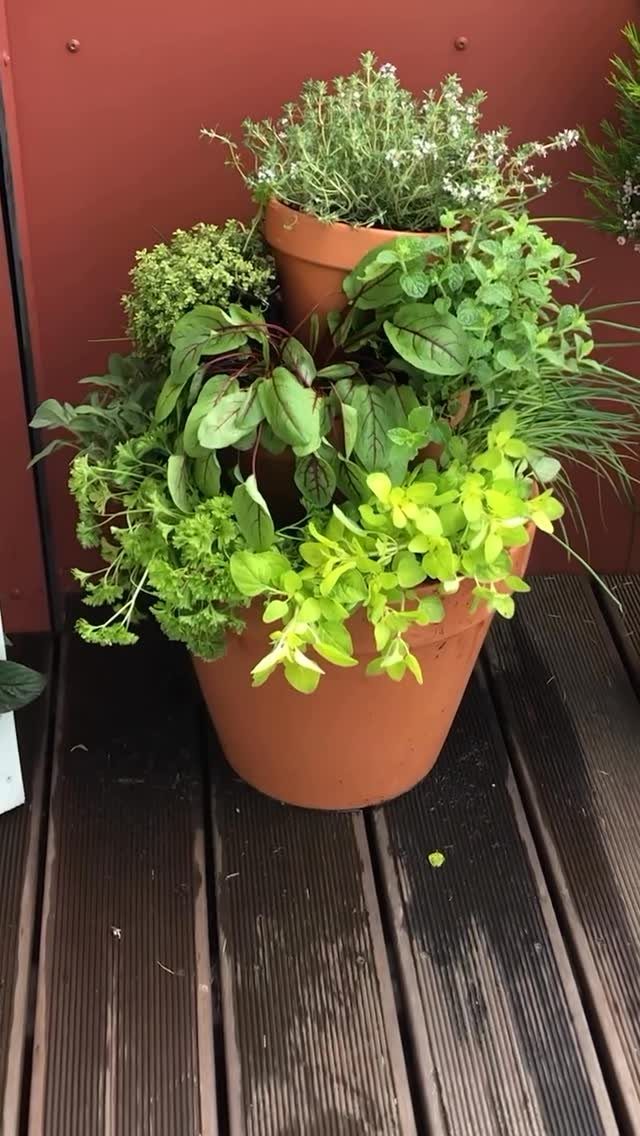
Terracotta’s weight holds the stack steady; 3 graduated cylinders, soil-full, do not wander. The red wall behind throws the clay color forward, though any dark backdrop would serve.
Herbs want lean soil; potting mix cut with perlite drains fast enough that basil roots do not rot in the saucerless bottom pot.
Plant mint at the bottom of the stack so it gets its own drainage and does not take the whole tower.
Wood decking under it stains from drainage. A saucer or a mat there saves the finish.
21. Hanging Porch Planters
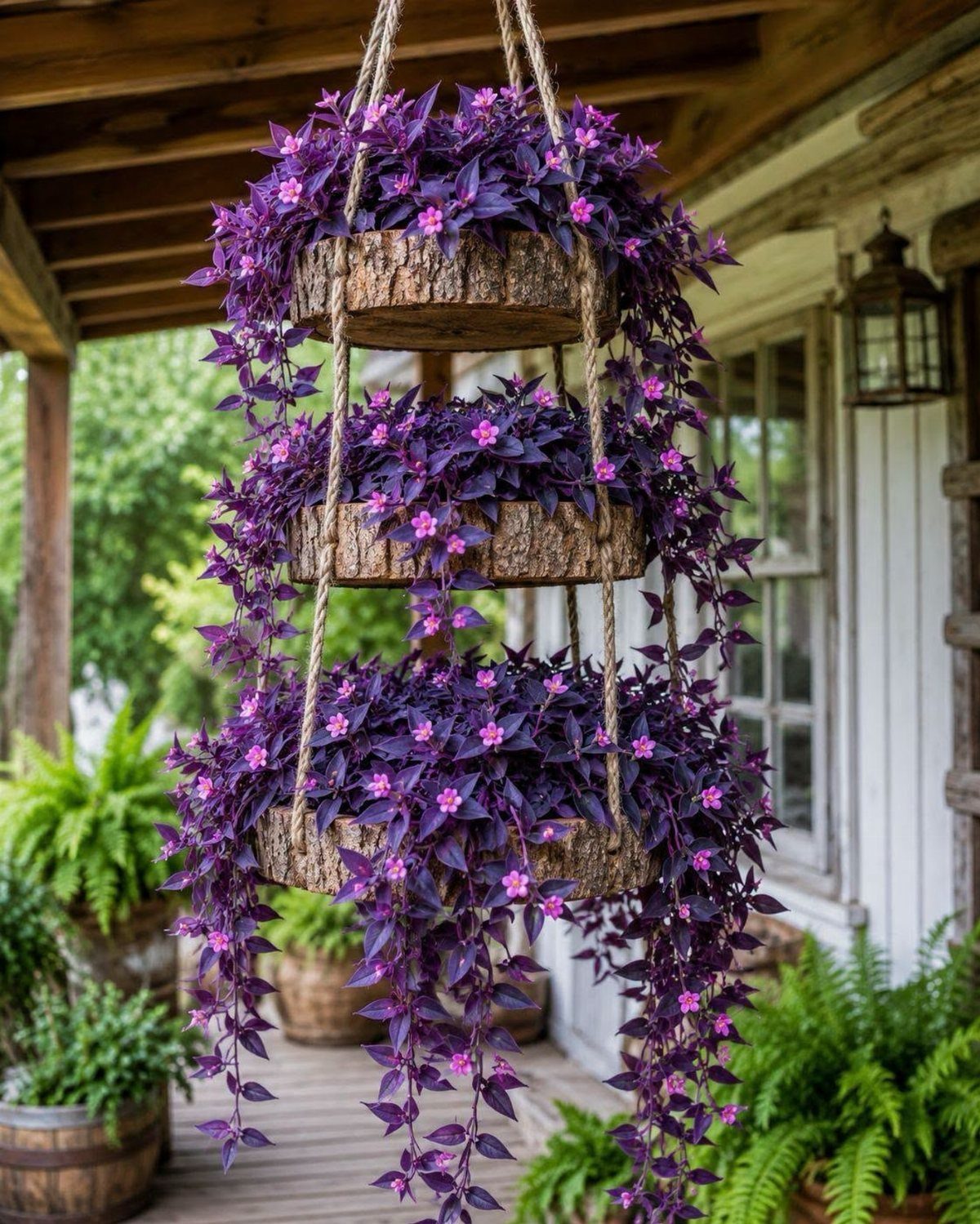
Rope-suspended log rounds carry weight the chains would scar; the raw edge hides water marks that polished wood shows. Purple leaf varieties need morning sun to hold color; full afternoon bleaches them to brownish bronze.
Three tiers staggered, not aligned, let each crown spread without shading the one below. Rope length fixes that spacing; measure with the plants already potted and at size, not as rooted cuttings.
Ceiling hooks need backing above beadboard or the assembly finds the floor by August. Find the joist, or add one.
22. Concrete Block Raised Bed
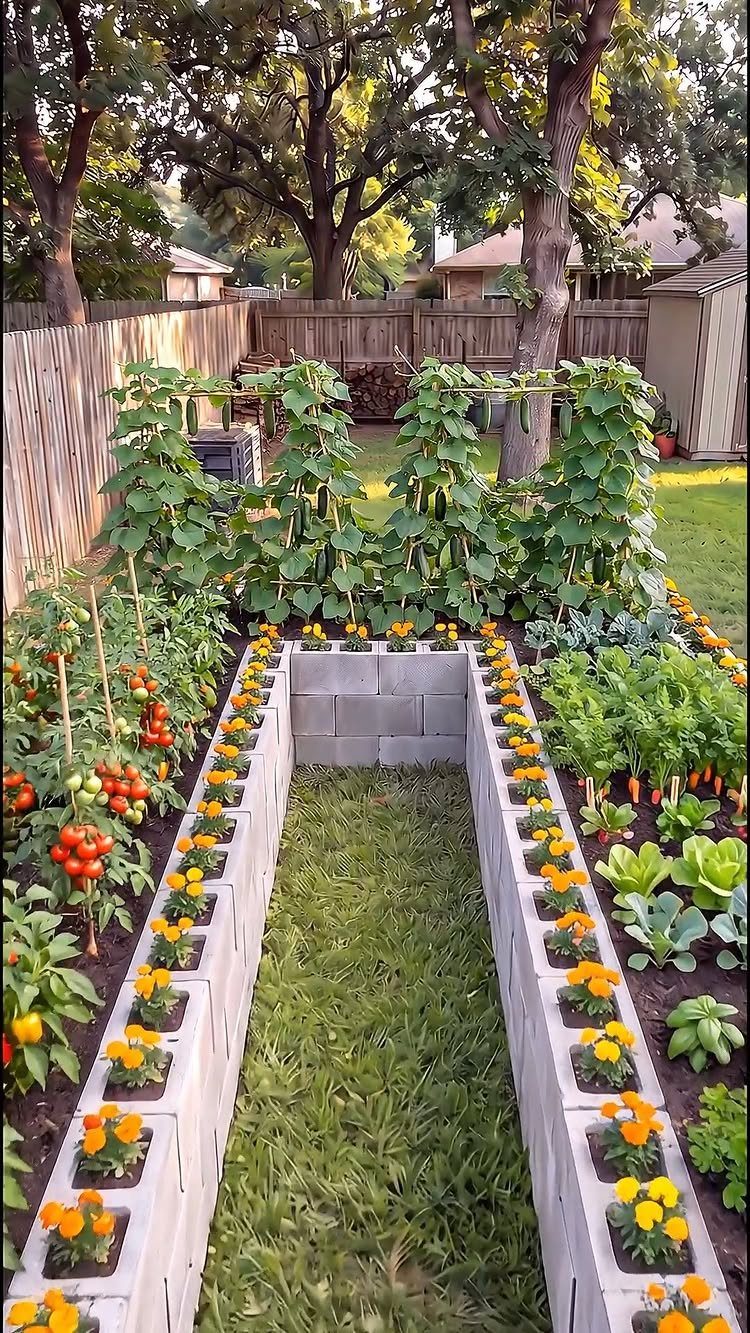
Grey block is cheap and rational: stack dry, no mortar, and the bed dismantles when the lease ends or the sun shifts.
The holes in each block are drainage, or can be; fill them with soil and they root marigold seedlings that flop in wind.
Tomatoes at center reach light over the block wall; greens at the edge mature faster in the reflected heat of the concrete. Plant by height, not by habit.
The block corners need no cap; raw edge is the look. But frost line varies by zone: shallow beds warm too fast and cool too fast both, so check your local depth before you build.
DIY Project Ideas
Most of these builds stay cheap because they reuse what already exists. The tire planters, tin can villages, and door-become-bar all start as someone else’s discard.
A brad nailer and jigsaw appear more than once, and either rents for a day at most hardware stores. The crescent wall planters and grow bags are the rare purchases; everything else is lumber in standard lengths or household scrap.
Paint is where the personality lands.
Charcoal hides grime on the bar, matte black redeems the tires, and the green shed dissolves into its surroundings. The wrong color turns thrift into trash, so test a patch where sun hits full.
Plant Selection Tips
Low maintenance means matching the plant to the spot, not just picking hardy species.
Sustainable Gardening Practices
Upcycling runs through half the list.
Tires become boundary planters once washed free of brake dust and rim residue. Tin cans last two or three seasons before rust wins.
Solid-core doors avoid new structure entirely. The crate planter notches corners instead of adding hardware, and cardboard lining rots exactly when roots hold the shape alone.
The PVC frames are new material, but they keep cylinders upright without replacing bags each season.
Neither is permanent, and both return to something simpler than they found.
Creating Relaxing Spaces
The pergola bench faces the shed, not outward, because sitting looks at the garden.
Frequently Asked Questions
What is the 3-5-7 rule in landscaping?
The 3-5-7 rule is a planting guideline that calls for odd-numbered groupings of three, five, or seven plants to create natural, asymmetrical arrangements that read as discovered rather than arranged.
A desert cactus bed looks right when the plants sit scattered, not lined up; a slatted fence does the opposite, repeating its bars like rhythm on purpose. Both work, but the rule keeps mixed-height plantings from looking formal.
What are some simple garden ideas for a home?
DIY projects with found materials keep the budget where a weekend project should sit.
Tin cans with drainage holes punched through become planters for two or three seasons, while fabric grow bags in PVC frames let you skip building raised beds entirely.
Stack terracotta pots for a vertical herb tower that needs no hardware, or sink three or more car tires to their sidewalls for a deliberate boundary line that costs nothing but labor.
What are the golden rules for designing a garden?
Hide what comes next to make the garden read larger than its lot, a curved corridor does this better than straight sightlines.
Loose sand under stone lets you lift the pieces and re-grade later when the ground settles, which it always does.
Rain running off a walk should hit dirt and roots before it reaches the patio doors. These three from my own notes are the ones I check first on every new layout.