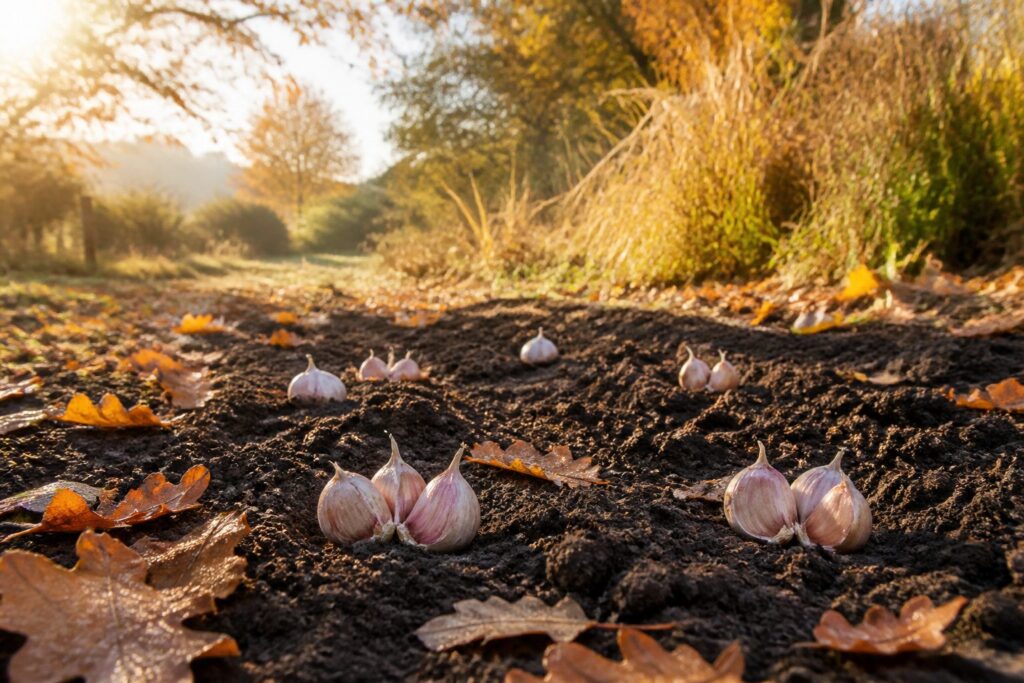
You get full bulbs the following summer for the cost of one fall morning and a little attention through winter.
Most people lose their crop at the very start, when they plant grocery store garlic treated with sprouting inhibitors that never wake in cold ground.
Start instead with certified seed stock, or at least soak saved cloves in fish emulsion and baking soda before they go in.
[link-whisper-related-posts]1. Select and Prepare Garlic
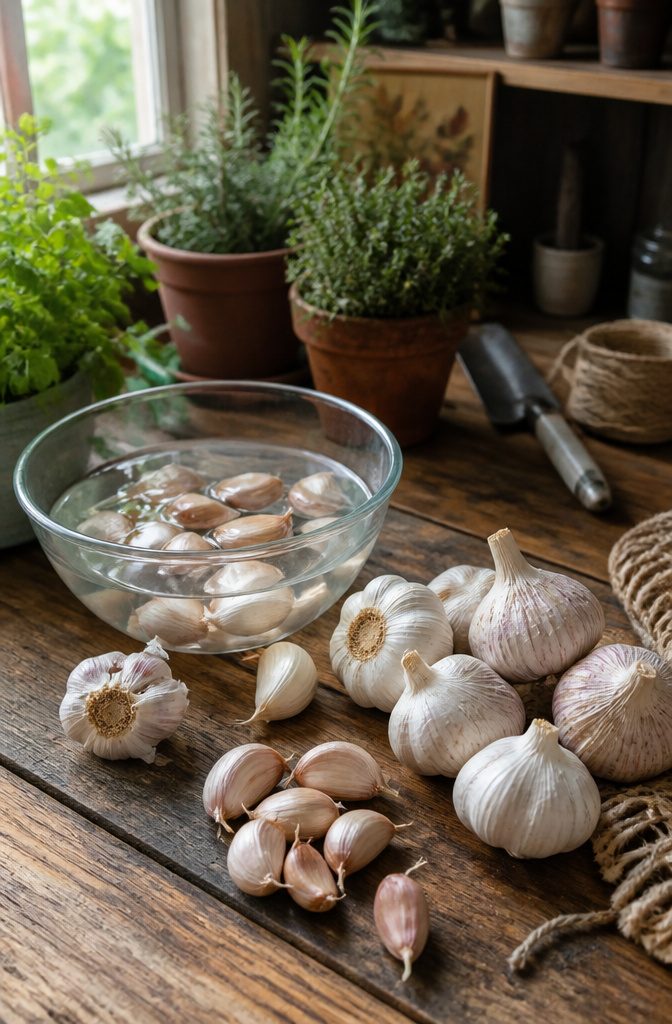
Seed garlic from a reputable grower gives you two things grocery store garlic usually cannot: varieties suited to your climate and cloves that have not been treated to stop sprouting.
Most supermarket garlic carries a sprouting inhibitor that lets it sit on shelves for months, which is exactly what you do not want when you are trying to convince it to root in cold ground.
Even when grocery garlic does break dormancy, it is almost always softneck, bred for long shelf life rather than hardiness through a northern winter.
Certified seed stock arrives tested for fungal disease, so the cloves go into the ground clean.
If you are uncertain about your source, or you are planting cloves saved from last season, a 30-minute soak in water with fish emulsion and baking soda is a sensible precaution.
Mix roughly 2 gallons of water, a couple capfuls of fish emulsion, and 2 tablespoons of baking soda.
The fish emulsion adds nitrogen to get roots moving; the baking soda addresses surface-borne disease. Liquid kelp works in place of fish emulsion if that is what you have.
After soaking, plant the same day. Wet cloves sitting around breed the rot you were trying to prevent.

Large, Firm Garlic Cloves for Planting. Each bulb produces thick, well-formed garlic cloves that separate cleanly. Customers consistently mention the firm texture and size, making these garlic seeds for planting easy to handle and space evenly.
Bold, Rich Flavor: Known for their robust, spicy taste that intensifies when cooked—perfect for roasting, sautés, and garlic-infused oils.

A great tasting healthy. Heirloom, Non-GMO
2. Prepare the Soil
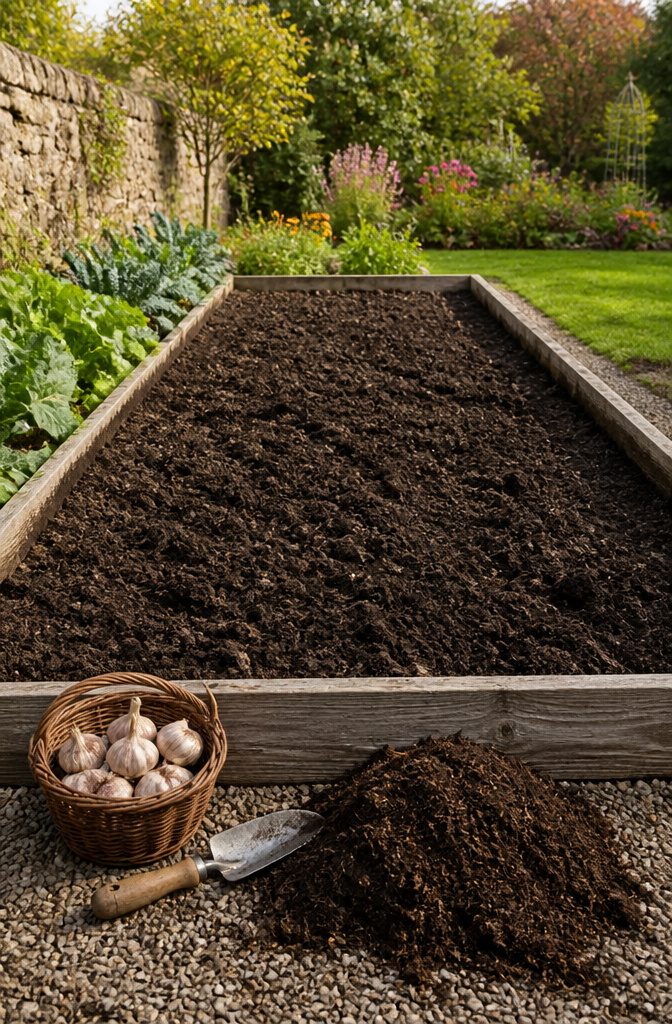
Garlic rots in soil that holds water, so drainage comes first.
The beds need to be fully tilled before you even think about spacing rows, and working the top few inches with a trowel or hori hori knife lets you feel whether the soil breaks apart or stays clumped.
If it stays clumped, you are looking at trouble by spring.
Well-aged compost fixes both problems at once: it feeds the bed and opens up the structure so water moves through.
A few inches worked into the top layer is enough; more is not better if it means planting into raw, unfinished material.
Some growers go heavier, using dried cow manure dug deep, but the same rule applies: it has to be broken down, not heating up.
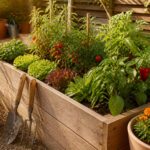
Raised beds solve drainage for sites with heavy clay or low spots, though in-ground beds work fine if the prep is thorough.
Either way, the soil should be fertile and weed-free before a single clove goes in, because garlic does not compete well once it is growing.
Two feet between rows gives the roots room without turning your plot into a maze, and that spacing is a lot easier to mark out in clean, level soil than in ground you skipped tilling.

Product of the USA

PREMIUM GARLIC BULBS FOR PLANTING: Healthy high-quality softneck garlic bulbs selected for strong growth, excellent flavor, and reliable garden performance. Each bulbs will have
3. Plant the Cloves
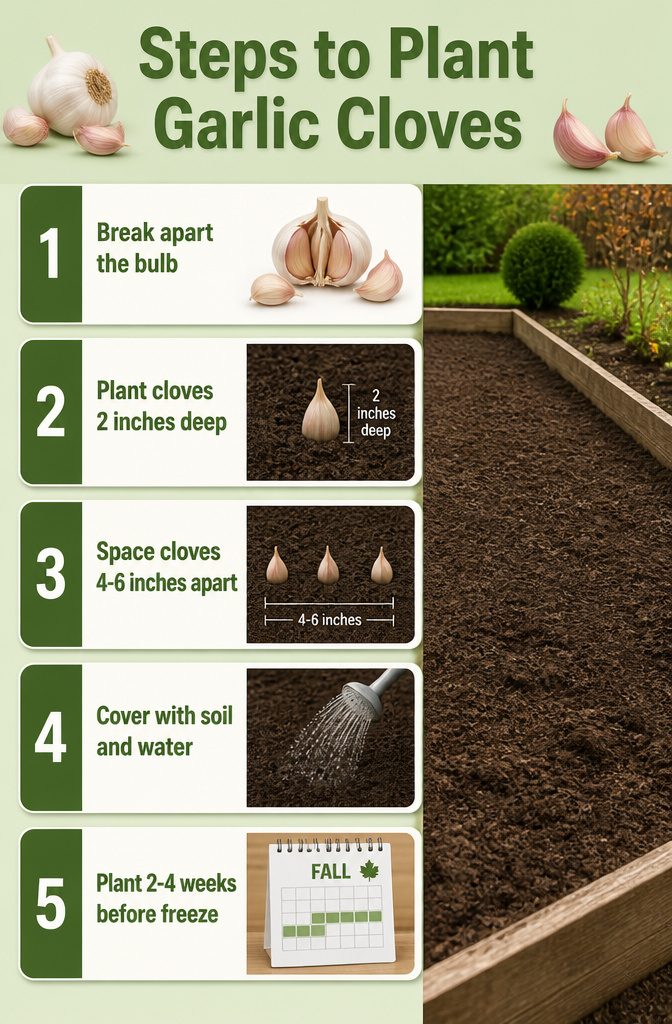
- Break apart the whole bulb and separate each clove, leaving the papery sheath intact. Plant each clove 2 inches deep in cold climates, going shallower if you garden somewhere warmer; the pointy end faces up no matter where you live.
- Space cloves 4–6 inches apart, with rows 12–18 inches apart. This gives the bulbs room to size up without crowding each other out.
- Cover with soil and tamp down gently. Water well after planting so the roots get established.
- The window for all of this is fall, about 2–4 weeks before your ground freezes solid. In zone 5, that usually means late October into mid-November. Zones 6 and 7 run similarly; zone 8 pushes into November or early December. Zone 9–10 gardeners sometimes plant into January, though cloves there may need 4–8 weeks in the fridge first if winter chill is too mild.
- If green shoots poke up after planting, leave them. They will not hurt your harvest come summer.

ENHANCES FEEDING RESPONSE: Brightwell Aquatics Garlic Power stimulates appetite in finicky or newly-added fish, encouraging consistent feeding habits.

Commercial-Strenth Garlic Extract Concentrate: Garlic Barrier is a highly concentrated liquid garlic extract designed for farms, orchards, gardens, and greenhouse operations. Mixes easily with water and applies with common sprayers, providing an efficient solution for growers, landscapers, and serious gardeners managing larger planting areas.

ENHANCES FEEDING RESPONSE: Brightwell Aquatics Garlic Power stimulates appetite in finicky or newly-added fish, encouraging consistent feeding habits.
4. Water the Rows
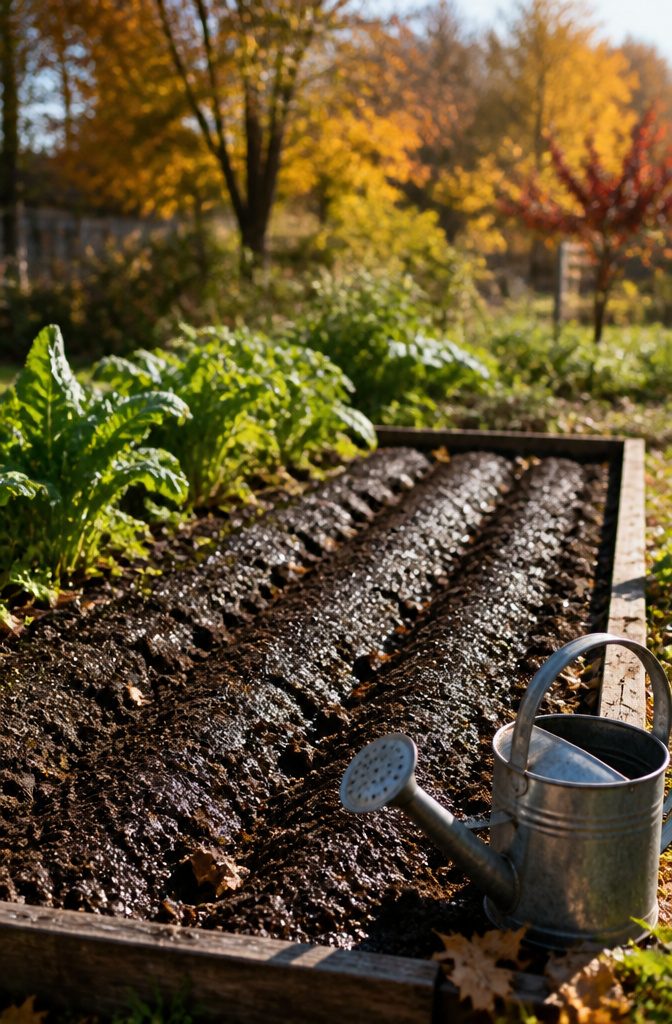
The cloves need moisture to settle in, but standing water is where trouble starts.
I give the bed a thorough drink right after tamping the soil, enough that the top few inches darken and hold together when squeezed, then I step back.
Garlic rots fast in soggy ground, so well-drained soil matters more than how often you water.
Through late fall and early winter, the roots are doing quiet work underground while little shows above.
Rain usually covers it where I garden, and the mulch layer keeps that moisture steady. If six weeks pass dry, a light soaking helps, but the cloves are not thirsty plants; they are building slowly, not drinking heavily.
Early spring shifts the pace. Shoots emerge, and with them the root system expands, pulling more from the soil.
Give the rows about an inch of water per week once growth resumes, counting rainfall in that total. I watch the leaves: firm and upright means the timing is right, yellowing or softening means I have overdone it.
The line between enough and too much is narrower than with most vegetables, and garlic gives less warning before it turns to mush.

Ready-to-Use Formula: No mixing or extra steps required. Simply pour and plant - perfect for gardeners of all experience levels.
Versatile garden soil and all purpose potting mix works as a raised bed soil, container potting soil, outdoor planting mix, indoor plant soil, flower bed soil, vegetable garden soil, shrub planting mix, and landscaping soil amendment, making this premium topsoil the only garden soil blend you need for every planting application around your home.

Hardneck Garlic Bulbs for planting grow into flavorful homegrown garlic with firm bulbs, large individual cloves and distinctive curling scapes, making them an excellent choice for vegetable gardens, raised beds and kitchen gardens
5. Mulch
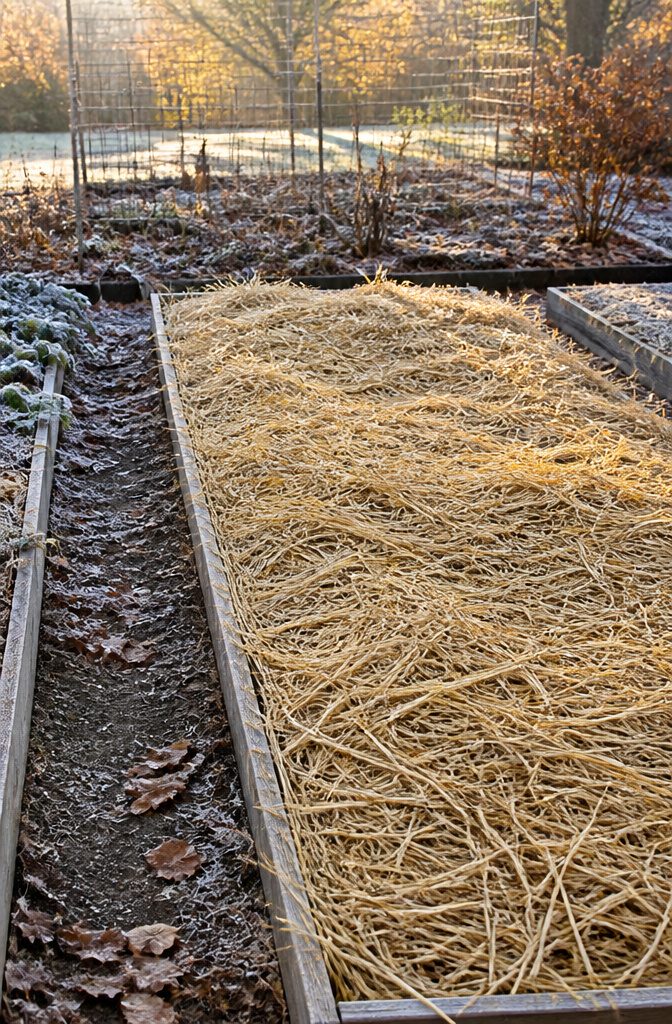
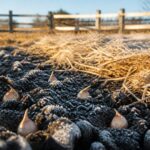
A thick layer of mulch is what keeps the cloves alive through winter. Straw, shredded leaves, or grass clippings all work, laid down 3 to 6 inches deep across the whole bed.
The mulch locks in whatever moisture the soil still holds and buffers the bulbs against hard freezes and the dry wind that pulls water from bare ground.
I have read advice that delays this step until late November or December in cold zones, waiting until soil temperatures drop enough that the cloves stay dormant underneath.
The risk of mulching too early, especially on heavy clay in a wet fall, is rot from warm, soggy conditions. In mild-winter regions the whole step is optional, though even there it smooths out freeze-thaw swings and cuts spring weeding.
Come spring, the shoots push straight through straw or leaf litter. No raking is required, and leaving the mulch in place conserves moisture as the bulbs size up.

Stainless Steel Concave Blade is perfect for cutting, pruning, cropping and scooping.

Multi-Purpose Gardening Tool: This versatile gardening knife serves as an essential digging tool, potting companion, and soil knife all in one, making it perfect for transplanting seedlings, removing weeds, and working through tough soil with ease
6. Care and Maintenance
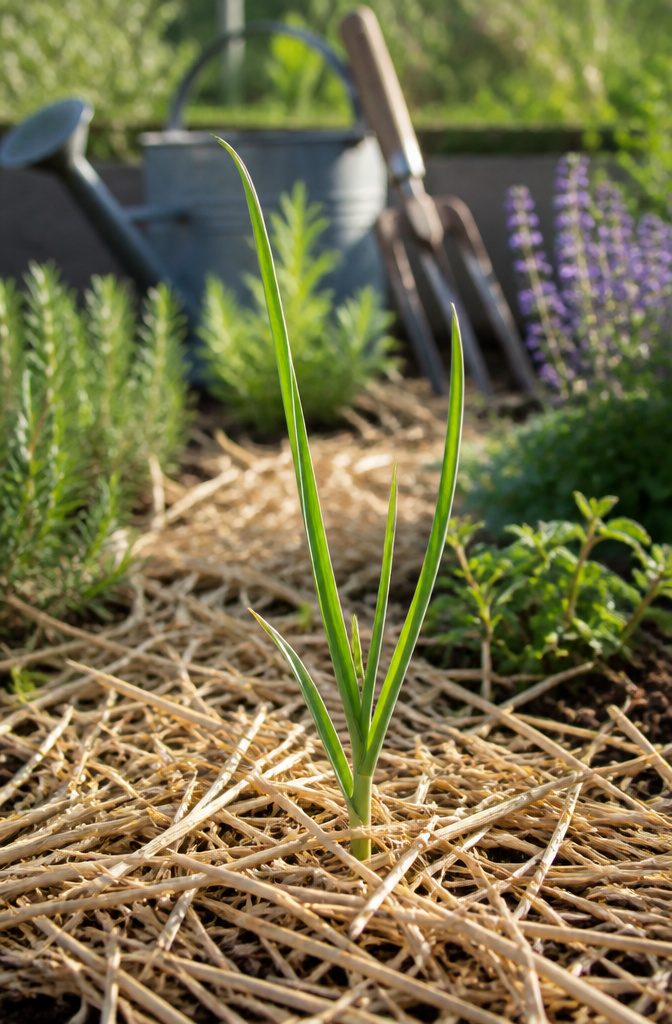
Spring care for garlic is mostly watching and waiting. The shoots that pushed through mulch in late winter need steady moisture, not saturation, so a finger test an inch down still works better than any calendar schedule.
Weeds compete harder than garlic tolerates; pulling them early keeps the shallow roots from tangling with something you did not plant.
A light side-dressing of compost can help if the leaves yellow, but garlic is not a heavy feeder and too much nitrogen costs you bulb density come summer.
Hardneck scapes curl into a full loop by late spring or early summer, and that curl is your harvest signal.
Snip or pinch them off so the plant pushes energy back to the bulb instead of a seedhead. The scapes are edible, and leaving them on means smaller garlic.
Pests rarely bother this crop, which makes organic growing straightforward. The real threat is poor drainage: sitting water rots cloves fast, and no amount of spring attention fixes a bed that holds puddles.
If your soil drains slowly, a raised bed or a different spot next year is the honest fix.

Great for Culinary Use in the Kitchen and for Planting and Growing Garlic
7. Harvest and Cure
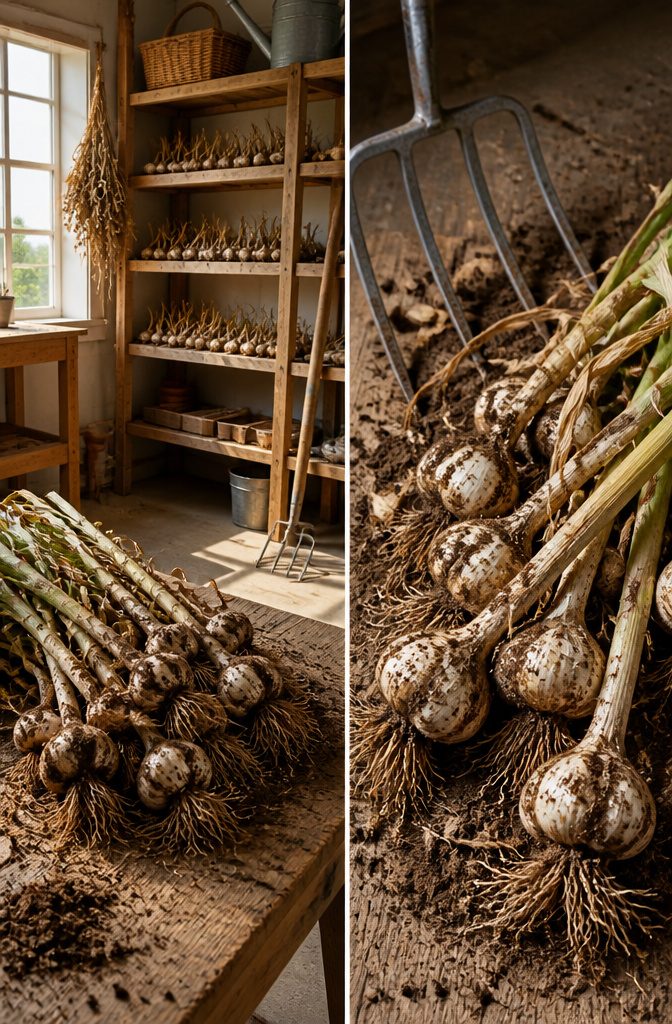
Garlic planted last October asks for patience you do not get back until mid-summer, roughly nine or ten months after those cloves went into cold ground.
The lower leaves turning brown while the top half stays green is the signal; harvest when the bottom third to half has dried, typically late July or early August.
I lift the bulbs on a dry day, working the soil loose with a fork rather than yanking, since a pierced bulb will not store.
The stems and roots stay intact for curing, a step too many weekend gardeners skip.
Brush off heavy dirt clumps but do not wash the bulbs. A garage, shed, or any dry corner with moving air works; lay the garlic in a single layer with bulbs not touching, or tie bundles and hang them stem-up.
Two to four weeks of this converts the last energy from the stalk into the bulb and tightens the papery wrappers that protect it.
Once cured, trim the roots and cut or braid the tops if you grew softneck. Stored cool, dry, and ventilated, the garlic keeps four to six months.
The whole cycle from planting to last clove used runs the better part of a year, which is either a long wait or a small miracle for the price of a Saturday morning and a little attention.


Hardneck and Softneck Varieties
Hardneck garlic delivers the complex, almost spicy flavor that makes growing your own worth the trouble.
The cloves run larger and peel easier, which matters when you are breaking down a whole head for roasted garlic or a batch of soup.
Varieties like Rocambole, Purple Stripe, Music, Chesnok Red, and German Extra Hardy all send up a stiff central stalk called a scape in late spring.
Cut it off and you get a second crop; leave it, and the bulb below stays smaller.
Softneck garlic skips the scape and keeps longer in storage.
Silverskin and Artichoke are the common types, and that soft stem braids neatly for hanging in a kitchen. Warm-climate growers in Zones 8–12 get more reliable results here, though gardeners in the transitional Zone 6 and 7 sometimes make either type work.
Elephant garlic looks like garlic on steroids but sits closer to the leek family. The flavor runs milder, which some cooks like and others find pointless after all that digging.
Softneck has a flexible stem that can be braided for longer storage and is the best for southern growers; hardneck has a stiff stem, or scape, which can also be eaten, and grows well in cold climates.
For most northern gardens, that climate split settles the choice before flavor even enters it.
I plant hardneck because my Zone 6b winters would punish anything less cold-hardy, and I would rather have scapes and easy-peeling cloves than a braid I can not reliably grow.
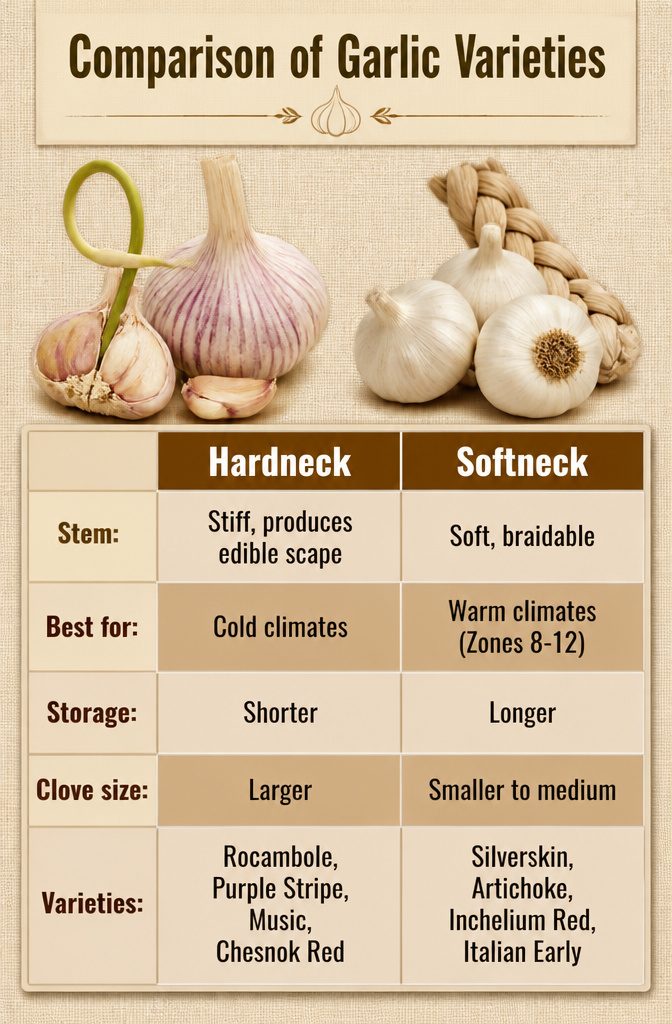
| Hardneck | Softneck | |
|---|---|---|
| Stem | Stiff, produces edible scape | Soft, braidable |
| Best for | Cold climates | Warm climates (Zones 8–12) |
| Storage | Shorter | Longer |
| Clove size | Larger | Smaller to medium |
| Varieties | Rocambole, Purple Stripe, Music, Chesnok Red, German Extra Hardy | Silverskin, Artichoke, Inchelium Red, Italian Early |

ENHANCES FEEDING RESPONSE: Brightwell Aquatics Garlic Power stimulates appetite in finicky or newly-added fish, encouraging consistent feeding habits.

Fish Protein :12-2-2 NPK powder made from 100% fish dried liquid powder, ground, and highly water-soluble when mixed.

Concentrated garlic food soak to encourage fish to eat; good for finicky eaters .
When to Plant by Zone
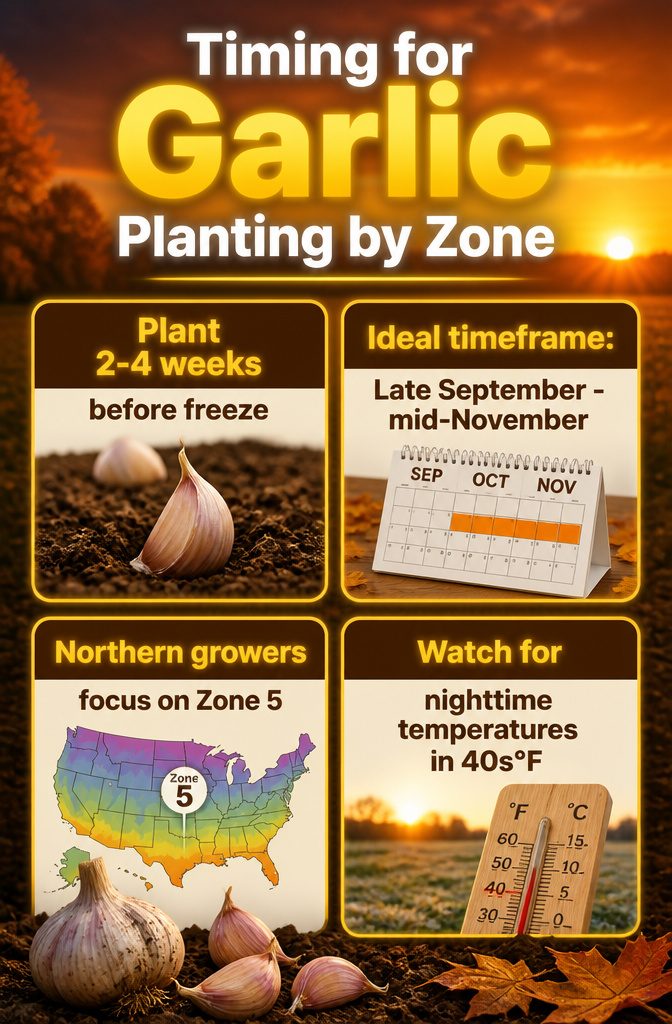
Fall garlic planting needs a window that feels uncomfortably tight until you learn to read it. Aim to plant 2–4 weeks before your first hard freeze, which in most of the US lands somewhere between late September and mid-November.
That span covers a lot of ground, so your actual date depends on where you sit on the map.
Sources cluster around slightly different numbers: some say 4–6 weeks, others 2–4, and a few simply say about 3 weeks before the ground freezes solid.
The disagreement itself is useful. It tells you the timing is forgiving enough that obsessing over the exact week misses the point.
What matters more is the mechanism: you want the clove to put down roots, but you do not want green shoots breaking the surface before winter.
Shoots that emerge too early get burned by cold; roots that never develop leave the plant stranded come spring.
Nighttime temperatures settling into the 40s°F are your practical signal. Plant then, and the soil is still warm enough to wake the root system without coaxing top growth.
Wait too long and the ground turns hard before anything anchors. Plant too early, especially if a warm spell follows, and the cloves think it is spring.
The cold itself is not the enemy. Garlic needs that winter chill, particularly hardneck varieties, to trigger proper clove formation later.
The dormancy is part of the deal. What you are really scheduling around is root establishment without premature emergence, and the 2–4 week buffer gives you that margin.

You will receive 5 Music Garlic bulbs for planting, ready to establish in your garden, raised bed, or outdoor growing space.

California Softneck Garlic Bulbs for Planting contain multiple individual cloves that can each be planted to grow a new garlic plant. Softneck garlic develops full bulbs with numerous cloves and classic papery skins, making it an excellent choice for home vegetable gardens, raised beds and large containers.

Specially Crafted for Raised Beds: Formulated to provide the ideal growing environment for vegetables, herbs, flowers, planter boxes, and other container gardens.
Water and Weed Schedule
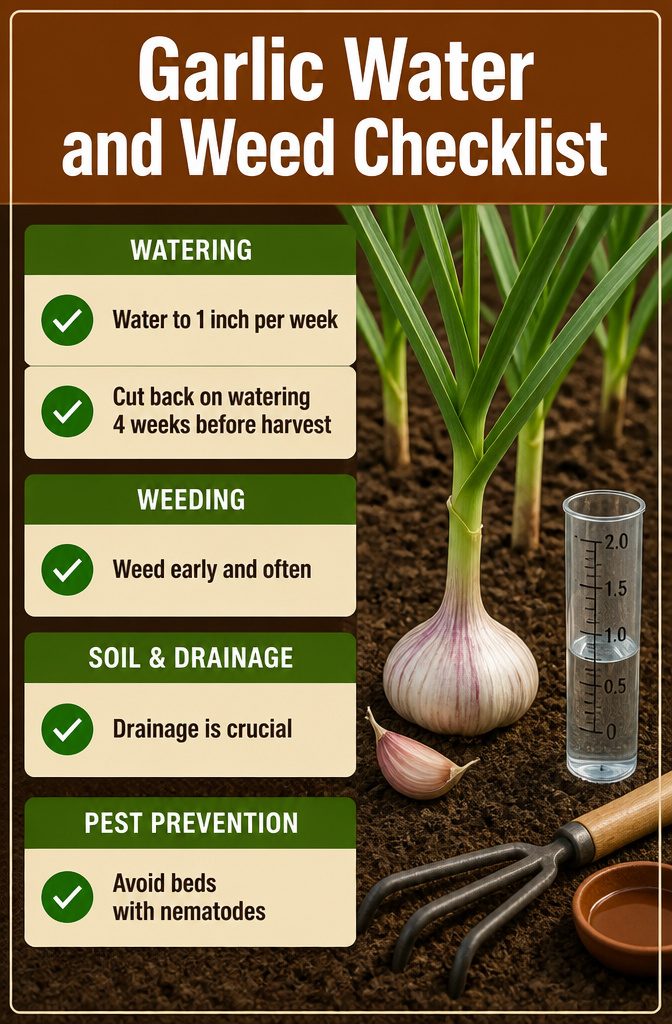
Consistent moisture matters more than frequency. The soil should stay damp but never soggy while the cloves settle in and roots establish before winter freezes.
- Water to 1 inch per week, including rainfall, once spring growth begins and through the bulb-forming stage in early summer. A simple rain gauge in the bed keeps the math honest.
- Cut back to nothing about four weeks before harvest. The outer wrappers start drying then, and extra water at that stage can stain them or invite mold.
- Weed early and often. Garlic competes poorly for both nutrients and moisture, and a clean bed makes the difference between full bulbs and disappointing ones.
- Drainage is non-negotiable. "Wet feet" rot cloves fast; if your soil holds puddles, plant on a slight mound or choose another spot entirely.
- Pest pressure stays low for most growers, but nematodes are the exception. Skip any bed that has hosted them before; they persist in soil and will find garlic roots.

Featured with a sharp edge for slicing and a serrated edge for cutting tough roots or dividing small branches. Hardened stainless steel blades and polished surfaces make it easy to penetrate through dry soil and prevent the blades from rusting.

Multipurpose Hori-Style Garden Tool – Ideal for digging, weeding, planting, transplanting, dividing roots, and cutting through soil, making it a versatile all-in-one tool for everyday garden work.

[Full-Tang Strength & Comfort Grip] Crafted with a full tang structure and premium stainless steel, this garden knife is built to last. The ergonomic beechwood handle offers a comfortable, non-slip grip even when wet, reducing hand fatigue during prolonged use.
Curing Methods That Work
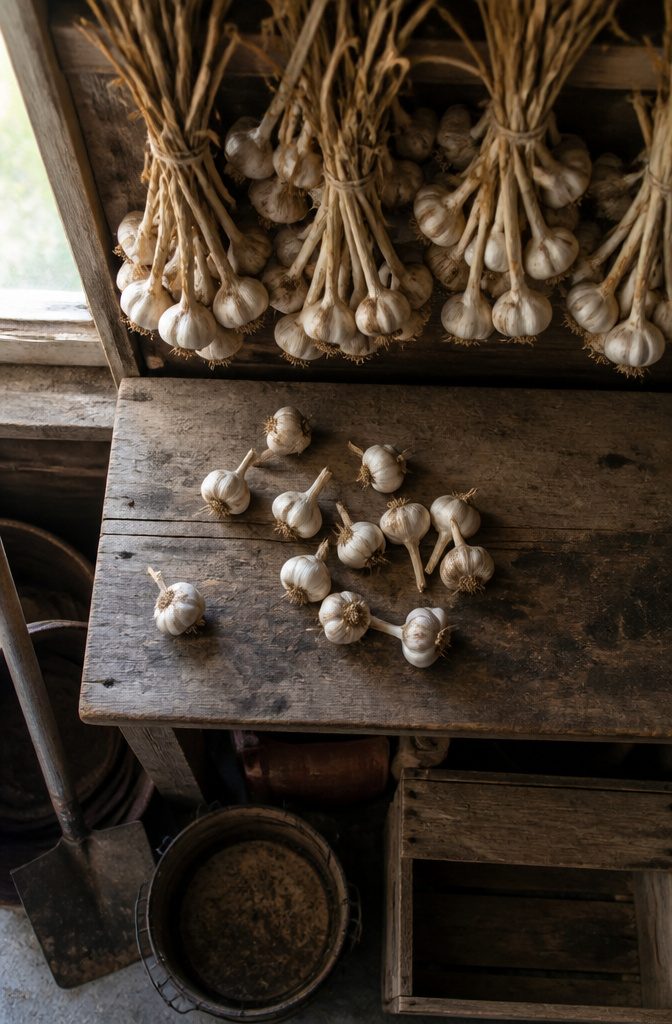
Garlic fresh from the ground is not ready for the pantry. The bulbs need two to four weeks in dry, ventilated shade so the stems and outer wrappers can fully dry.
That curing period is what shifts the last energy from stalks into bulbs and builds the papery skin that keeps garlic usable for months.
Three setups handle this without much space.
Tie the bulbs in bunches of six to ten and hang them bulb-down from rafters or a laundry rack in a garage. A quarter-bushel or half-bushel basket works too, bulbs facing down so air reaches the neck.
If floor space is easier, a raised screen or old window screen on sawhorses lets you lay bulbs in a single layer. A fan on low, shifted every few days, evens out drying when humidity runs high.
Temperature matters.
Seventy to eighty degrees is the zone; if your garage spikes past eighty-five, move more air through rather than move the garlic. Hardneck varieties store about five months once cured, softneck closer to eight.
After curing, trim roots to a quarter inch, cut tops to an inch or two above the bulb, and brush off loose soil. Save your largest cloves from the best heads for next fall’s planting.
Frequently Asked Questions
When is the best time to plant garlic in the fall?
Plant garlic 2 to 4 weeks before your ground freezes solid, which usually means late September through mid-November depending on your zone.
Nighttime temperatures settling into the 40s°F are your practical signal to start planting. This window gives cloves time to establish roots without sending up shoots that could get damaged by cold.
How deep should I plant garlic?
Plant each clove 2 inches deep in cold climates, going slightly shallower in warmer regions.
The pointy end always faces up. Cover with soil and tamp down gently before watering well to settle the roots.
How far apart should garlic cloves be spaced?
Space cloves 4 to 6 inches apart, with rows 12 to 18 inches apart.
This spacing gives bulbs room to size up fully without crowding each other out. Two feet between rows also makes maintenance and harvest easier throughout the growing season.
When should I harvest garlic?
Harvest when the lower leaves turn brown while the top half stays green, typically late July or early August.
Lift bulbs on a dry day using a fork rather than pulling, since a pierced bulb will not store properly. The whole cycle from fall planting to harvest runs about nine or ten months.
Can I plant grocery store garlic?
You can, but it is not recommended. Most supermarket garlic carries a sprouting inhibitor that prevents it from rooting in cold ground, and it is almost always softneck varieties bred for shelf life rather than winter hardiness.
Certified seed stock from a reputable grower gives you climate-suited varieties and disease-tested cloves that actually sprout.
What are some common mistakes people make when planting garlic?
Poor drainage tops the list; garlic rots fast in soil that holds water, so skipping soil prep or planting in low spots ruins the crop.
Planting too early can trigger premature sprouting before winter, while planting too late leaves no time for root establishment. Using grocery store garlic, overcrowding cloves, and mulching too early on wet, heavy clay are other frequent errors.
Will garlic grow back every year?
Garlic is not a true perennial in the way many gardeners mean; it completes its life cycle in one growing season and is harvested the following summer.
However, if you leave small cloves or bulbils in the ground, they may resprout and grow again, though usually with smaller, less uniform results than replanting selected seed stock each fall.
Why do you soak garlic before planting?
Soaking is a sensible precaution for cloves of uncertain origin or ones saved from last season’s harvest.
A 30-minute bath in water mixed with fish emulsion and baking soda feeds initial root growth and addresses surface-borne disease. Plant the same day after soaking; wet cloves left sitting around breed the rot you were trying to prevent.
Can I leave garlic in the ground over winter?
Fall-planted garlic is designed to stay in the ground over winter; the cold period is actually required for proper clove formation, especially in hardneck varieties.
A thick mulch layer 3 to 6 inches deep protects the bulbs through hard freezes and dry wind. The cloves root underground during this dormant period and resume growth in early spring.