Plant thirsty herbs like basil and parsley together, and keep drought-tolerant ones like rosemary and thyme in their own pot.
The clash comes when you mix the two groups: basil rots from dry soil while rosemary rots from wet, and mint in a shared container simply becomes a mint container.
A 12-inch plastic planter works for most pairings, but mint always gets its own pot, no exceptions.
[link-whisper-related-posts]What Herbs to Plant Together
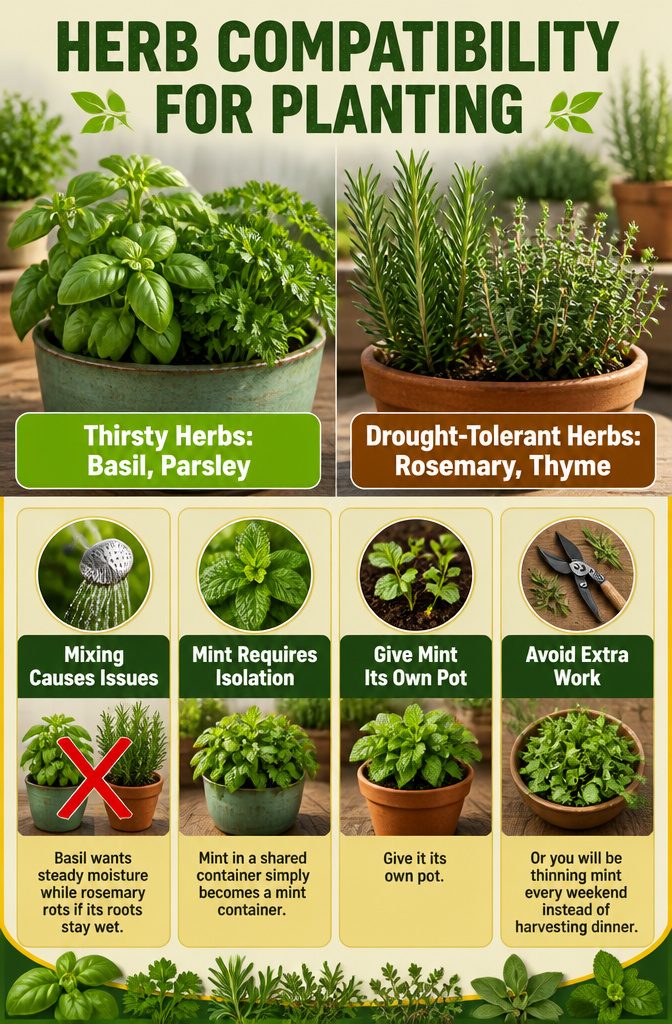
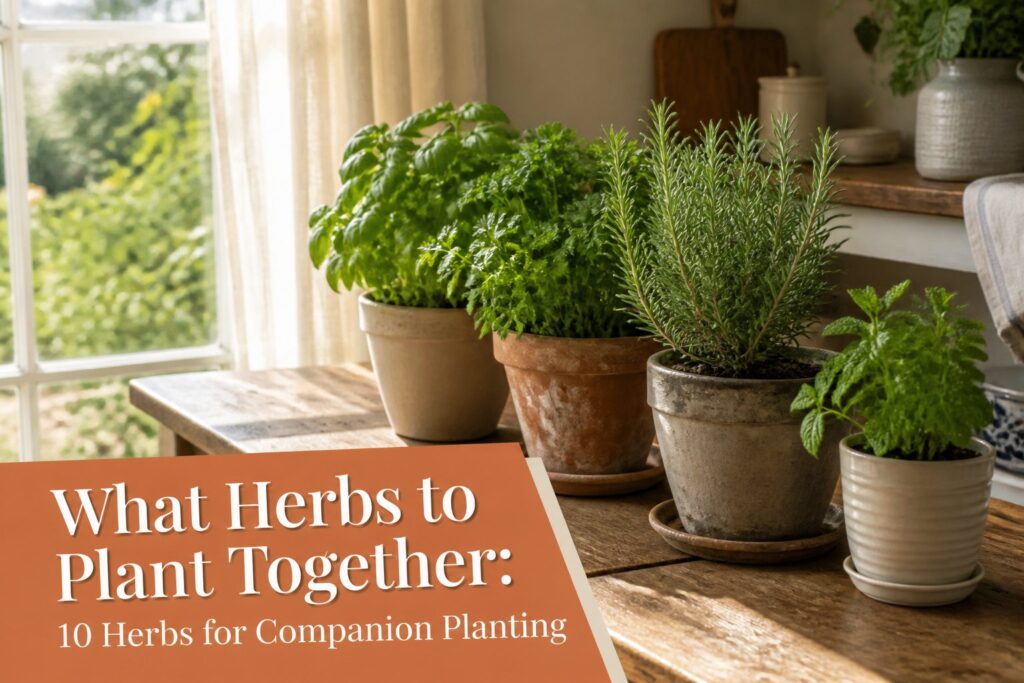
Herbs grow best in groups that share light, water, and soil needs. The two main camps are thirsty herbs like basil and parsley versus drought-tolerant ones like rosemary and thyme.
Pair basil with parsley, cilantro, or chives in the same container and they will keep each other company without drama. Mediterranean herbs such as rosemary, thyme, oregano, and sage prefer the same dry-between-waterings routine and do fine together too.
The clash happens when you mix the two groups: basil wants steady moisture while rosemary rots if its roots stay wet. Mint is its own case.
Owners on Reddit mention that mint in a shared container simply becomes a mint container, choking out everything else. Give it its own pot, or you will be thinning mint every weekend instead of harvesting dinner.

HERB GROWING KIT: This all-inclusive kit comes with 5 planter bags, 5 plant markers, 5 soil disks, 1 mini shears, and 1 planting guide. Designed for simplicity, it's perfect for beginners looking to start their own indoor garden.

Complete All-In-One Kit - No need to buy separate supplies. This herb starter set comes with 4 plastic planter pots, 4 soil discs, 4 plant markers 4 heirloom herb seed packets, and essential planting tools—everything you need to start your indoor herb garden immediately.

COMPLETE INDOOR HERB GARDEN KIT: This ROOTCRAFT herb growing kit includes everything you need to start your herb growing journey. It's perfect for kitchen, windowsills, balconies and patios, elevating your indoor space with a vibrant array of gourmet herbs
Basil
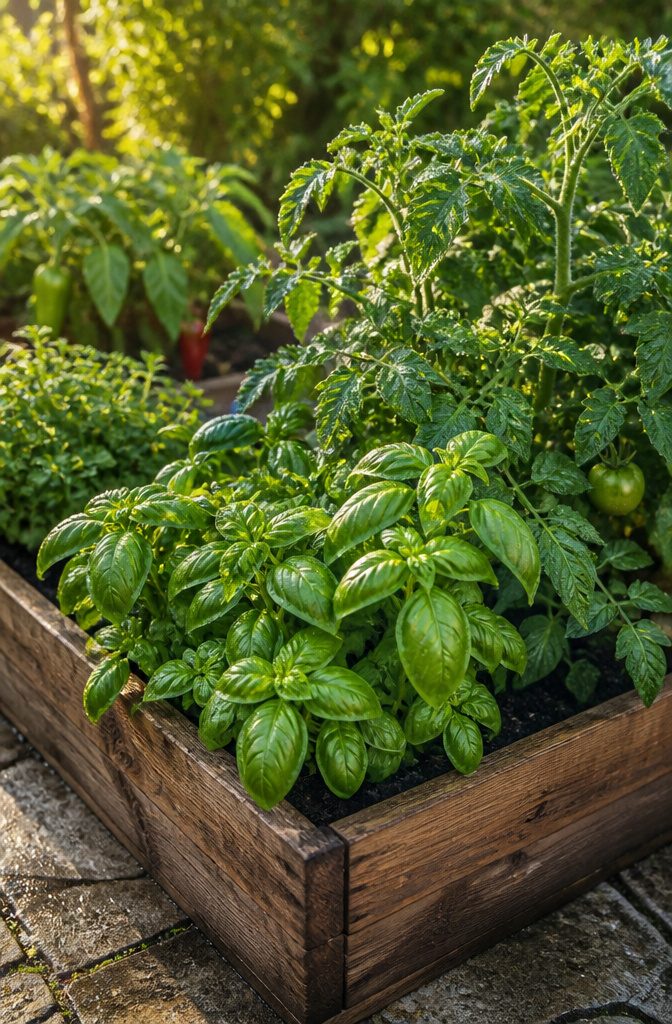
Basil earns its spot in almost every companion planting setup because the pairings are as practical in the soil as they are on the plate.
Tomatoes and basil go together, and the plants behave like partners: basil can improve tomato flavor and growth while repelling whiteflies, mosquitoes, and aphids that would otherwise settle on the leaves.
Oregano and peppers also work nearby, though basil’s needs differ from the typical Mediterranean herb. It wants more moisture than sage or rosemary can tolerate, so grouping it with drought-loving herbs leads to somebody getting watered wrong.
Rue and sage are the ones to actually avoid; sources note they tend to inhibit each other’s growth with basil specifically.
If your garden runs on a soaker hose or you hand-water on a schedule, basil belongs with the thirstier end of the herb bed, not the dry-soil crowd.

All-in-One Package: Our kit includes 5 of the widely loved organic, non-GMO herb seeds—basil, parsley, rosemary, thyme, and mint. The set also comes with 5 burlap bags, 5 coconut soil discs, 5 plant markers, 3 gardening tools, 1 pruning scissors, 1 spray bottle, and an wooden box

HERB PLANTS & SEEDS - Start an indoor herb garden from seed with basil, chives, dill, cilantro and parsley, each in its own burlap pot.

【Complete All-in-One Indoor Garden Kit】Start your home herbal journey instantly with this indoor garden kit. It features 1 x Wooden Planter Box, 5 x Burlap Pots, 5 types of Non-GMO Seeds (Sweet Basil, Cilantro, Italian Parsley, Thyme,Mint), Nutrient-Rich Soil Disks, Plant Labels, and Garden Tools. No extra trips to the store—unpack and grow today!
Parsley
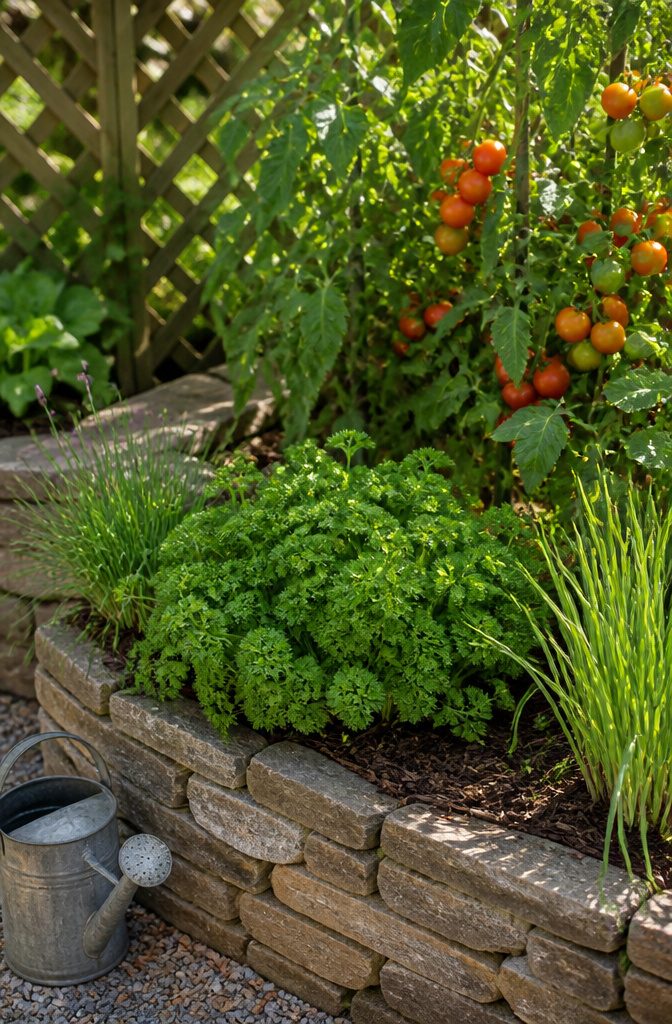
Parsley is the herb I always end up planting near tomatoes, partly because the pairing works and partly because both end up in the same recipes anyway.
Tomatoes are the sure bet, and asparagus and chives usually get listed as solid neighbors too. Keep mint in its own pot — underground runners will overrun parsley within a season, and lettuce nearby tends to bolt early too.
The flowers attract hoverflies and parasitic wasps, which is a quieter benefit than big blooms but just as useful for pest control.
Soil moisture needs to stay fairly steady; parsley wilts fast in a dry spell and recovers slower than you’d expect.

Cold-Hardy Perennial: These creeping thyme seeds grow into resilient perennial plants that thrive in USDA hardiness zones 5-9, returning year after year to provide continuous ground coverage through varying seasonal temperatures and weather conditions

Grow Your Own Rosemary, Thyme from Seed: This complete Buzzy Seeds grow kit gives you everything to raise cheerful rosemary and thyme right at home in a metal planter, a thoughtful, hands-on project for indoor spaces.

Dill
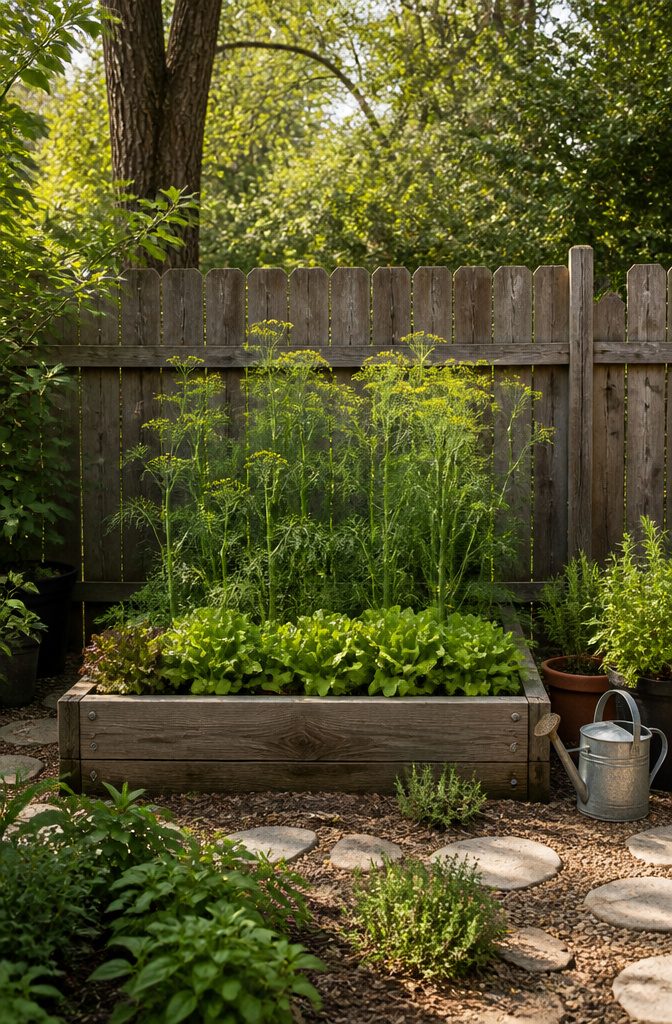
Dill tops out taller than most herbs in a typical garden bed, so placement matters more than with low growers.
Keep it toward the north or back edge so the feathery fronds do not shade out lettuce or shorter companions you tuck in front.
Chives and lemon balm handle the light competition well enough, and lettuce actually appreciates a little midday relief in hotter zones.
The umbels draw honeybees and beneficial insects in numbers that make a visible difference near vegetables needing pollination. That alone justifies finding a spot for it, even in a small plot.
Carrots are the pairing to skip.
The two cross-pollinate readily, and mature dill releases compounds that slow carrot growth. Lavender also struggles nearby, though sources differ on whether the issue is shared soil preference or root competition.
Either way, the fix is simple: give dill its own corner with the companions that thrive there, and keep the problem pairings one bed over.

Drain Holes Design -- Window planter box design with many small drain holes,prevent excessive watering, maintain soil drainage and ventilation.

Indoor Herb Garden Planter with Tray - Add greenery to your space with this vintage metal windowsill planter. Herb planters for indoor plants with a farmhouse touch. Place the indoor herb planter on your kitchen counter or display the small herb planter as an apartment window planter.

【Indoor Herb Garden】Experience the joy of gardening with our specialized indoor herb planter. This set includes a planter with a tray but does not come with plants and seeds. Designed specifically for herb cultivation, these planters can be used both indoors and outdoors. Crafted from durable metal with a sleek, glossy sage green finish, they blend functionality with a farmhouse style to enhance your living space.
Cilantro
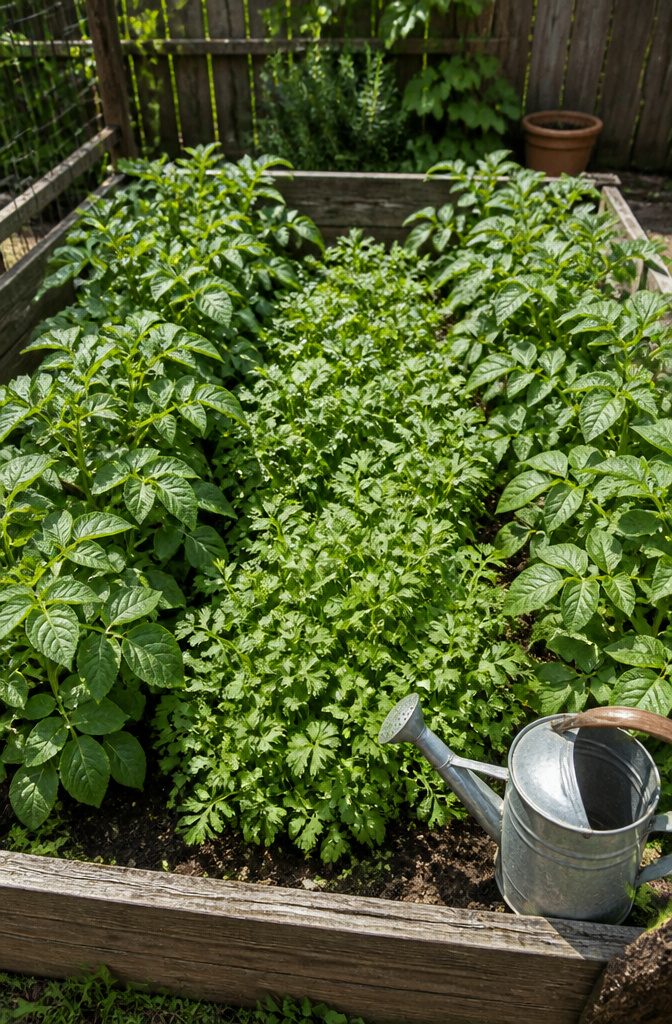
Cilantro bolts the second summer heat sets in, which makes its companion lineup a cool-season puzzle.
Plant it with anise and potatoes, and the pairing pays out in both directions: anise and cilantro promote each other’s germination and early growth, while cilantro’s presence repels aphids, spider mites, and potato beetles from the row.
The herb also draws in predatory wasps and hoverflies that keep broader pest pressure down.
The flip side is knowing what to leave out of that spring bed. Fennel inhibits cilantro’s growth outright, and lavender belongs to the dry, sunny world that cilantro wilts in; thyme and rosemary fall into that same camp.
I’ve seen gardeners lose a whole cilantro patch by tucking it between established Mediterranean herbs that hog the light and the drainage.
If spider mites do show up on neighboring plants, a spray made from cilantro tea knocks them back. That trick only works if you planned ahead and sowed thickly enough to spare some leaves for brewing.

5 COMPANION PLANTS - This five-pack includes heirloom seeds for growing Large Leaf Basil (Ocimum basilicum), Borage (Borago officinalis), Compact Dill (Anethum graveolens), Crackerjack Marigold (Tagetes erecta), and Tip Top Mix Nasturtium (Tropaeolum majus)

15 Herb Seeds Variety Pack – 4300 Seeds Included: Start your own herb garden with this all-in-one heirloom herbs seeds kit. Includes Genovese Basil, Sweet Basil, Italian Oregano, Rosemary, Thyme, Cilantro, Dill, Mint, Sage, Lavender, Chives, Garlic Chives, Parsley, Chervil, and Scallions. Each herb seed packet is USA-sourced and tested for high germination. Grow these herb garden seeds in your backyard, windowsill, raised beds, or pots for fresh flavors all season long.
Thyme
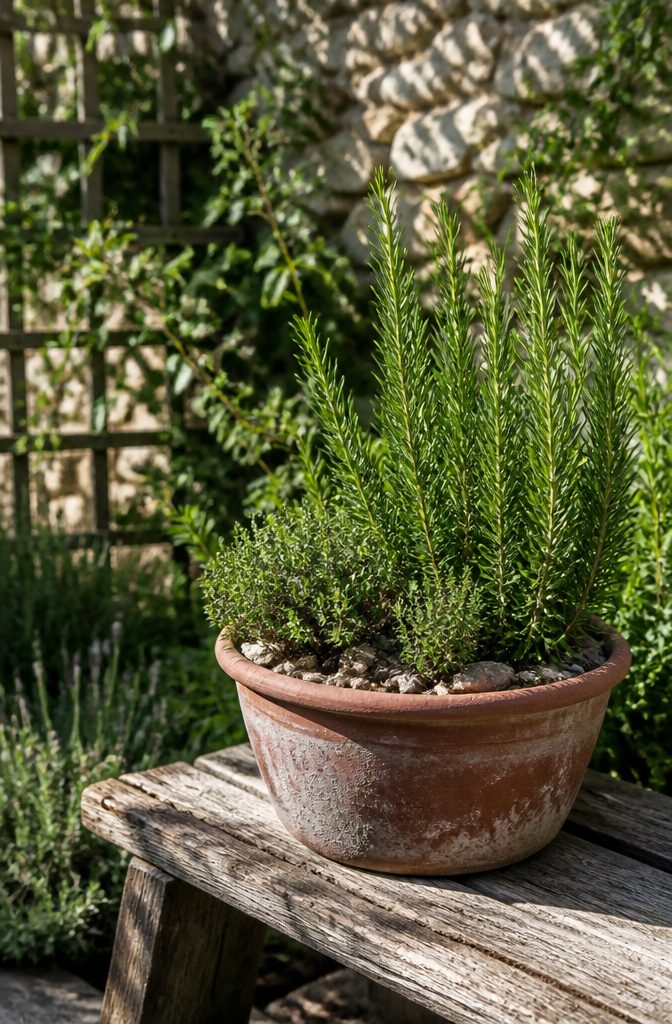
Thyme carries an earthy, slightly lemon-mint flavor that intensifies when the plant stays a bit stressed.
That same stress tolerance makes it one of the easier herbs to group, provided you match it with neighbors that want the same dry life.
Rosemary, oregano, and sage share that preference. All four are Mediterranean herbs that want soil to dry between waterings and at least six hours of full sun.
Thrown together in a single container, they simplify watering into one schedule rather than two. Thyme also repels cabbage worms and, by some accounts, the strong scent can mask neighboring plants enough to confuse pests entirely.
The pairing to skip is basil, along with chives. Both want steady moisture, the opposite of thyme’s dry-soil requirement.
Mixing thirsty herbs with drought-tolerant ones usually ends with one root system rotting or the other drying out. Coriander falls in the same avoid category for the same reason.
In my own reading, the only point of tension was parsley. One guide groups it near rosemary despite different water needs, suggesting the herbs "get along well" structurally even when conditions diverge.
The safer play for a weekend project: keep the Mediterranean four together, and give basil and chives their own pot.
Mint
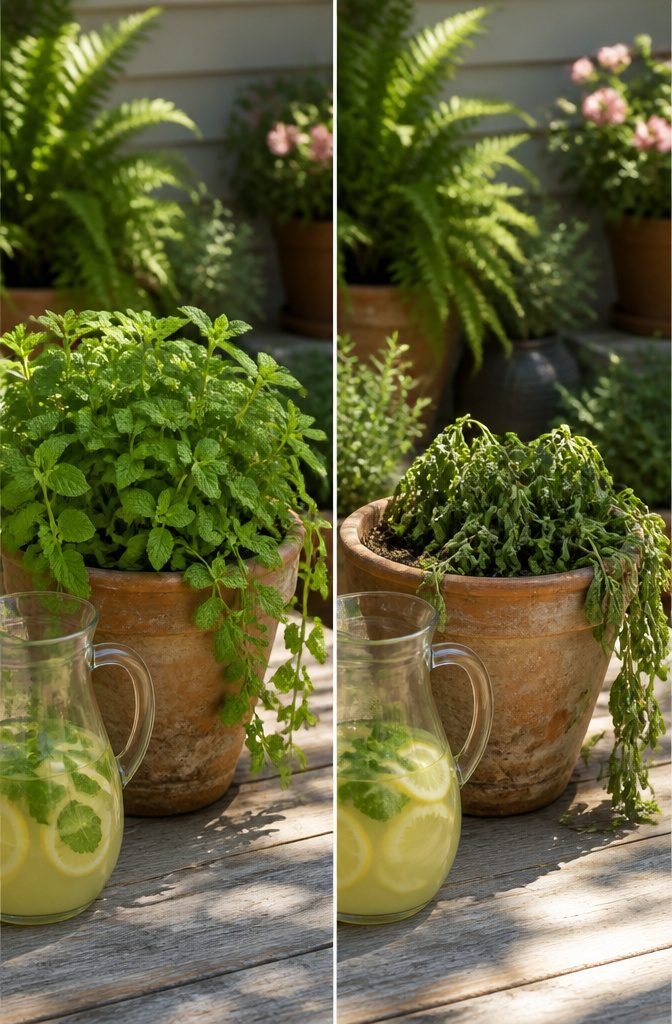
Mint spreads by underground runners that will overtake parsley, thyme, or anything else within a single season.
Keep mint in its own container rather than mixing it into a shared bed, even if some guides suggest pairing it with tomatoes or cabbage for pest deterrence.
The same aggressive roots that supposedly help flea beetles away from brassicas will strangle the very herbs you are trying to grow alongside it. Lemon balm and oregano behave the same way, so the rule holds for the whole family.
If you must plant in ground, a buried barrier deep enough to block those runners is the only defense, but a dedicated pot on the patio is simpler and still gives you all the leaves you need for summer drinks and sauces.

USDA CERTIFIED ORGANIC & NON-GMO: Grow your own fresh culinary herbs with peace of mind. Our open pollinated, heirloom variety pack is 100% clean, natural, rigorously tested for germination, and proudly certified organic by Oregon Tilth.
Sage
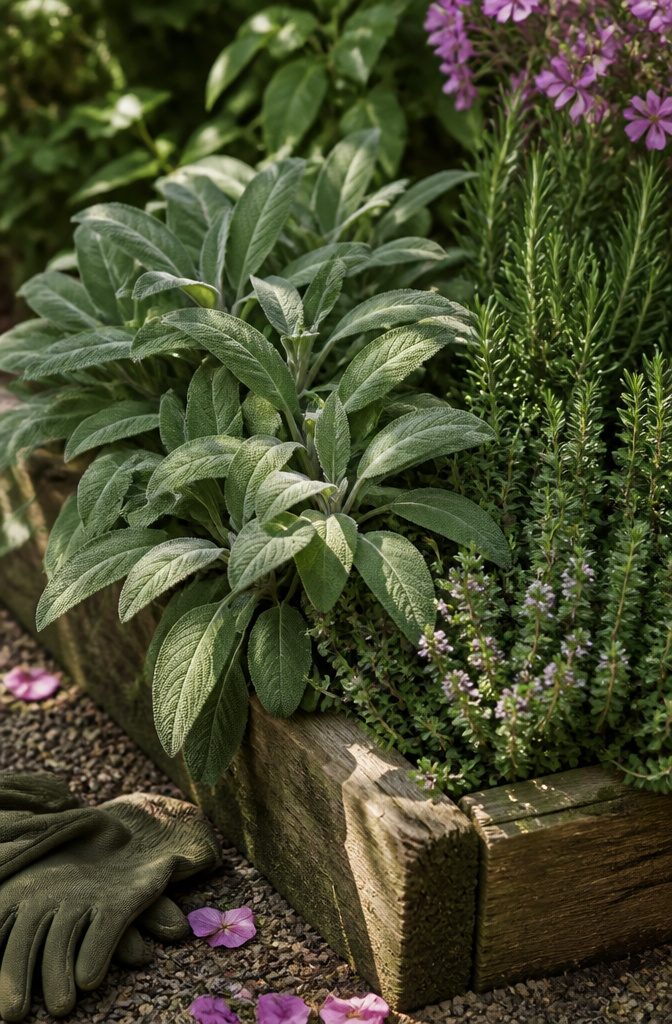
Sage belongs with the other drought-tolerant Mediterranean herbs: rosemary, thyme, and oregano all want the same dry-between-waterings rhythm, so grouping them in one bed or pot removes the guesswork.
I learned the hard way that mixing thirsty basil into that same soil leaves one plant drowning or the other parched, and sage always loses when the roots stay wet.
The pairing with carrots pays off in two ways. Sage repels carrot flies, and the two share that preference for drier soil once established.
Cabbage moths also steer clear of the strong scent, so a few sage bushes near brassicas cut down on the white butterflies that turn into leaf-stripping caterpillars.
Cucumbers and onions are the ones to skip. Onions fall into the allium family, and sage seems to set them back rather than help them along.
Cucumbers want steady moisture that would rot sage roots before the vines even set fruit. Wet soil is the fastest way to kill this plant; good drainage matters more than almost any other condition you give it.
Lavender
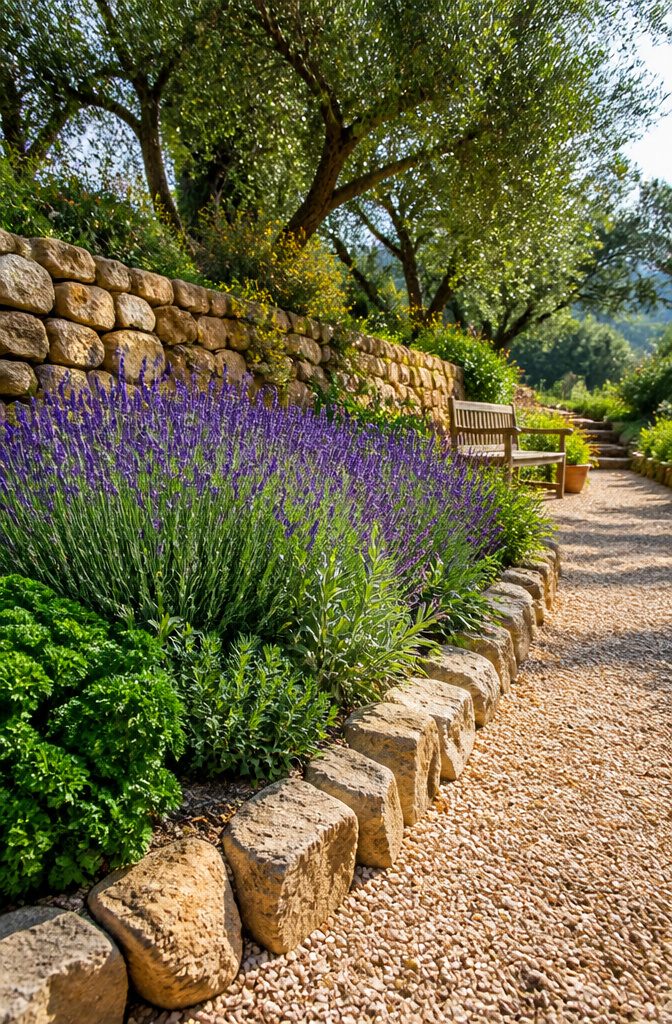
Lavender pairs naturally with rosemary, thyme, and sage because all four evolved for the same harsh conditions: poor, rocky soil and long dry spells between rains.
The roots rot fast in damp ground, so sharp drainage matters more than any other factor.
I lost two plants before I stopped amending the bed with compost; now I plant into a mix of native soil and coarse sand, on a slight mound, and water only when the top two inches are dusty.
Bees and butterflies show up the same day the lavender opens. Bees and hoverflies find lavender fast, and that activity spills over to nearby crops.
Planting it beside tomatoes or beans pulls more pollinators through the garden than either crop manages alone. The scent also confuses pest insects, which is why carrots and leeks grow cleaner with lavender nearby than without it.
Mint is the plant to keep away. Its runners will choke lavender roots within a season, and the moist soil mint demands is exactly what kills lavender.
Impatiens and camellias fail for the same reason: they need steady moisture and richer feed than lavender can survive. Grow those in separate beds, or keep mint in its own pot where the watering schedules never mix.
Chives
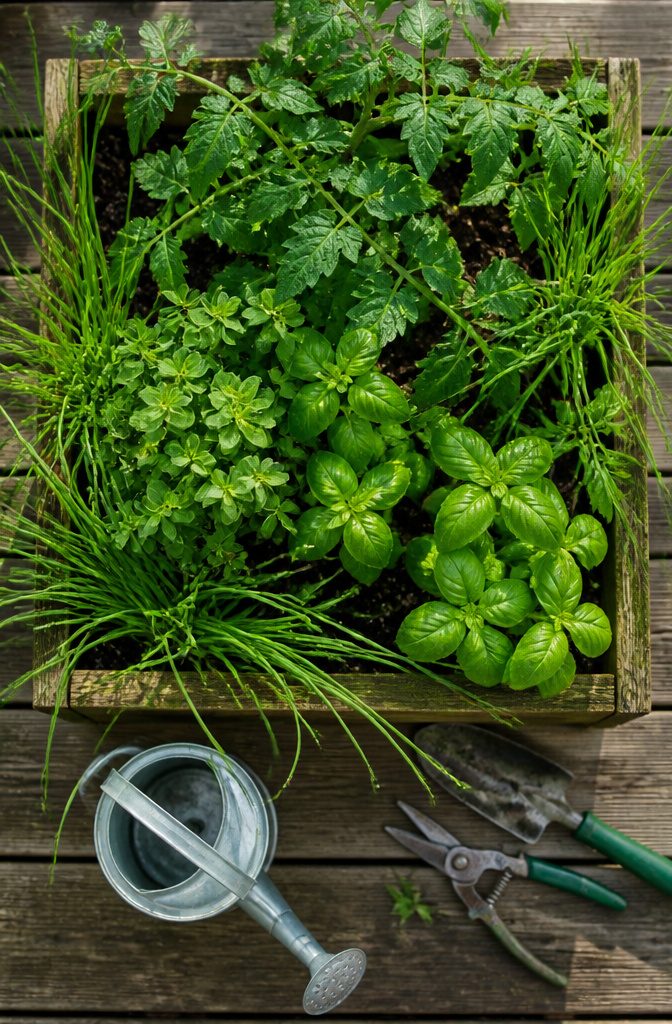
Chives are the easygoing member of the herb garden that still pull their weight. The slender green shoots work well tucked beside carrots, tomatoes, and broccoli, where they quietly improve carrot flavor while keeping aphids off neighboring plants.
I have seen the same clump come back for years with nothing more than occasional division, which makes them forgiving for weekend gardeners who do not want a high-maintenance roster.
The one place chives do not belong is anywhere near beans or peas. The same sulfur compounds that repel aphids can stunt legume growth, so keep them out of beds where you are counting on a bean harvest.
Otherwise they fit into most groupings without fuss, and their compact footprint means even a small border can accommodate them.
If you are building a container grouping, chives fill the edge space that taller herbs leave empty, and their mild onion flavor is useful enough that you will actually cut them regularly rather than let them go to woody neglect.
Rosemary
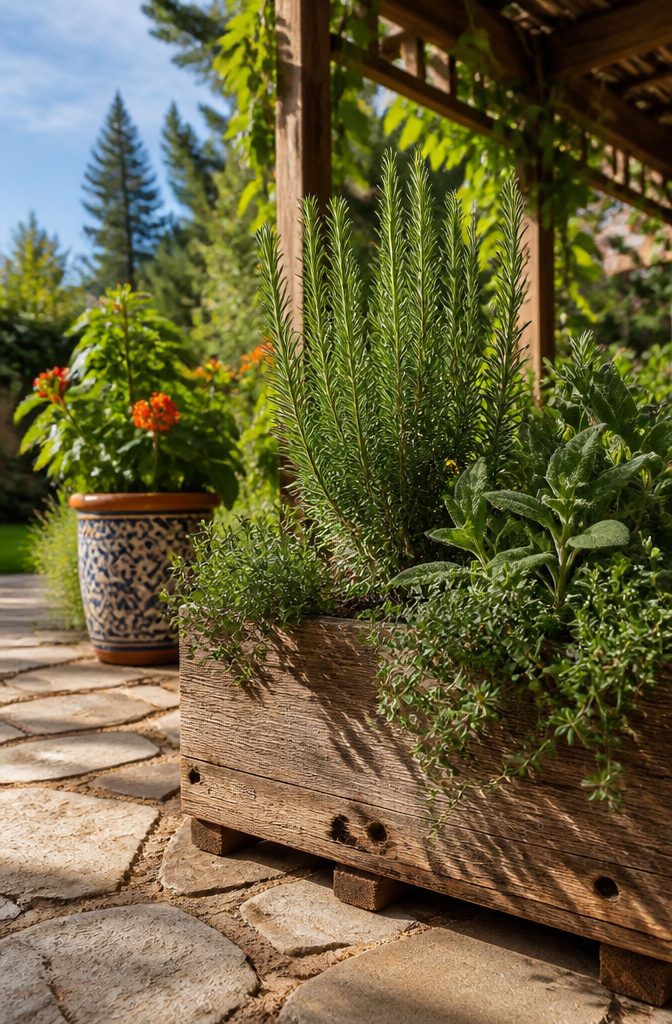
Rosemary is one of those herbs that quietly takes over if you let it.
In my second year of growing it, the plant I’d tucked beside a row of basil had turned into a woody shrub nearly 3 feet across, shading out everything I’d planted too close.
Give rosemary its own space from the start, especially in a raised bed or container where you are working with limited square footage.
The herb pairs well with sage and thyme, which share its preference for dry soil and full sun, and the three together can handle the same neglect that would wilt parsley or cilantro.
Beans also benefit from having rosemary nearby; the strong scent helps repel bean beetles and cabbage moths, which means less picking and spraying later in the season.
Where rosemary becomes a problem is with potatoes. The same compounds that protect neighboring plants appear to inhibit potato growth, so keep those two in separate beds.
Annual herbs are another poor fit. Rosemary’s mature size and woody structure will crowd out basil, dill, or cilantro before midsummer, and once established it lives for years while they finish their single season.
Plan for the shrub it becomes, not the seedling you are planting now.
Companion Planting Benefits
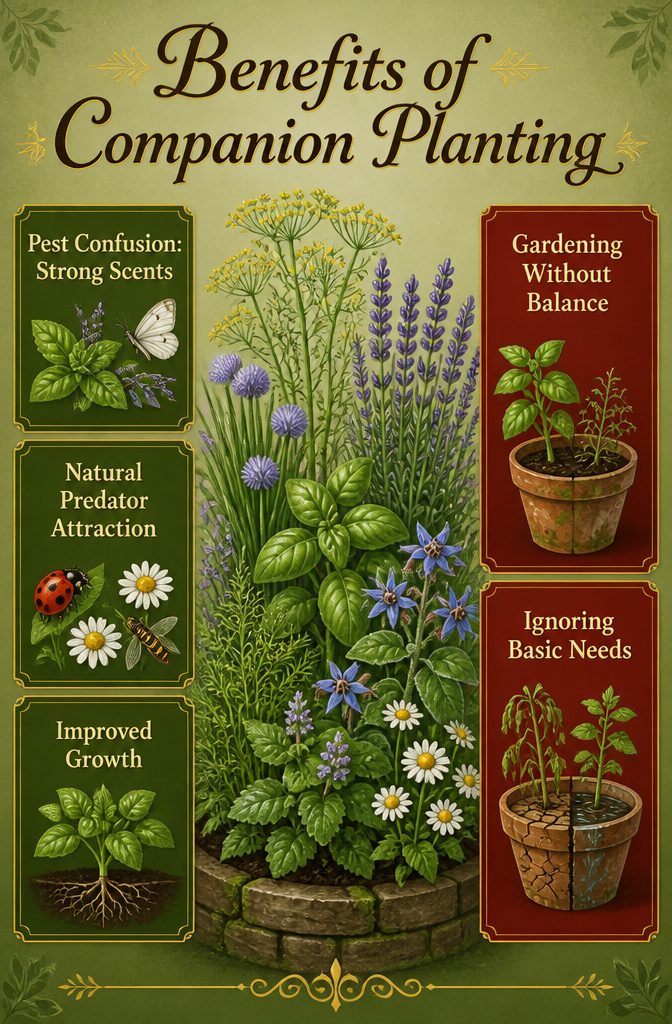
Basil packed tight in a row gives slugs a buffet; spread it out among other plants and the damage drops. Aphids moved in, then ants farmed them like livestock, and the whole bed collapsed into a rescue mission.
The next spring I tucked dill and chives between the herbs, and the ladybirds showed up on their own. That shift, from firefighting to letting the garden handle itself, is what companion planting actually delivers.
Scent is the quiet weapon. Strong-smelling herbs confuse pests hunting for a specific host, so the carrot fly never finds your chives and the whitefly misses your basil.
Some pairings add direct defense: catnip repels ants, flea beetles, and Japanese beetles; lavender drives off moths, fleas, and mosquitoes. Others attract the predators you want.
Borage pulls in bees and more than a hundred beneficial insects; chamomile draws hoverflies and wasps that prey on aphids. Dill hosts swallowtail caterpillars while its flowers repel tomato hornworms and squash bugs.
Companion planting is an organic method of maintaining a natural balance in your garden by growing plants together that are mutually beneficial.
The balance only holds when the basics match.
Two herbs sharing a pot need the same light, water, and nutrient appetite, or one thrives while the other starves. Pairing for pest control without checking those fundamentals is how a "compatible" grouping still fails.
What to Avoid
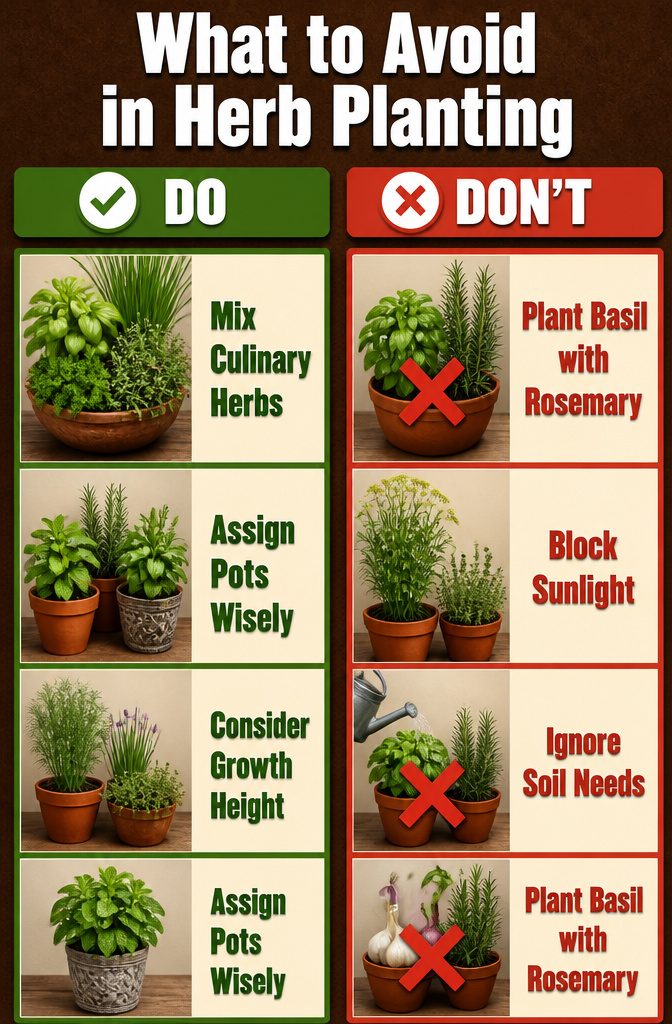
Basil and rosemary are the textbook mismatch for anyone learning what herbs to plant together.
Basil wants steady moisture; rosemary wants soil that dries between waterings. In a shared pot, one of them suffers no matter how carefully you water.
Tall herbs shading short neighbors is another easy mistake. A mature dill or bolting cilantro can block hours of sun from low growers like thyme or oregano, leaving them leggy and weak.
Some plants release chemicals that slow nearby growth, a property called allelopathy.
Walnut trees are the famous example, though the science on herbs is thinner. Anecdotally, garlic and onions are thought to stunt beans and peas, and mint or onions are said to clash with asparagus.
Mint deserves its own warning. It spreads by runners and will overrun a mixed planter within a single season.
Mint needs its own pot, set beside the others rather than among them. Give it that isolation, or it will become the only herb you still have.
Growing Conditions
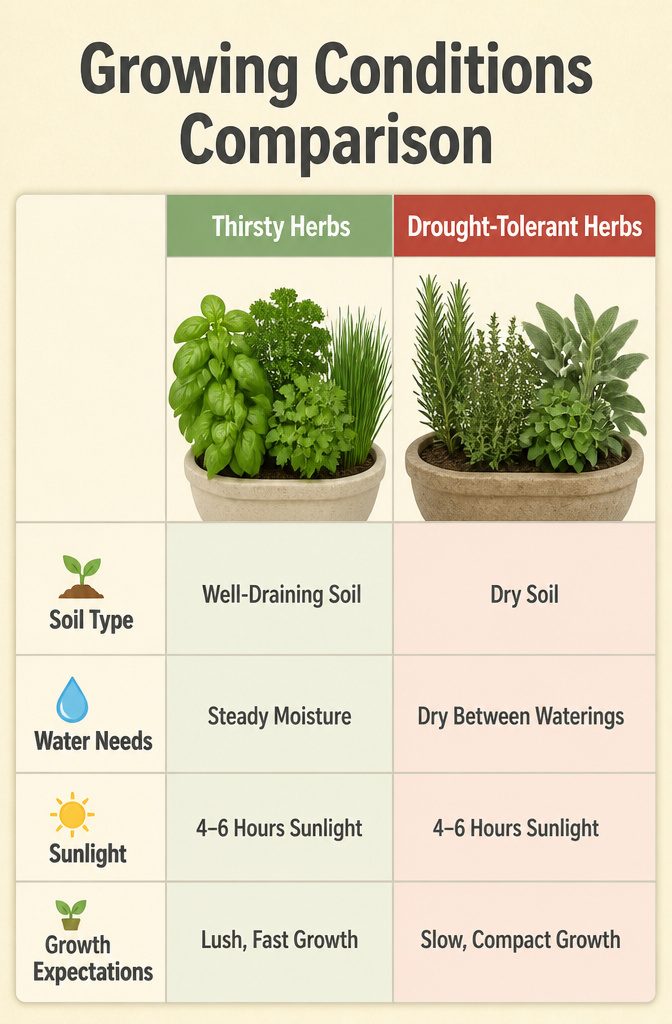
Well-draining soil and at least 4–6 hours of sunlight keep most herbs alive, but water is where groupings live or die. Mediterranean herbs like rosemary, thyme, and lavender want the soil to dry between drinks.
Basil and parsley need steady moisture. I learned this the hard way after planting basil between two lavender starts; the basil yellowed while the lavender rotted at the crown.
Group by thirst, not just by flavor.
Thirsty herbs share pots well: basil, parsley, cilantro, chives. Drought-tolerant herbs share pots well: rosemary, thyme, oregano, sage.
Mixing the two makes watering harder and raises the odds that one root system stays too wet or too dry. If you only have limited light, parsley, chives, and mint tolerate less than the full 4–6 hours.
Container Groupings
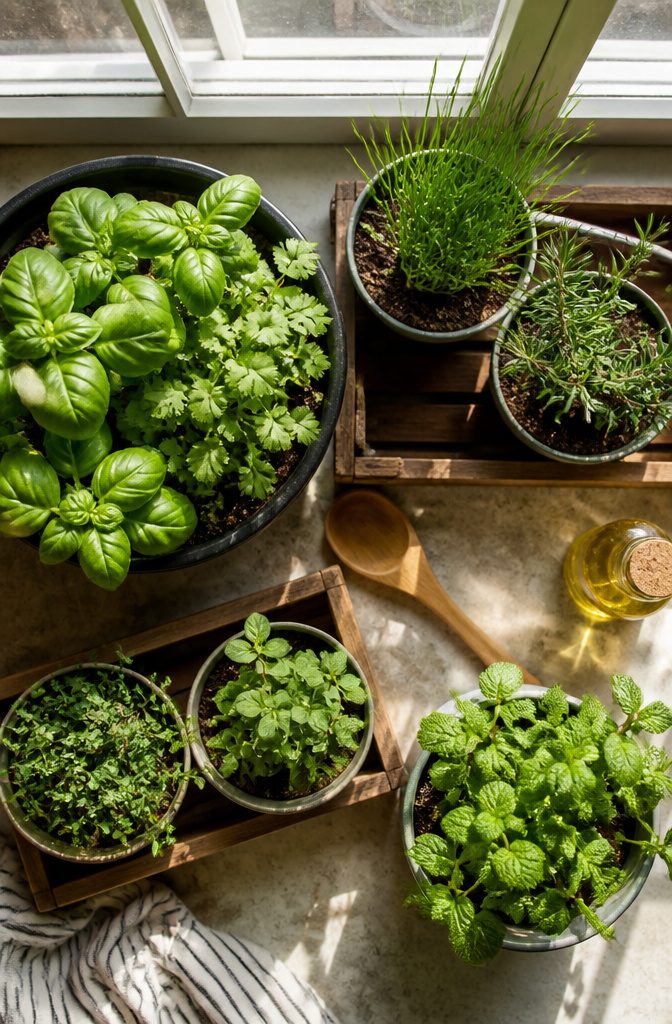
A 6-inch terracotta pot on a windowsill holds one herb comfortably, two at a squeeze, but most renters I know start with a plastic planter about 12 inches across and treat it like a mini raised bed.
The mistake is treating all herbs as roommates. Mint always gets its own pot, no exceptions.
Owners on Reddit mention it like a warning label: drop mint into a shared container and within a season you are growing a mint container with some dead former herbs at the edges.
Drainage holes matter more than the pot’s looks. Without them, rosemary and thyme sit wet and sulk; with them, you can cluster those two with oregano or sage in a single box and skip watering for a few days.
The Reddit growers who keep thyme, rosemary, and oregano together in a 2.5-by-1.5-foot standing planter report the combo fills out over three years without any one plant choking the others.
Basil, by contrast, will fill whatever space you give it, so either plan to harvest hard or give it solo space on a balcony rail.
For a kitchen windowsill, pair parsley and cilantro if you must, but cilantro tends to outcompete parsley over time, and their leaves look enough alike that you will stop knowing which you are snipping.
The easier split: moisture-lovers like basil in one box, the Mediterranean drought-tolerant crew in another. Two containers, no guesswork on watering, and you still fit both on a narrow rental balcony.
Herb Groupings by Need
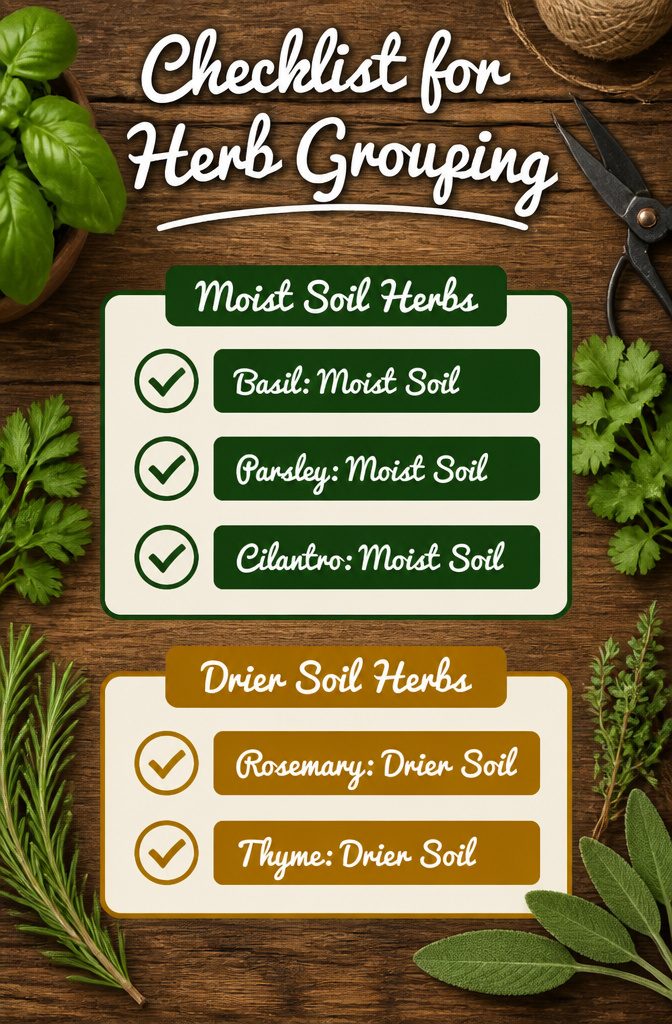
Water needs split herbs into two camps that do not forgive mixing. Basil, parsley, and cilantro all want consistently moist soil, so they share a pot without drama.
On the other side, rosemary, thyme, sage, and lavender prefer soil that dries between drinks. I learned this the hard way after killing two lavender starts in a planter with basil.
The basil pulled water fast; the lavender sat soggy and rotted. Moving lavender to its own gritty mix solved it.
Culinary themes help too. An Italian grouping of basil, oregano, parsley, rosemary, sage, and thyme keeps harvest simple.
Aromatic herbs like lavender, lemon verbena, and chamomile share another pot, valued for scent over cooking. The theme matters less than the moisture match, but it does make the garden feel intentional when you step outside to clip.
Frequently Asked Questions
What herbs can I plant together?
Group herbs by water and light needs. Basil, parsley, cilantro, and chives all want steady moisture and full sun, so they share pots without trouble.
Rosemary, thyme, oregano, and sage prefer soil that dries between waterings and also do well together. The clash happens when you mix the two groups: one root system ends up too wet or too dry.
Which herbs should not be planted together?
Basil and rosemary are the classic mismatch because basil wants steady moisture while rosemary rots in wet soil.
Mint should stay in its own pot no matter what; its underground runners will choke anything else in a shared container within a season. Also skip dill near carrots, since they cross-pollinate and dill’s compounds slow carrot growth.
How much sunlight do herbs need?
Most herbs need 4–6 hours of sunlight daily to stay healthy and productive.
If your space gets less, parsley, chives, and mint tolerate limited light better than Mediterranean herbs like rosemary or lavender. All herbs still prefer well-draining soil regardless of how much sun they receive.
Are basil and chives compatible?
Yes, basil and chives make good container mates because both want consistently moist soil and full sun.
They fall on the same side of the water-needs divide, so one watering schedule keeps both happy. Just avoid pairing either with drought-loving herbs like rosemary or thyme.
Can basil and mint be planted together?
Technically they share similar moisture needs, but mint still belongs in its own pot.
Mint spreads by aggressive underground runners that will overtake basil within a single season, turning any shared container into a mint monoculture. Give mint its own space even if the water requirements match.