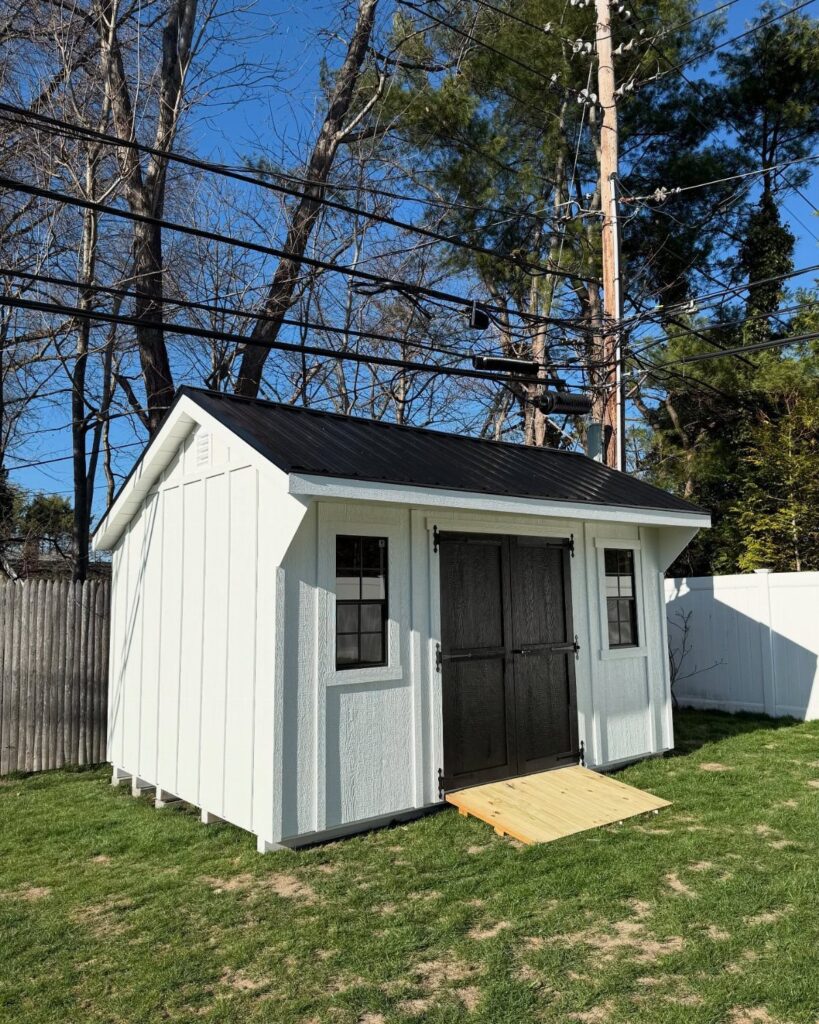
A modern farmhouse shed budget runs anywhere from about $3,500 for basic painted wood to $15,000 for larger workshop builds with dormers and upgraded roofing.
What you actually need that shed for, more than how you want it to look, decides which of these 9 directions fits.
[link-whisper-related-posts]1. Classic White Board and Batten Shed
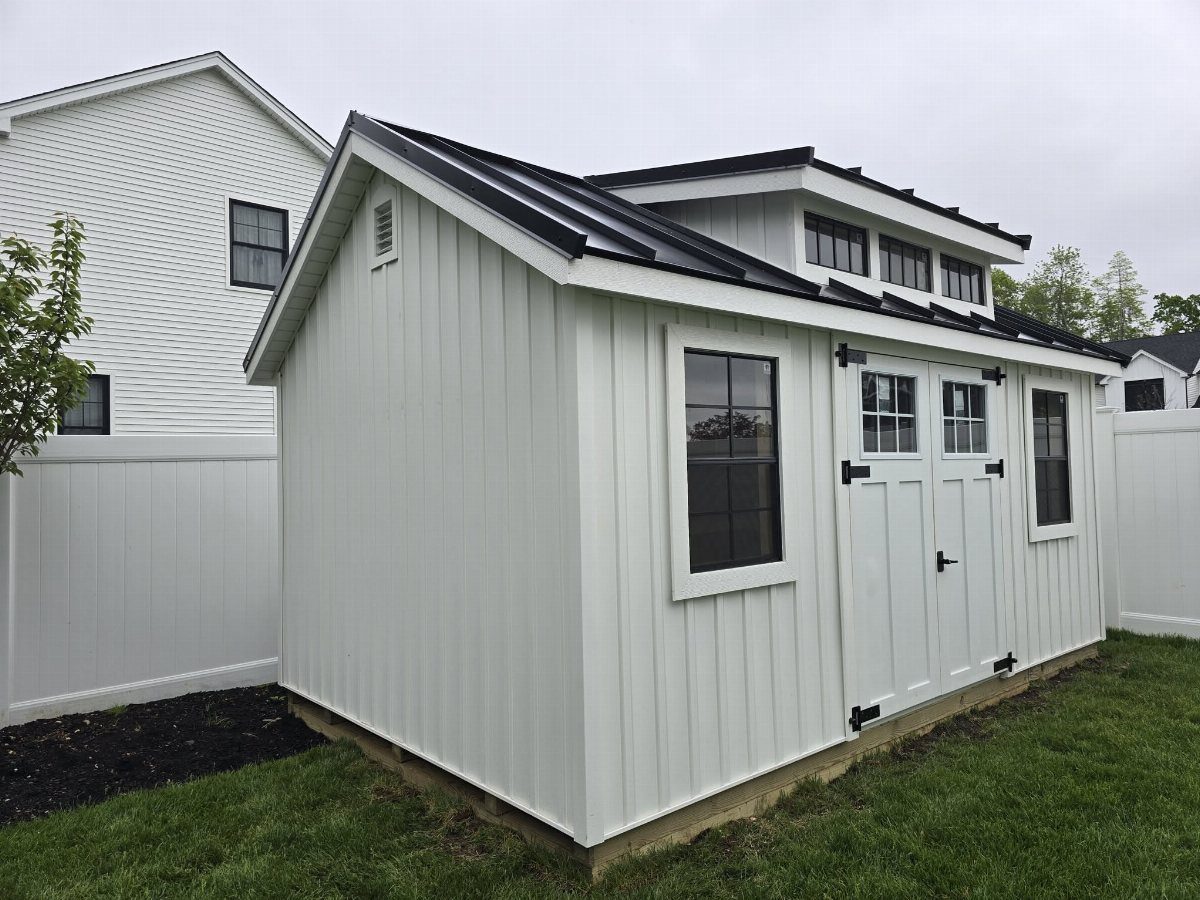
White board-and-batten siding with a black metal roof is the most forgiving way to get a modern farmhouse look without fighting your existing house color.
I always check the trim width first: too narrow and the shed reads like a utility box, too wide and it goes cartoon.
Borrow the proportions from your main house windows or door casing, even if the budget stops at basic pine.
Matte or low-sheen white hides dust better than gloss, and composite trim beats raw wood where winters stay wet. Black hardware on the doors grounds the whole thing.

All-in-One Design - Package of 10 premade molding trim slat + 2 decorative edge strip create instant board & batten walls

Available in various color options
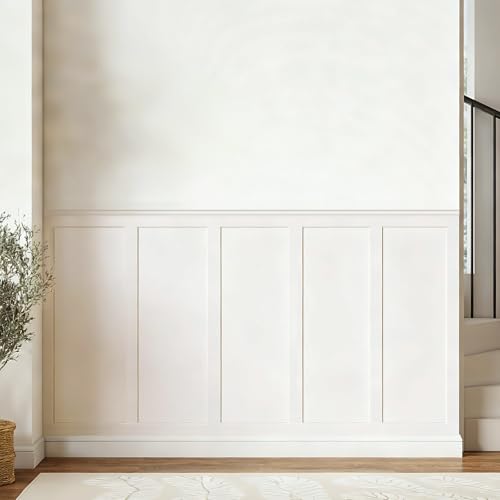
【Coverage】Includes 10 pre-cut wall molding slats and 2 shelf edge strips to create a clean board & batten look. (No peel-and-stick adhesive or nails included)
2. Greenhouse Potting Farmhouse Shed
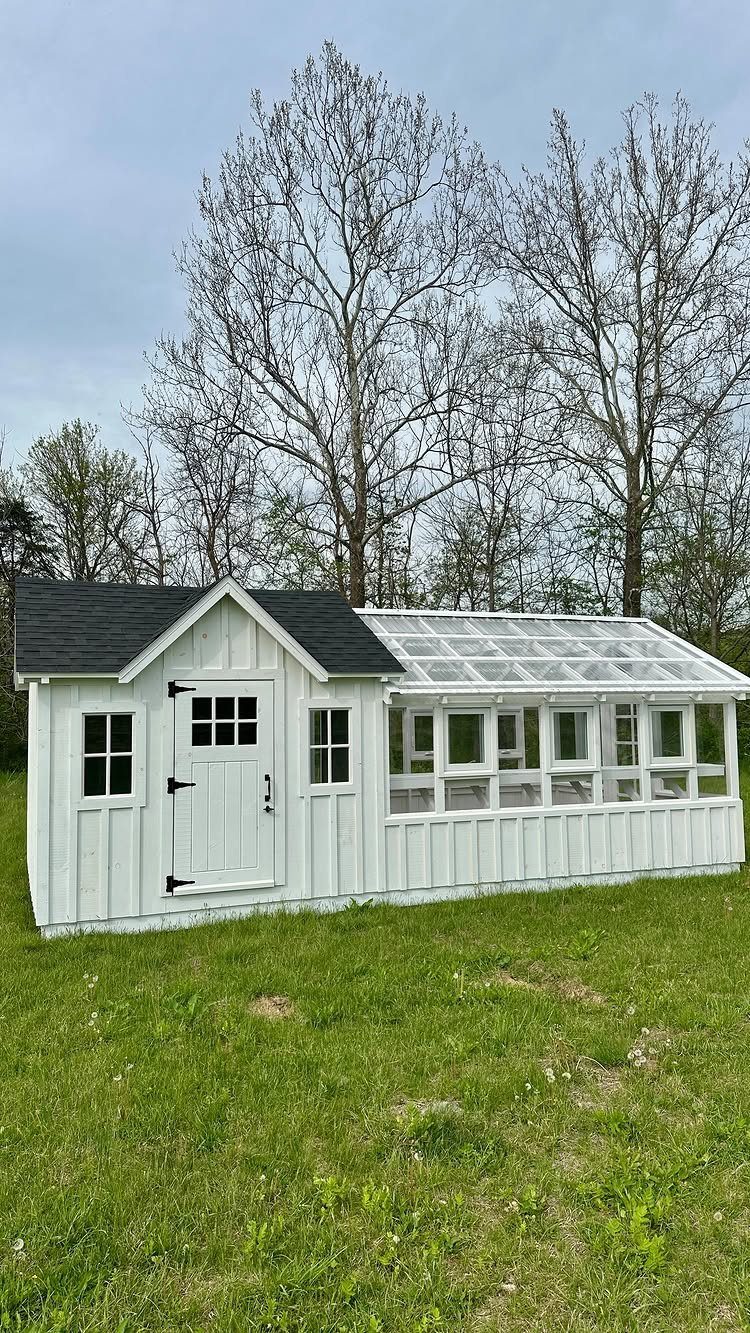
A greenhouse attached to a standard shed solves the spring timing problem: tools stay dry in the enclosed half while seedlings start under glass where the light hits.
I would put the glazed section facing south if your yard allows it.
Inside, moisture-resistant flooring matters more than the walls—sealed concrete, painted plywood, or composite decking each handles damp pots and soil tracked in. A deep sink or hose bib inside saves trips back to the house.
Glazing costs more than siding and needs cleaning, so budget for both the material and the ongoing work.
But for anyone starting plants before the last frost, the head start pays back in healthier transplants and fewer leggy seedlings killed off in a late cold snap.

Iron Weather Vane: Made of high-quality metal iron, its sturdy material ensures long-term use. The surface has a black matte coating, which is waterproof, dustproof, and not easy to rust, and can resist various harsh weather conditions

Flowers Calves Theme: Countryside Pattern showcases the vitality of spring and the cuteness of farm animals by depicting a highland cow with hollowed out flower patterns on its body

Charming Highland Cow Aesthetic: Featuring a detailed Highland cow silhouette, it brings vintage farm charm to your outdoor space. Once installed, it instantly becomes a visual focal point for your farmhouse, shed, or yard, adding a unique touch of animal artistry.
3. Black Farmhouse Shed with Metal Roof
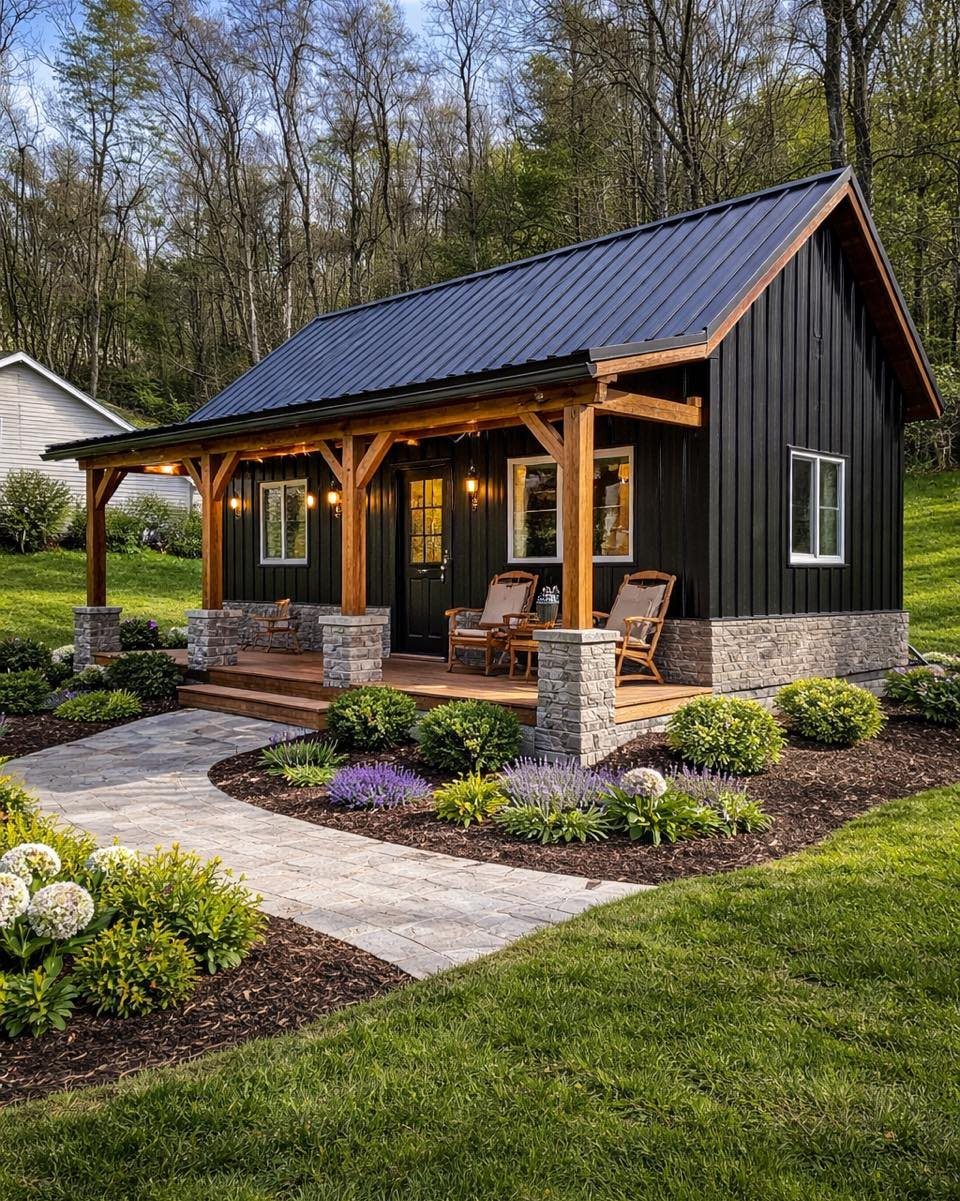
Black siding with a metal roof makes the shed sink back visually against green lawn, which helps when the yard is small and the structure risks dominating.
Dark finishes show pollen and dust faster than lighter colors, so I would spend on exterior-grade paint rated for UV and a roof coat that resists chalking.
Cedar accents soften the look; stone does the same job, and either works. Wood doors, a planter, or a stained bench prevents the whole thing from reading too severe.
Minimal trim keeps the lines clean. The metal roof adds durability and sharp edges that read modern more than rustic.

CEDAR SHAKE SIDING PANELS – Realistic cedar shake shingle texture in Pacifica in a composite exterior wall panel. Get the look of real cedar shakes without painting, staining, oiling or replacing damaged shingles.

Utility Grade Shingle for Under Coursing of Double Coursed Sidewalls and Starter Shingles
4. Cedar Shingle She Shed Retreat
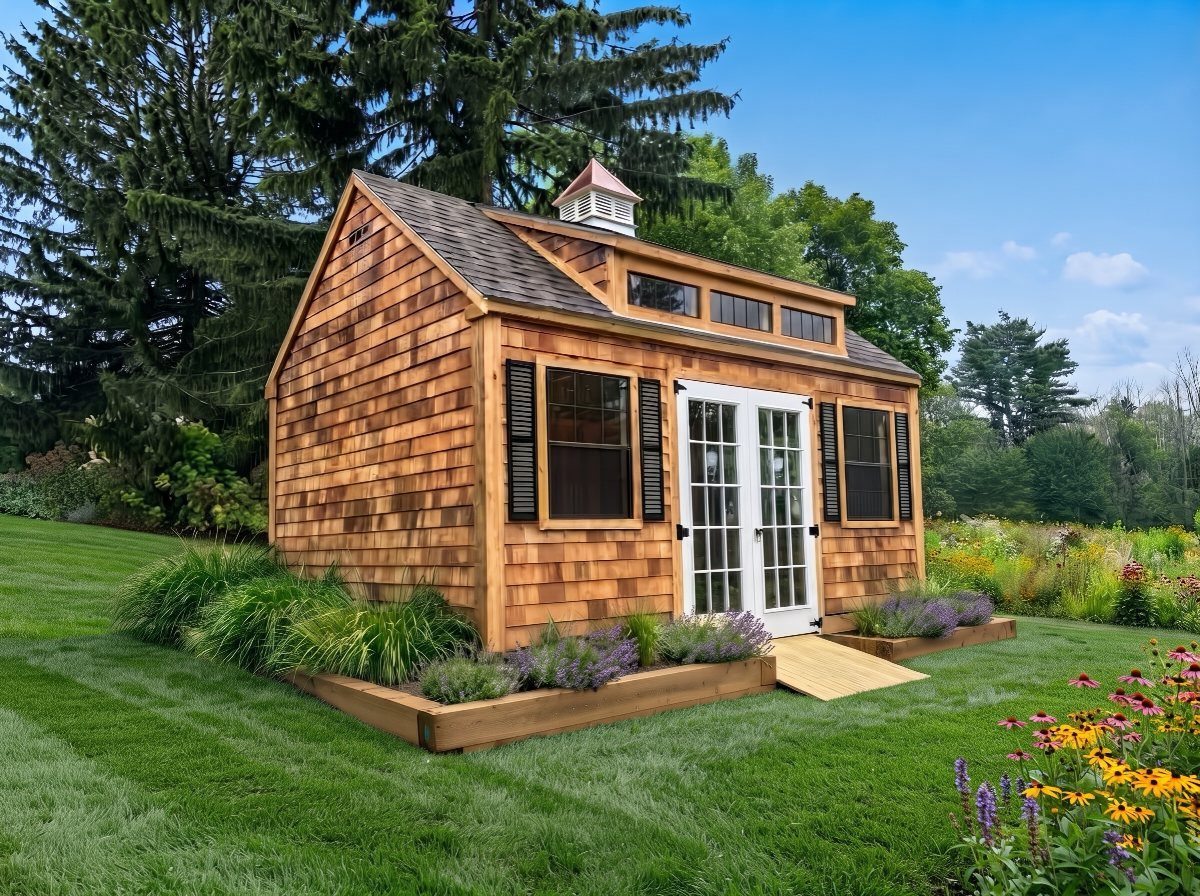
Cedar shingles give a shed the feel of a room you want to be in, not a box you store things in.
The wood weathers to silver-gray if left unfinished, which some homeowners love and others fight with stain or sealant.
I would decide that before building since the maintenance path splits early. Natural cedar resists decay when detailed properly, and the texture pairs well with black shutters and white trim like the visible setup.
This suits a reading room or small studio more than heavy tool storage. Painted siding is lower maintenance, and cedar asks for attention every few years depending on your climate.

【Package Includes】You will get 12.2 x 10.2 ft storage shed mat 2MM Thickened, Which can not only prevent the storage shed floor from being eroded by damp ground, wear or tear, but also help keep your shed clean and tidy, effectively saving your cleaning time.

Versatile Storage Space: The bike storage shed measures 48.6" L * 67.1" W * 81.1" H externally, this 6x4.4 feet resin outdoor shed is available in a variety of sizes, colors, and shapes; Ideal for storing garden tools, lawn equipment, bicycles, patio furniture, and other sundry items; It can also serve as a cozy shelter for pets or a greenhouse for nurturing plants
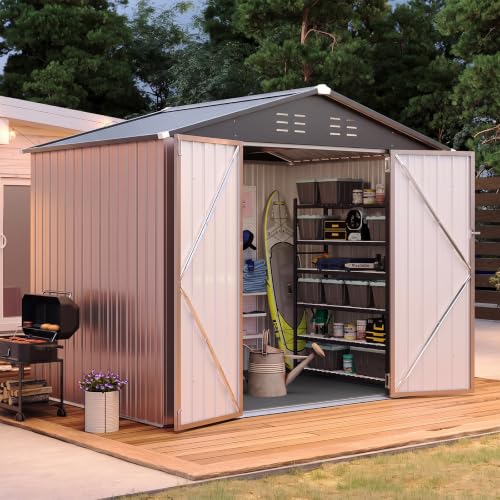
Quality Floor Frame & Galvanized Steel Construction: Crafted with thick galvanized steel panels and reinforced structural engineering, this metal shed delivers exceptional durability. The anti-rust powder-coated surface combined with a 12mm interlocking plastic floor ensures 360° moisture resistance while maintaining floor flatness. In addition, the floor supports a load-bearing capacity of 82 pounds per cubic foot, making it easy to hold heavy machinery
5. Two Story Farmhouse Storage Shed
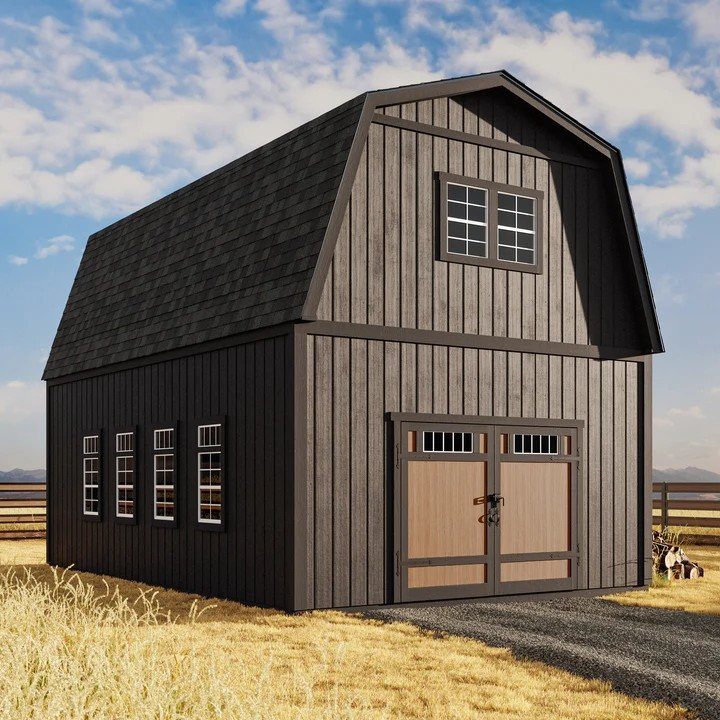
A two-story shed maximizes storage without eating yard width, though the cost jumps for stairs, stronger framing, and a more complex roof.
Wide doors on the ground floor matter more than upstairs windows since you are moving equipment, not just light. Consistent siding from base to peak makes the height look intentional rather than an afterthought.
This fits rural properties or anyone with serious storage needs who still wants a silhouette that reads as architecture. The gambrel roof adds headroom upstairs without pushing the ridge too high.

Board and Batten Layout: Create classic board and batten wall panels with structured rectangular sections, eliminating the need to cut and measure raw lumber

ALL-IN-ONE WALL PANEL KIT:Includes 10 premade molding trim pieces and 2 decorative edge strips, providing everything needed to create a stylish board and batten accent wall with a clean, professional finish

All-in-one Molding Kit: This premade board and batten wainscoting kit includes 20 molding slats and 3 decorative edge strips for quick accent wall assembly. It is supplied to build classic board and batten wall designs
6. Olive Green Shed with Covered Porch
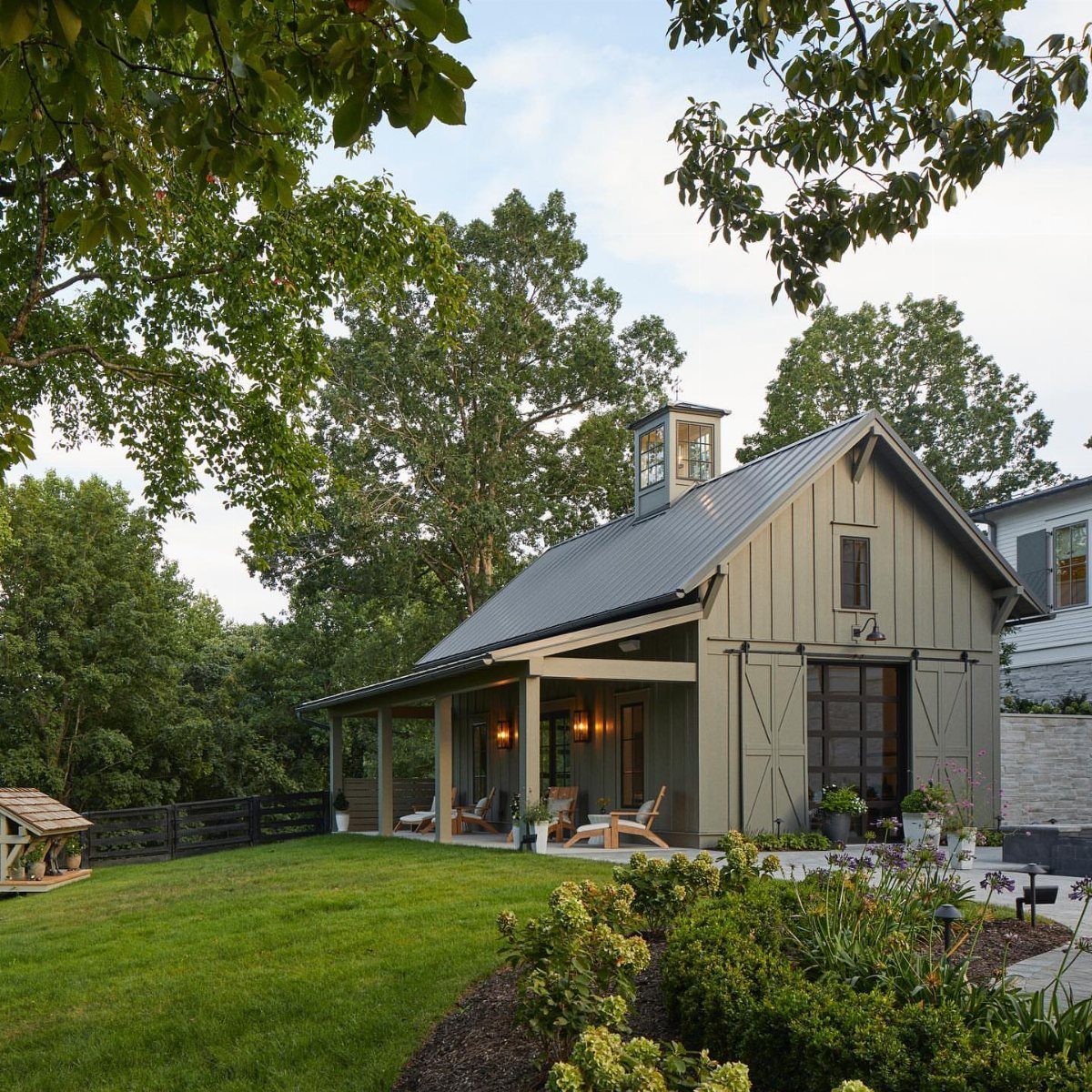
An olive green shed with a covered porch turns the building into a destination instead of a destination you avoid.
The porch depth looks generous enough for seating, but even 4 feet works if the budget or footprint is tight.
Tapered posts read farmhouse more than plain square lumber, and composite or painted tongue-and-groove decking outlasts raw pine in a covered but open space. A hanging lantern adds evening use without wiring a full fixture.
A glass garage door lets light and air in when open and seals up when storms hit.
The covered area protects doors and siding from direct weather, which extends paint and caulk life. You lose interior square footage and pay more for the roof structure, which is the price of the covered space.

Dachshund Wind Vane: The black weathervane features a dachshund in a cute and special pattern, which is not only aesthetically pleasing, but also makes for great outdoor decor!

Unique Farm Silhouette Design: Features a cute pig with rooster on its back, paired with grass & flower cutout art. Rustic farmhouse style, a standout outdoor ornament

Crow Weathervanes: The weathervane features a crow on a branch. Following the E, W, S, N signals on the wind vane is easy to do. See where the arrow points and read the letter at the end.
7. Farmhouse Shed with Front Porch
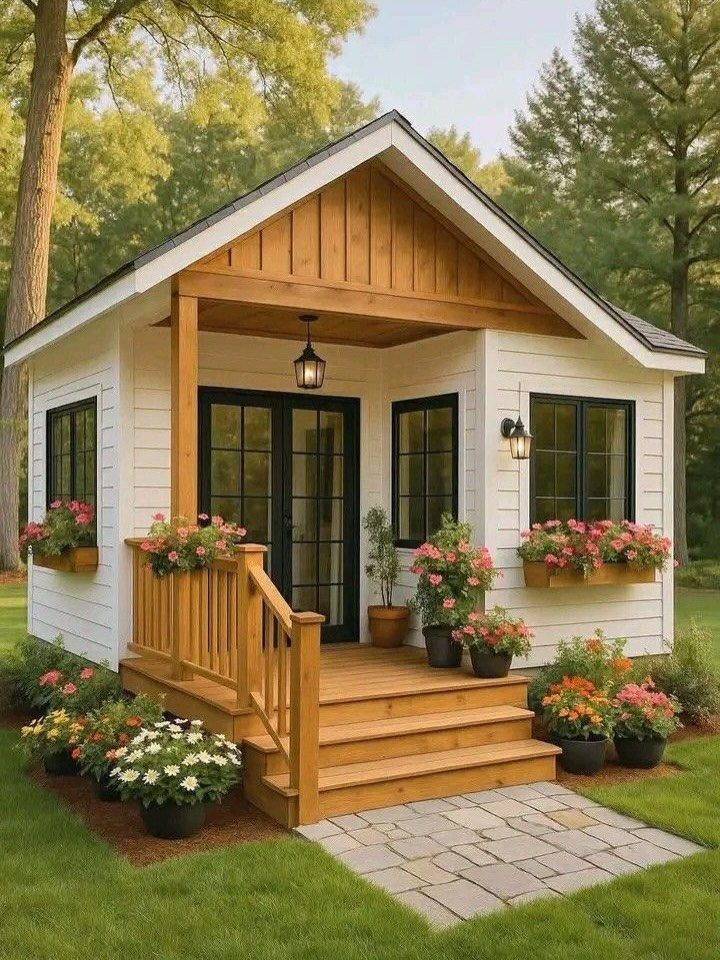
Natural wood for the porch floor and posts warms up white siding more than painted trim ever could.
I would match the stair width to the door if possible; a narrow stoop feels apologetic against a broad gable end.
Black window frames and hardware repeat on the lantern so the accents talk to each other, not past. Flower boxes sit shallow, so liner boxes with reservoirs keep plants alive through a hot weekend.
The porch steals interior floor space, which matters in a shed this compact.
For pure storage, skip it. For a potting bench, a reading chair, or any reason to linger, the covered entry earns back its cost.

10 INDIVIDUAL red cedar wood panels for creating a fresh aromatic cedar scent in closets

✅ #1 ROYALS GRADE – PREMIUM APPEARANCE QUALITY Royals grade shingles offer a high‑quality appearance with fewer imperfections, making them ideal for visible exterior siding and architectural projects.
8. Charcoal Grey Shed with Transom Windows
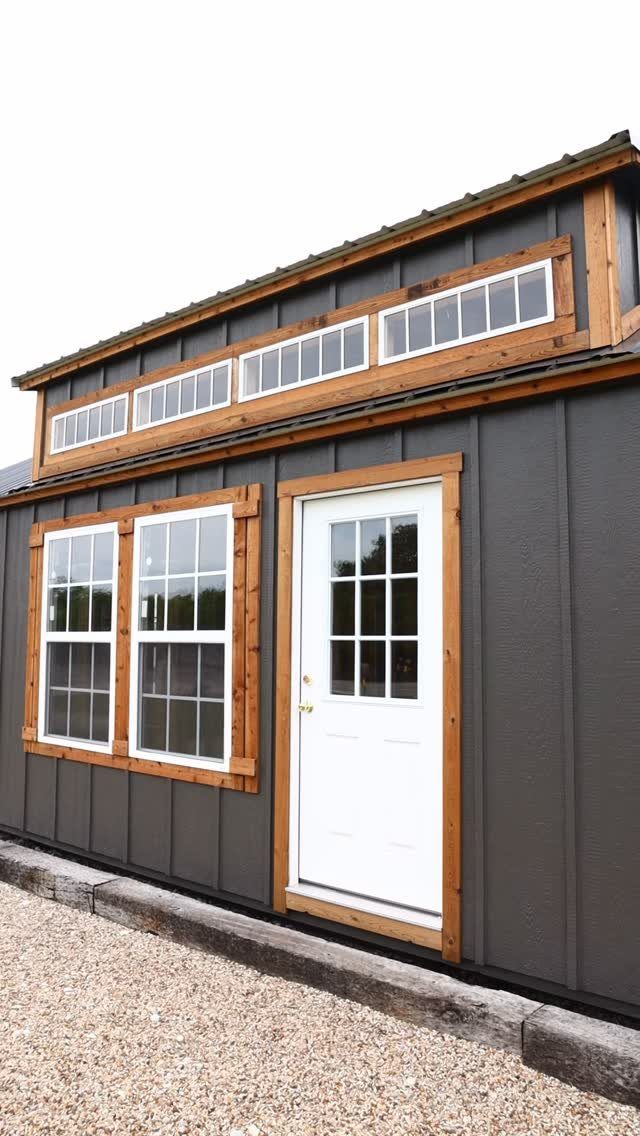
Charcoal reads softer than black and pairs with warm wood trim without the harsh contrast.
The transom row under the eaves brings in north light without sacrificing wall space where you hang tools or shelves.
I would keep the trim around the lower windows and door in the same wood tone so the band reads continuous. White on the door pops against dark siding but needs repainting more often than the body color.
A full clerestory wall costs more than one high strip; this version splits the difference. The gravel base drains better than bare dirt and keeps the perimeter from turning to mud.
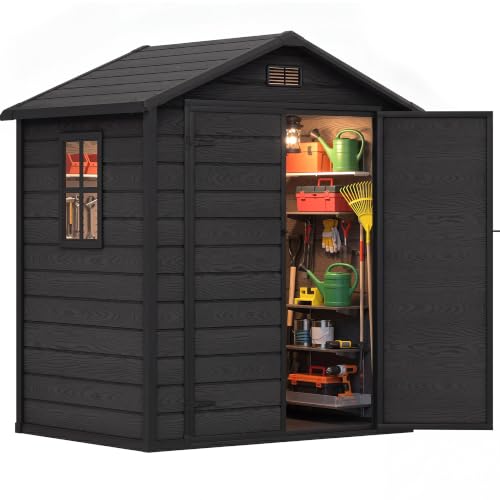
Versatile Storage Space: The bike storage shed measures 48.6" L * 67.1" W * 81.1" H externally, this 6x5 feet resin outdoor shed is available in a variety of sizes, colors, and shapes; Ideal for storing garden tools, lawn equipment, bicycles, patio furniture, and other sundry items; It can also serve as a cozy shelter for pets or a greenhouse for nurturing plants

【Durable Resin Shed with Two Exterior Looks】 Built from low-maintenance resin panels, this plastic outdoor shed is made for everyday backyard storage through changing seasons. The surface helps resist rain, UV exposure, rust, rot, cracking and fading, while the reversible panel design lets you choose between two different exterior appearances to better match your outdoor setting

【High Quality Material】Outdoor shed floor mat is made of high-quality felt material, which has excellent water and oil absorption functions. Bottom is a sturdy and wear-resistant waterproof PE backing, providing anti-seepage protection. Providing protection for valuable equipment and shed floors to prevent rusting. Ensure that storage space is in a dry state for a long time
9. Blue Farmhouse Shed with French Doors
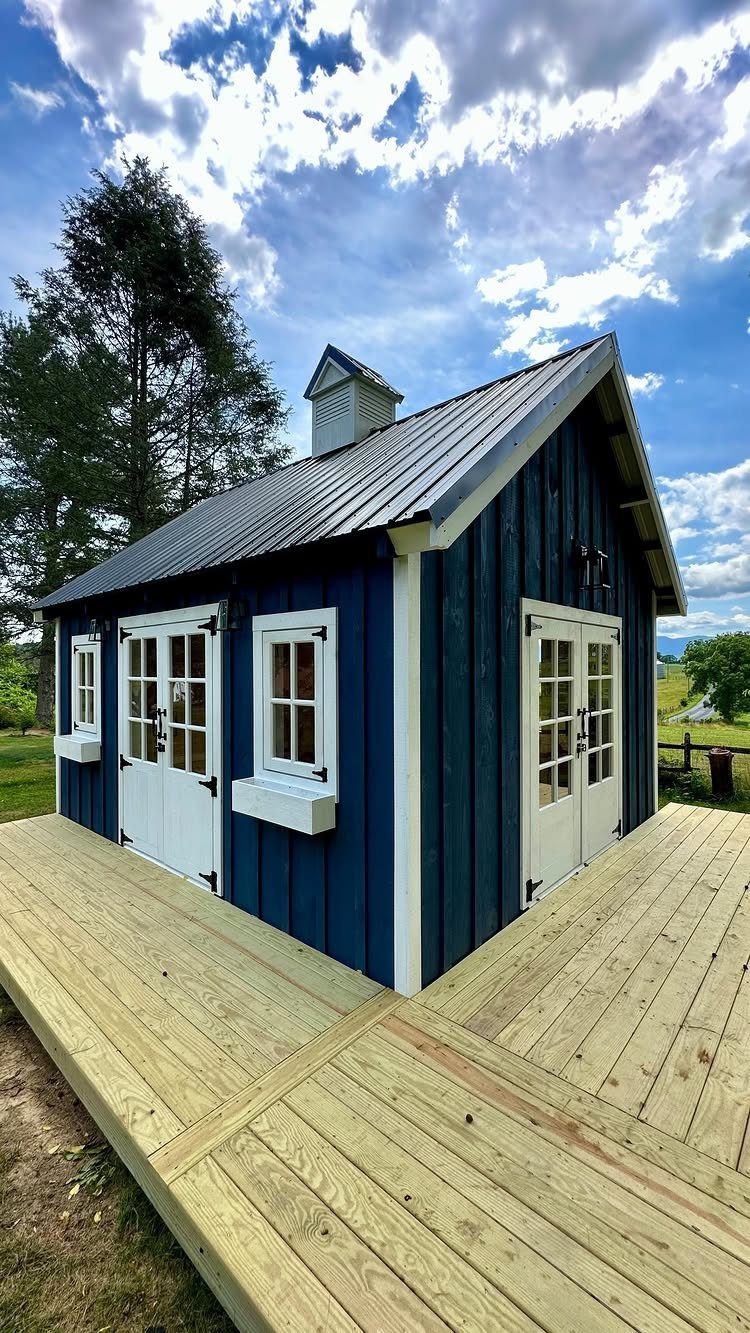
French doors on a shed turn storage into a room that happens to hold garden tools.
The navy-and-white pairing is crisp, and the metal roof with a vented cupola moves air without wiring.
A wooden deck instead of a concrete pad saves cost if you already own the lumber skills; pressure-treated decking lasts, and spacing boards for drainage matters more than sealant in a damp climate.
Multiple door sets need real estate.
I would check swing clearance against paths and planting beds before ordering. The look suits a pool house, guest overflow, or any secondary use where you want guests to feel invited rather than tolerated.

Board and Batten Shutters are Decorative Shutters which fit Window Heights of 80in - 82in (Window not included)
Available in various color options

Premade Board and Batten Paintable Wainscoting Kit: Package includes 10 premade molding trim slats and two pairs of gloves for convenient installation
Choosing the Right Materials
LP SmartSide panels with SilverTech finish do 3 jobs at once: they block radiant heat from the sun, bounce interior light around, and carry SmartGuard protection against rot and termites.
I would use them anywhere the shed sits in full afternoon sun or stores temperature-sensitive items.
The flooring matters as much as the walls. LP ProStruct engineered flooring uses a resin that resists both moisture and warping, which matters when you are rolling heavy equipment across it or tracking in damp soil from the garden.
Metal roofing outlasts asphalt shingles and reads sharper against farmhouse siding, but the coating quality varies.
For doors, fiberglass with a polyurethane core and wood-grain texture gives the look of painted wood without the swelling and scraping.
Black acorn hinges at 12 inches repeat the hardware vocabulary from the list entries and hold up to heavier door swings than standard strap hinges.

Fighter Jet Weathervane: A fighter aircraft in a vivid, great manner. The E, W, S, N signals on the weathervane are very easy to recognize. If you want to install a weathervane in your home, then it is great for you.

Hen Grass Metal Weather Vane: This wind vane features a subtle design with a hen motif for simplicity, giving it a laid-back and cosy feel, making it a great outdoor decoration!

Quail Weather Vane: This quail weather vane garden decor,creating a natural ambiance—perfect for outdoor decor!
Customization Options
Size and color sit at the top of most customization menus, but the roofline choice shapes everything else.
The farmhouse roofline with wood panel siding and porch carries the vocabulary of the main list into a single configured package, and changing it after the order goes in costs more than getting it right up front.
Color contrast trim lets you darken the body and lighten the trim, or reverse it, without fighting the undertones of existing house paint.
SilverTech sheathing on roof and walls is worth specifying together. The radiant barrier finish keeps the interior cooler in summer and brighter year-round, which matters more if you are wiring the shed for a desk or potting bench.
Budget figures from the broader market run from roughly $3,500 for a basic painted-wood shed to $15,000 for larger workshop configurations with dormers and upgraded roofing.
I would decide which side of that range fits before falling for details that push the number.
Design Considerations
Trim scale is the detail that betrays a shed as "added later."
I would measure the casing width on my main house windows and door surrounds, then match that dimension on the shed, even if the material downgrades from cedar to primed pine. The proportion matters more than the species.
Roof overhangs need depth to read as functional, not decorative afterthought.
On a red barn-style shed, deep overhangs carry the eye across the whole form and protect the siding from splashback. White or cream trim keeps a strong red from heaviness; black hinges and hardware sharpen the edges without adding ornament.
A barn-red shed against a neutral house becomes the yard’s visual anchor. I would use that intentionally, not accidentally, and place it where the sight line wants stopping, not where construction convenience left the only flat spot.
Shade and glare shift through the day. Walking the site morning, noon, and evening before finalizing window placement costs nothing and prevents the regret of a south-facing workspace that turns uninhabitable by two in the afternoon.
Functionality Vs. Aesthetics
A shed that stores well but looks wrong still fails; one that photographs beautifully but jams your tools into an afterthought fails just as completely. The balance point sits at honest materials sized for the actual work.
The list entries show this split in their details.
French doors and a deck invite guests; gravel and transom windows favor the solo gardener. Cedar shingles ask for maintenance attention every few years, while composite trim and metal roofing buy time back for other weekends.
Neither path is wrong, but the choice has to match the hours you are willing to spend, not just the look you want arriving home.
Porched entries steal interior square footage.
For pure storage, that is waste. For any use where you pause before entering, the covered space earns its keep by keeping you dry while you find keys or set down seedlings.
Workshop, office, storage, or overflow guest space: each function rewires which details matter. I would write down the three activities I actually expect, not the ones that sound pleasant, and let that list kill the features that serve no one.